
As New York City Mayor-elect Zohran Mamdani prepares to take office, tax-happy progressive groups are eager to let you know that the idea that rich people move because of taxes is all a big myth. There are no consequences to raising taxes on rich people, they argue, because rich people will be rich no matter what.
It’s a pretty picture, and a convenient one for those who have never met anything economically productive that they didn’t want to tax. The only problem is that the data proves it just isn’t true.
The latest media blitz comes in response to Mamdani’s campaign proposals to raise the income tax rate for top earners in the city from 3.9 percent to 5.9 percent. That’s in addition to statewide rates, which currently run as high as 10.9 percent. That means that, under Mamdani’s proposal, the wealthiest Big Apple residents would face state and local income taxes as high as 16.8 percent, even before federal taxes.
But never fear, say progressive groups such as Patriotic Millionaires — Zohran can tax to his heart’s content without fear of millionaire tax flight. They attempt to fortify their claims with research by the Center for Budget and Policy Priorities and tax-happy academics who make points that are technically true, yet entirely miss the point.
For instance, Patriotic Millionaires cites data showing that the millionaire population in New York grew in the wake of recent tax increases on the wealthy at the state level. But of course it did — the population of millionaires is constantly growing across the country due to economic growth and inflation. The more important thing, as the New York-based Empire Center shows, is that New York’s share of the nationwide millionaire population has dropped precipitously in recent years, from 12.7 percent in 2010 to 8.7 percent in 2022.
Others point to a spike in sales in the New York City luxury real estate market to suggest that “there is no Mamdani effect.” But that actually is an indication of the ongoing exodus, not a rebuttal. The New York City housing market has such a severe shortage of housing that when some wealthy New Yorkers pack up and leave, it’s no surprise that remaining millionaires snap up those luxury properties quickly. It’s no coincidence that inquiries from New Yorkers to the Miami Beach Ritz-Carlton for beachfront penthouses worth $10 million or more nearly tripled in the wake of Mamdani’s election.
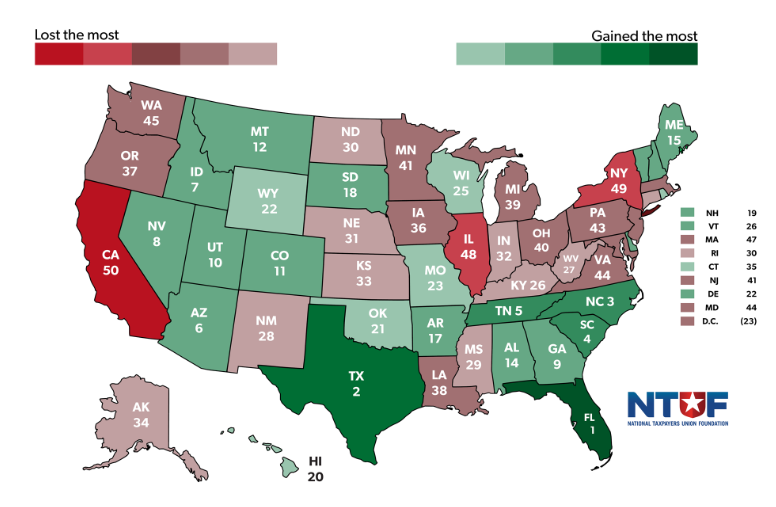
Looking at the impact of net migration, the highest-tax states lose big among the wealthy every year. In the most recent IRS data, New York lost the second-most wealthy residents (shocker: California lost the most). On the other hand, Florida gained the most new wealthy residents from other states, followed by Texas.
If pressed further, progressive tax advocates may fall back on another true yet ultimately irrelevant point: that specific tax increases, generally speaking, raise more money than they lose in tax flight. And, indeed, Zohran’s two-percent income tax surcharge would likely leave the city with more revenue in the short term. But the cost comes in the long term, and has been coming for spending-addicted cities and states for some time.
The National Taxpayers Union Foundation estimates that New York will have $3.8 billion less tax revenue to work with at both the state and local levels in 2025 because of out-migration. New York and New York City are losing that revenue year after year, shrinking the tax base and making future spending binges even harder to finance.
As the cash cows in the top income brackets leave for greener pastures, there are only two options for politicians who treat the idea of “reining in spending” as an odd foreign custom. One is to increase taxes further on the wealthier New Yorkers who are left, which only exacerbates the problem. The other is to start to shift more and more of that tax burden onto the middle class.
And guess what? A lot of those wealthy emigrants take their businesses — employers who provide jobs and pay a lot of tax revenue — with them. No state is losing firms to other states faster than New York.
Even long-time New York City staples are looking elsewhere, as Mamdani’s election has managed to accelerate the already exploding growth of the Dallas counterpart to Wall Street (affectionately known as “Y’all Street”). Big names such as Goldman Sachs and JPMorgan Chase continue to shift more and more of their operations to the Lone Star state, and Texas now boasts more jobs in the financial services sector than New York does.
Progressives should not stick their heads in the sand about the consequences of their policies. Many wealthy New Yorkers will choose to stay after yet another tax hike from Mayor Mamdani, and some of those will stay after the next tax hike as well. But with death by a thousand cuts, it’s the steady bleeding that kills you.
