
Despite being brothers who share many of the same preferences, most notably a love for economic and personal freedom, we deeply disagree over BBQ smokers. On the Fourth of July, Chris will be waking up early to light a reverse flow offset smoker while I will be plugging in my pellet smoker. Aside from some good-natured brotherly teasing — Dan calling Chris a 14-hour full-time fire tender and Chris saying Dan has an adult Easy-Bake oven — our divergent preferences create no conflict between us. But we have our mutual love for markets to thank for this outcome; in societies where decisions are made collectively under socialism, friendly differences in preferences often turn into bitter societal conflicts.
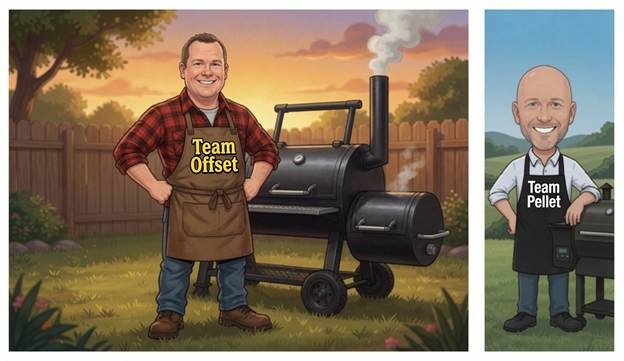
Markets, by decentralizing decision-making and encouraging entrepreneurial innovation, unleash a wide range of options. You can purchase several variations of smokers, or grills for that matter — Chris does want to remind Midwesterners that barbecue is a noun rather than a verb — to properly celebrate your Independence Day. Because consumers are spending their own money on themselves, as Milton Friedman famously noted, they have a strong incentive to economize and seek the highest possible value. Because of this, individual decisions get aggregated into a “hivemind” that economist Deirdre McCloskey refers to as “market-tested betterment,” where investment is continuously pulled away from failing or obsolete products and redirected toward better ones. And the market even serves seasoned pitmasters who can’t find the right commercial smoker to meet their exacting needs. They can either order a custom smoker or purchase the raw materials to make one themselves. In this sense, markets give autonomy and agency, along with responsibility, to individuals to make their own independent choices to reflect their own preferences and individuality.
Compare this to a society where people must collectively decide on one government-issued BBQ smoker. Societies may pursue this for goals such as eliminating the duplication of production or profits. While the disbandment of the market has many well-identified knowledge and incentive problems, such as undermining the incentives for consumer-improving innovation, reducing dynamic flexibility, and eliminating the incentives to conserve scarce resources in production, they also encourage conflict as we transition from individual to group decision-making.
We have strong preferences when it comes to smoking BBQ. Chris puts years into a single meal by planting trees to harvest (and we won’t even get started on how opinionated he is about his preferred chainsaw), the proper wood to dry a year before it hits the firebox to get maximum bark and flavor. Dan, on the other hand, is perfectly fine trading off a bit of flavor and bark to avoid this immense time and hassle.
In a market society, both of us get to buy the smoker we prefer, and our choices do not generate conflict (beyond brotherly teasing). But if we had to agree on one smoker, our preferences would come into stronger conflict because one of us would be imposing a decision on the other. While between brothers we could likely work out a mutually acceptable side bargain to avoid conflict, it would be prohibitively costly to reach such an agreement between all voters across the United States, especially with the full range of different BBQ or grilling platforms.
If you will be spending some extended time with family or friends over Independence Day weekend, you will likely realize there are myriad ways in which your preferences diverge from even close family and friends. As individuals, we often disagree on our preferred type of coffee maker, hamburger joint for a meal on the road, television subscriptions, and so on. These all have important tradeoffs that reasonable people value differently. Chris and Dan have different preferences over not only smokers, but what BBQ rub or sauce to use, and what to drink while making dinner.
Collectively deciding on any of these consumer items would politicize each decision and potentially turn it into a heated conflict with one side winning and the other losing.
And these are less important decisions. Imagine more difficult decisions that are less clear-cut and thus prone to deep-seated disagreement, such as the type of education your child receives, your healthcare coverage, or the investments in your retirement portfolio. Making decisions collectively turns individual decision-making into political battles. The collective decision-making process, where politicians spend someone else’s money on others, can also be compromised by special interest groups that can secure concentrated benefits by disbursing the costs across society. And it also introduces the possibility that a majority with slight preferences can readily outvote a minority with strong preferences.
This Independence Day, while Chris tends his offset smoker and I relax with my pellet grill, we’ll enjoy the same fireworks, the same family laughter, and, most importantly, the same freedom to choose our own path to great barbecue. Our harmless disagreement remains harmless precisely because no one is forced to adopt the other’s preference.
That is the underappreciated genius of the market. It doesn’t demand that we all agree. It simply allows us to disagree peacefully. In doing so, it preserves harmony in our families, friendships, and our larger society.
So, the next time you hear calls for government to impose a single “best” solution on complex personal choices, whether it’s smokers, schooling, or healthcare, remember that reasonable people can differ deeply on worthwhile tradeoffs. Markets let us express those differences without turning them into political wars. Centralized control does the opposite.
True independence isn’t just celebrated with flags and fireworks. It is lived every day when free people are allowed to make their own choices, even if that choice is between a 14-hour labor of love (not including cutting and splitting the wood) and an “Adult Easy-Bake Oven.”
So, fire up or plug in whatever smoker or grill you prefer. Just be grateful you’re free to choose.
