Author

admin

Browsing

President Trump’s detractors and defenders alike have cast his federal foray into local law enforcement as a revival of “broken windows” policing. But while Americans quarrel over deploying federal troops in city streets, the president has been busy applying a different type of broken windows theory to our nation’s trade policy. 

In 1850, French satirist Frédéric Bastiat introduced – and promptly smashed – what economists call the “broken window fallacy.” Bastiat’s parable runs like this. Suppose a roving bandit smashes a shopkeeper’s window. The shopkeeper is devastated – this cruel deed will cost him $1,000. But the local mayor consoles him: “Don’t despair! This destruction creates work for our local glazier. Perhaps he’ll spend his earnings from this repair at the butcher’s, who’ll then patronize the brewer’s, who’ll then frequent the baker’s, and so on. Ultimately, Fortuna’s misfavor enriches our community!”

The mayor’s Panglossian outlook paints a pretty picture. But, as Bastiat notes, it’s wildly deceptive. Why? It focuses only on the “seen” – everyone who directly benefits from the damage: the glazier, the butcher, the brewer, the baker, and so on. This cleverly distracts us from seeing the “unseen” –  all the wealth that would’ve been created if not for this wanton act of vandalism. For had his window not been smashed, our shopkeeper could’ve spent his shekels on something else he’d surely value more than repairing a window. Perhaps he would’ve spent it on a new fireplace. This would create work for the mason. Perhaps the mason would’ve spent his earnings at the butcher’s, who’d then patronize the brewer, who’d then visit the baker, and so on. All told, society would be roughly $1,000 richer in this alternate reality. For our shopkeeper would have a new chimney and a perfectly good window.

Nearly 175 years later, Bastiat’s cautionary tale provides a window into the fallacy that lies at the heart of today’s trade war: the myth that destruction creates wealth – that breaking trade deals and global supply chains, like breaking windows, is a secret recipe for prosperity. 

Like the mayor in Bastiat’s tale, President Trump is a slick politician and a masterful spin artist. He’s exceptional at portraying his policy’s “success” by focusing our attention squarely on its visible beneficiaries. That’s why he often unveils his latest tariffs in made-for-TV spectacles where he’s encircled by jubilant workers at revived factories that directly benefit from his protectionist policies. 

Thankfully, Bastiat’s parable exposes this clever marketing ploy for what it is: cheap sophistry. For every reshored job and “Made in America” product comes at the hidden cost of whatever else we could’ve made with those resources (where that “whatever else” is something more valuable to the economy). These costs are, by definition, difficult to measure. And unlike a ribbon-cutting ceremony at a newly opened factory, they’re impossible to showcase. But they’re very real, and very damaging to the economy. The late Henry Hazlitt aptly distilled Bastiat’s insight in his classic work, Economics in One Lesson: the art of economics consists in looking beyond the immediate, visible benefits of a policy on one group to consider its long-run, “unseen” consequences on the entire economy. 

Keep your eyes peeled, and you’ll detect shards of this fallacy scattered all over the White House Rose Garden from the president’s “Liberation Day” extravaganza. You’ll also find it littered all over cable news. Indeed, viewing today’s headlines through Bastiat’s lens reveals that many of the president’s most cherished trade war “victories” are a mirage. 

In May, Trump’s Commerce Secretary Howard Lutnick vowed to stick it to China by bringing iPhone assembly jobs “back” to America. “The army of millions of human beings screwing in little screws to make iPhones, that kind of thing is going to come to America!” he gushed. 

Would this bolster our economy, as Trump and Lutnick argue? Quite the opposite. Hiring an “army of millions” of Americans to assemble iPhones means drawing them away from jobs we actually excel at, like designing iPhones, developing new software, and countless others. If a $25,000 job assembling iPhones replaces a $125,000 job designing them, America isn’t $25,000 richer – we’re $100,000 poorer. Dave Chappelle is right: Americans want to buy iPhones, not make them. 

In August, the president touted July’s tariff haul as a $30 billion windfall to our economy. To the untrained eye, this appears to be welcome news. But a messier image comes into focus when viewed through Bastiat’s lens. As any economist worth their salt can attest, tariffs are a tax borne by consumers in the form of higher prices. Higher prices mean consumers have less money to spend on other things, thus crowding out growth and destroying jobs in those sectors. That $30 billion in tariff revenue isn’t manna from heaven, as Trump often portrays it. It’s a hidden tax on US consumers. 

What about the raft of “trade agreements” and investment deals the president loves to flaunt? In July, Trump touted his agreement with the EU as “the biggest deal ever made.” The EU, Saudi Arabia, Japan, South Korea, and the UAE pledged to invest $750 billion, $600 billion, $550 billion, $350 billion, and $200 billion, respectively. Corporations have also joined in. In May, Nvidia pledged to invest $500 billion in domestic chip manufacturing. In August, Apple affirmed its $600 billion investment in America. Meta’s Mark Zuckerberg also vowed to invest $600 billion. 

These headlines certainly seem propitious, even if these “commitments” are incredibly vague, and the numbers seemingly conjured out of thin air. (Lest we forget: what matters to the dealmaker-in-chief is eye-catching headlines, not empirical accuracy or sound economics.) But even if Trump’s tariffs succeed in reshoring some jobs, Bastiat’s question remains: at what cost? If other nations can manufacture iPhones and widgets more efficiently than we can, economics teaches us we’re better off importing those products. This frees our workers to specialize in higher-paying jobs they excel at – skilled craftsmen, artisans, high-skilled manufacturing, etc. – of which there’s no shortage.

Trump is a skilled promoter and a crafty marketer; he knows how to craft a compelling story. Credit where it’s due, he’s often not entirely wrong. Even his tallest tales are typically rooted in a seed of truth. Urban crime, though still fairly low by historical standards, remains inexcusably high. Foreign trade, though incredibly beneficial to our economy, does displace some domestic firms and workers. 

But he’s also a deft illusionist. Whether he’s defending his policies on crime or trade, he’s remarkably adept at drawing our attention where he wants. On crime, he tells harrowing tales of urban violence to justify federal incursions into local law enforcement. On trade, he hosts grand ribbon-cuttings at reopened factories in made-for-TV spectacles to justify taking autocratic control over trade policy. 

It’s brilliant retail politics, to be sure. That said, there’s a stark difference between broken windows policing and his broken windows trade policy. Although controversial, broken windows policing is eminently defensible. His broken windows trade policy, in contrast, is not. Economists are virtually united in condemning protectionism (with the notable exception of Peter Navarro and Ron Vara, but we repeat ourselves). They generally support free trade, only granting exceptions in rare, well-delineated circumstances.

To be clear, economists don’t claim free trade is a panacea. No profession is more fond of reminding people that every decision involves tradeoffs (hence Harry Truman’s Melvillian quest to find a “one-armed economist”). Are there tough tradeoffs that policymakers must weigh when conducting trade policy, like protecting crucial national security interests and fortifying strategically vital industries? Absolutely – though, to be fair, these concerns are often wildly overstated by lobbyists trying to hurt foreign competitors. Are there steps policymakers can take to make our economy more competitive? Sure – though, to be clear, we should start by slashing red tape, not clumsily cutting off trade. The Hippocratic Oath in medicine also applies to economic policy: “first, do no harm.” It’s one thing to attract investment with the carrot of simplifying taxes and surgically removing our most malignant policies. It’s quite another to compel it with the stick – nay, sledgehammer – of tariffs and trade barriers, with all their far-reaching negative consequences. One need not be a free trade absolutist to believe that we shouldn’t throw the baby out with the bathwater when it comes to trade. 

When it comes to trade policy, don’t fall for the president’s sleight of hand. Don’t get beguiled by propitious-sounding headlines or eye-popping investment figures. All this smoke and mirrors is a clever way for the president to distract Americans from the destructive effects of his trade war, as evidenced by the recent spate of weak jobs reports and anemic growth figures. Instead, heed Bastiat’s timeless wisdom: Behind every lofty tariff pronouncement lies a hidden cost. Like the politician in Bastiat’s tale, when Trump brags about “bringing back” jobs, all he’s really celebrating is a hefty bill for replacing windows he smashed with his tariffs. 

Despite all the sound and fury emanating from the White House, Bastiat’s lesson rings as true as ever. Destroying trade doesn’t create prosperity any more than smashing windows creates wealth.

Last month, we lamented California’s Frontier AI Act of 2025. The Act favors compliance over risk management, while shielding bureaucrats and lawmakers from responsibility. Mostly, it imposes top-down regulatory norms, instead of letting civil society and industry experts experiment and develop ethical standards from the bottom up.

Perhaps we could dismiss the Act as just another example of California’s interventionist penchant. But some American politicians and regulators are already calling for the Act to be a “template for harmonizing federal and state oversight.” The other source for that template would be the European Union (EU), so it’s worth keeping an eye on the regulations spewed out of Brussels.

The EU is already way ahead of California in imposing troubling, top-down regulation. Indeed, the EU Artificial Intelligence Act of 2024 follows the EU’s overall precautionary principle. As the EU Parliament’s internal think tank explains, “the precautionary principle enables decision-makers to adopt precautionary measures when scientific evidence about an environmental or human health hazard is uncertain and the stakes are high.” The precautionary principle gives immense power to the EU when it comes to regulating in the face of uncertainty — rather than allowing for experimentation with the guardrails of fines and tort law (as in the US). It stifles ethical learning and innovation. Because of the precautionary principle and associated regulation, the EU economy suffers from greater market concentration, higher regulatory compliance costs, and diminished innovation — compared to an environment that allows for experimentation and sensible risk management. It is small wonder that only four of the world’s top 50 tech companies are European.

From Stifled Innovation to Stifled Privacy

Along with the precautionary principle, the second driving force behind EU regulation is the advancement of rights — but cherry-picking from the EU Charter of Fundamental Rights of rights that often conflict with others. For example, the EU’s General Data Protection Regulation (GDPR) of 2016 was imposed with the idea of protecting a fundamental right to personal data protection (this is technically separate from the right to privacy, and gives the EU much more power to intervene — but that is the stuff of academic journals). The GDPR ended up curtailing the right to economic freedom.

This time, fundamental rights are being deployed to justify the EU’s fight against child sexual abuse. We all love fundamental rights, and we all hate child abuse. But, over the years, fundamental rights have been deployed as a blunt and powerful weapon to expand the EU’s regulatory powers. The proposed Child Sex Abuse regulation (CSA) is no exception. What is exceptional, is the extent of the intrusion: the EU is proposing to monitor communications among European citizens, lumping them all together as potential threats rather than as protected speech that enjoys a prima facie right to privacy.

As of 26 November 2025, the EU bureaucratic machine has been negotiating the details of the CSA. In the latest draft, mandatory scanning of private communications has thankfully been removed, at least formally. But there is a catch. Providers of hosting and interpersonal communication services must identify, analyze, and assess how their services might be used for online child sexual abuse, and then take “all reasonable mitigation measures.” Faced with such an open-ended mandate and the threat of liability, many providers may conclude that the safest — and most legally prudent — way to show they have complied with the EU directive is to deploy large-scale scanning of private communications.

The draft CSA insists that mitigation measures should, where possible, be limited to specific parts of the service or specific groups of users. But the incentive structure points in one direction. Widespread monitoring may end up as the only viable option for regulatory compliance. What is presented as voluntary today risks becoming a de facto obligation tomorrow.

In the words of Peter Hummelgaard, the Danish Minister of Justice: “Every year, millions of files are shared that depict the sexual abuse of children. And behind every single image and video, there is a child who has been subjected to the most horrific and terrible abuse. This is completely unacceptable.” No one disputes the gravity or turpitude of the problem. And yet, under this narrative, the telecommunications industry and European citizens are expected to absorb dangerous risk-mitigation measures that are likely to involve lost privacy for citizens and widespread monitoring powers for the state.

The cost, we are told, is nothing compared to the benefit. After all, who wouldn’t want to fight child sexual abuse? It’s high time to take a deep breath. Child abusers should be punished severely. This does not dispense a free society from respecting other core values.

But, wait. There’s more…

Widespread Monitoring? Well, Not Completely Widespread

Despite the moral imperative of protecting children — a moral imperative so compelling that the EU is willing to violate other core values to advance it — the proposed CSA act introduces a convenient exception. Anything falling under national security, and any electronic communication service that is not publicly available (i.e. available only to elected officials and bureaucrats) would remain entirely untouched. Private chats among citizens require scrutiny — but the conversations of those who claim to protect us are off limits.

As the good minister said, “behind every single image and video there is a child who has been subjected to the most horrific and terrible abuse.” If that is indeed true of every “single image and video,” why would it not also be true of the messages shielded by the CSA’s national security and non-public exceptions? Does the horror somehow dissipate when the users are politicians or bureaucrats? Is the unacceptable suddenly made acceptable when it concerns those who write the rules?

In the EU’s hierarchy of rights, protecting children trumps privacy. But protecting Eurocrats trumps protecting children. In the end, modern technology gives politicians unprecedented opportunities to monitor citizens, while exempting themselves from scrutiny.

There is no chatter yet — that we know of — about imposing similar measures in the US. But, from the wealth tax to AI regulation — and the very origins of the American administrative state — bad ideas from Europe have a nasty way of making their way across the Pond. 

2026 is poised to be transformative for uranium as tightening supply converges with robust demand from new reactor builds and life extensions, plus data center construction and a broader shift to clean energy.

Despite these tailwinds, the U3O8 spot price remained muted for most of 2025, locked between US$63 and US$83 per pound; meanwhile, long-term contracting prices spent the majority of the year inching incrementally higher.

For Justin Huhn of Uranium Insider, the long-term contracting price rise paired with a V-shaped recovery exhibited by equities during the second half of the year has set the stage for bullish growth.

“In the background, the long-term U3O8 price, the three year forward, the five year forward price are all moving up. In fact, the long-term price is up from US$80 to US$86 on the year. That’s a very nice move.”

He went on to explain that long-term uranium pricing usually goes through periods of stagnation, followed by strong upward moves. This trend can be seen in how the long-term price has performed over the last five to six years, with stagnation lasting between eight and 15 months before eight to 12 months of higher prices set in.

“As far as we can tell, we’re in month three of a higher move,” said Huhn.

“We think it’s going to breach US$90 and probably push US$100 on this move that will happen next year.”

With uranium still far from its 2016 bottom, he believes the sector “has a huge runway,” adding that small caps remain largely overlooked, but “will have their day” once the commodity itself finally breaks higher.

Strong reactor growth — not AI hype — to drive long-term demand

In 2024, worldwide uranium production met 90 percent of global demand, with the remaining 10 percent likely made up of stockpiled material. At the same time, global nuclear expansion is accelerating quickly, according to the latest World Nuclear Association outlook. From 398 gigawatts electric (GWe) of installed nuclear capacity this past June, the organization’s reference scenario shows capacity nearly doubling to 746 GWe by 2040.

More aggressive growth could push that figure to 966 GWe, while a slower buildout still reaches 552 GWe.

This rapid growth has major implications for uranium demand.

Reactors are expected to consume about 68,900 metric tons (MT) of uranium in 2025. By 2040, requirements will more than double to just over 150,000 MT in the reference case, and could exceed 204,000 MT in the high-growth scenario. Even the low case sees demand topping 107,000 MT, underscoring the sector’s long-term structural pull on supply.

On that note, Lobo Tiggre, CEO of IndependentSpeculator.com, cautioned investors not to lose sight of uranium’s core driver — dependable, round-the-clock electricity.

“The use case is baseload power,” he said. “There’s no substitution, and the world is building like gangbusters.”

He argued that data center construction and electric vehicle (EV) adoption are just an added boost, not the backbone, and that headlines about AI or data center growth may be distracting from the foundation of the uranium thesis.

“If the EV story completely went away, it wouldn’t undo the thesis for uranium,” Tiggre said. “It would remove a tailwind, not the base story.” And despite political noise in the US, he believes the global shift to EVs remains intact.

He sees AI demand as similar: a powerful tailwind that strengthens the case for nuclear, but doesn’t define it.

When asked how meaningful near-term demand from new reactors and extensions could be — and when utilities will need to accelerate contracting — Gerardo Del Real, publisher at Digest Publishing, didn’t hesitate.

“How material? Very material,” he said.

But he cautioned that utilities remain “the slowest actors, always,” even as long-term contract prices have climbed “US$8 to US$10 above spot.” That contract price, he noted, is the real signal to watch. Because fuel makes up such a small share of a utility’s total operating costs, “they can afford to sign at US$120 or even US$130,” he said — levels that are far more consequential for producers and developers than for reactors themselves.

While some utilities have begun stepping in at higher prices, Del Real said the aggressive contracting many expected a year ago still hasn’t materialized. “I don’t think we’ll really see that until 2026,” he said.

Del Real said the uranium market is being driven by a mix of fundamentals and sentiment, and right now, the psychological lift from the tech boom is hard to ignore. While he doubts every AI-era data center plan will be built, the expert argued that even partial follow-through could massively expand power demand. If tech companies deliver “35 to 50 percent of their promises,” Del Real said, the energy needs would be “absolutely spectacular.”

That surge would hit an already-tightening market. He noted that the uranium sector is on track for a major supply deficit by 2026, a shortfall that he now believes is accelerating.

This sentiment was reiterated by Huhn, who explained that while broader narratives like AI and data center growth have been loosely tied to uranium, they don’t fundamentally alter the thesis for rising prices.

“If we see CAPEX pull back and growth slow, could that narrative impact us? Absolutely. But once prices start moving, uranium will carve out its own story,” he said. In his view, the real driver is the de-risking of existing reactors.

‘So instead of data center demand quadrupling by 2030, if it only doubles, we’re still going to see the de-risking of the existing operating reactors of the world, in particular in the countries that have expansion of data centers, which is most of the modern countries, but especially in the US, especially in China.”

Looking ahead, Huhn stressed that while new US reactors could eventually boost fuel demand in the early 2030s, utilities are already securing long-term contracts today.

“So the market for those reactors exists now,” he said. “As we enter 2026, attention will be everywhere.”

Aging uranium mines threaten supply security

Global uranium production is expected to climb over the next decade, but is seen struggling to meet demand.

The Australian government’s latest Resources and Energy Quarterly report projects that world uranium supply will rise from roughly 78 million MT in 2024 to about 97,000 MT by 2030, fueled by output expansions in Kazakhstan, Canada, Morocco and Finland — a roughly 24 percent increase over six years.

Industry experts also forecast a modest compound annual growth rate of 4.1 percent through 2030, with output reaching around 76,800 MT, reflecting expansions at major producers, including Kazakhstan and Canada.

Yet beyond 2030, many existing mines are expected to plateau or decline unless new projects come online, highlighting the critical need for timely investment to meet the fuel demands of the world’s growing nuclear fleet.

Future supply was a concern raised by Huhn, who underscored the challenges inherent in uranium mining.

“Mining is hard,” he said, pointing to Cameco’s (TSX:CCO,NYSE:CCJ) struggles at MacArthur River as it transitions to a new phase of the mine. The company has experienced mill downtime and production setbacks, yet still aims to deliver 15 million pounds of uranium in 2025, down from its typical 18 million. “These are very complicated underground mines with high-grade ore,” Huhn noted, emphasizing the operational complexity.

Huhn also highlighted long-term concerns: “Cigar Lake will be offline in 10 years, MacArthur River in 15. The two biggest projects that the industry relies on are finite. They need replacements if they intend to stay in uranium mining.”

Regarding Kazatomprom, he said the company is adopting a “value over volume” approach, focusing on responsible management of legacy assets while balancing joint ventures with Russia and China.

However, many of its projects are expected to peak over the next five years, with steep decline rates looming in the 2030s. Huhn warned: “Both (major miners) have pipeline problems into the 2030s. Without new development, the market will struggle to balance supply with the surging demand ahead.”

To facilitate this growth, Huhn stressed that uranium prices will need to stay elevated to incentivize the capital expenditures required to meet long-term demand.

“Looking at what the world will need to supply 250 million to 300 million pounds a year in about 10 years, we’re probably going to need prices in the US$125 to US$150 range, and they’ll need to stay there for a while,” he said.

Huhn added that short-term spikes aren’t enough.

“A spike to US$200 and then falling back to US$100 doesn’t do much for the industry,” he explained, noting that commodities cycles tend to overshoot on both ends. “Even in past cycles, prices fell below production costs — like when spot was US$30 a pound, but most low-cost producers were at US$40 to US$50. When the market recovers, the upside is usually much higher than the incentive price.”

Bullish uranium outlook meets real risks

Tiggre sees a bursting AI bubble as a possible threat to uranium’s upward price movement.

“There’s going to be a lot of companies that blow up,” he said. “There’s a significant chance that we get a major market event based on the AI bubble popping, and there will be a lot of panic selling of everything related. And unfortunately, that’s going to smack uranium too, because it has become an AI play now.”

Tiggre believes an event like this would be a strong buying opportunity, and while he doesn’t want to see people impacted by bubble burst, he urged investors to be prepared.

“I’ll be gleefully in the market when it puts something on sale, something you know is valuable. When the market offers it at a discount, and nothing else has changed, that’s an absolute gift,’ he said.

‘Opportunities like that don’t come often. Fluctuations happen, but a genuine sale on something you want for all the right reasons — that’s what makes fortunes for those with the courage to act.”

For 2026, Huhn sees utilities as the key driver for uranium prices. “I’m really looking at the utilities more than anything in the physical market, because that dictates everything else,” he explained.

While uranium equities have drawn attention, including meme-stock-like surges, Huhn is focused on the underlying commodity. He also pointed to a standoff, noting that major uranium producers like Cameco are seeking market-reference contracts with high ceilings, signaling confidence in rising prices, while utilities — still adjusting from reactor restarts and long-term power agreements — are testing the waters with small tenders.

“(Producers) want market reference with ceilings at US$130 to US$140, so that should tell all of us where the biggest players in the industry believe the price is going,” said Huhn. “Once we see the big utilities step up and sign these large contracts at the prices producers want, then it’s game on,” he emphasized, predicting a rapid price reset that could potentially push uranium from around US$75 to US$100 over a few months.

Looking down the pipeline, Del Real said he’s keeping a close eye on junior uranium companies, which he believes offer some of the biggest upside in the sector.

“If you know the management teams and can access these deals early, you can do spectacularly well,” he said, citing his firm’s early investment in North Shore Uranium (TSXV:NSU) as an example.

While he acknowledged the high risk involved, Del Real argued that in the current volatile market, well-chosen juniors can rival larger producers in potential returns, particularly when strategic financing and timing align.

Securities Disclosure: I, Georgia Williams, hold no direct investment interest in any company mentioned in this article.

This post appeared first on investingnews.com

Erika Kirk has announced that she is to meet privately with commentator Candace Owens marking the first direct conversation between the two after a period of public discussion and differing perspectives that emerged after her late husband’s death.

Kirk shared the update in a brief statement on X on Sunday, saying both women had agreed to pause all public commentary until after the meeting.

‘Candace Owens and I are meeting for a private, in-person discussion on Monday, December 15,’ Erika said.

‘@RealCandaceO and I have agreed that public discussions, livestreams, and tweets are on hold until after this meeting. I look forward to a productive conversation. Thank you,’ Erika added.

The planned discussion between Erika and the former Turning Point USA employee reflects an effort by the women to address weeks of mounting tensions over conspiracy theories online in a more thoughtful and personal setting.

At a recent CBS town hall Erika expressed the emotional toll of widespread online speculation surrounding her husband’s passing, ‘Stop. That’s it. That’s all I have to say. Stop.’ when asked what she had to say to people making unfounded claims.

‘When you go after my family, my Turning Point USA family, my Charlie Kirk Show family, when you go after the people that I love, and you’re making hundreds and thousands of dollars every single episode going after the people that I love because somehow they’re in on this, no,’ Erika also said on ‘Outnumbered’ Dec. 10.

The relationship between the two women has deteriorated sharply in recent months, despite their earlier history of collaboration and personal friendship.

The recent events have placed them on different sides of a sensitive moment and their decision to meet privately shows signs of a mutual desire to speak directly while reducing misunderstandings and avoiding further speculation.

Kirk, who now leads TPUSA, has been focused publicly on preserving her husband Charlie Kirk’s legacy since his tragic death in September.


This post appeared first on FOX NEWS

Perth, Australia (ABN Newswire) – Locksley Resources Limited (ASX:LKY,OTC:LKYRF) (FRA:X5L) (OTCMKTS:LKYRF) announced the appointment of Lieutenant General (Ret.) Mark C. Schwartz as Strategic Advisor – U.S. Government Initiatives, strengthening the Company’s engagement across U.S. defense, national security, and federal funding programs.

HIGHLIGHTS

– Lieutenant General (Ret.) Mark C. Schwartz appointed as Strategic Advisor to advance U.S. Government Initiatives

– Brings 33+ years of senior U.S. military leadership, including JSOC, SOCOM-Europe and U.S. Security Coordinator roles

– Appointment of new strategic advisor supports Locksley’s pursuit of DPA Title III, DoD, and DOE funding pathways for critical mineral onshoring

– Provides strategic guidance on integrating Locksley’s antimony supply into defence, aerospace, and prime contractor applications

– Enhances Locksley’s standing within U.S. national security circles during a period of heightened focus on reducing Chinese dependency for critical minerals

– Appointment supports Locksley’s positioning of the Desert Antimony Project as an immediate and credible U.S. supply solution

– Appointment of Lieutenant General (Ret.) Mark C. Schwartz reinforces ‘Locksley’s U.S Mine to Market’ strategy, targeting production of ingots, trisulphide, trioxide, and other downstream defence-grade products

Lieutenant General Schwartz served more than 33 years in the U.S. Army, including senior leadership roles as:

– U.S. Security Coordinator for Israel and the Palestinian Authority

– Commander, Special Operations Command – Europe

– Deputy Commanding General, Joint Special Operations Command (JSOC)

– Deputy Commander, Special Operations Joint Task Force Afghanistan

Experience Directly Aligned with U.S. Critical Minerals Priorities:

– Oversaw complex bilateral and multilateral security operations, including U.S. coordination with allied forces across the Middle East and Europe, ensuring integrated strategic planning and operational readiness

– Led major U.S. strategic assistance, force readiness, and interoperability programs, providing experience directly relevant to the United States’ efforts to secure domestic supply chains and strengthen critical minerals resilience His career has centered on advancing U.S. national security interests, joint force readiness, and strategic operations.

Experience Aligned with the Strategic Role:

As Strategic Advisor, Lieutenant General Schwartz will support Locksley’s U.S. government engagement strategy, specifically:

– Advancing Locksley’s DPA Title III and related Department of Defense and Department of Energy funding pathways;

– Supporting Locksley’s positioning within the National Defense Stockpile framework for antimony and other critical minerals;

– Providing strategic guidance on U.S. initiatives to onshore or friend-shore critical mineral supply chains;

– Supporting downstream integration of Locksley’s antimony products into defence, aerospace, and prime-contractor applications, including trisulphide, alloys, and other strategic materials.

His appointment directly complements Locksley’s progress toward establishing the United States’ first modern, integrated Mine-to-Market antimony supply chain.

Lieutenant General (Ret.) Mark C. Schwartz commented:

‘Throughout my career, my purpose has been to lead and protect U.S. national security interests across the globe. Today, one of the most significant strategic vulnerabilities facing the United States is our reliance on foreign often adversarial sources of critical minerals.

Onshoring and friend-shoring materials like antimony is essential for U.S. military readiness, industrial resilience, and protection against coercive threats, including the risk of China cutting off supply.

I look forward to working with Locksley to further articulate the importance of their antimony project, and to accelerate the immediate opportunities it presents for strengthening America’s defence and strategic materials base.’

Kerrie Matthews, Managing Director & CEO, commented:

‘Lieutenant General Schwartz brings unparalleled strategic insight into U.S defense operations and national security frameworks. His experience in operating at the highest levels of U.S. defense and government and allied commence will significantly strengthen Locksley’s engagement across defense, aerospace and strategic materials sector.

His appointment will materially strengthen our engagement across federal departments, funding agencies, and prime defence contractors at a time when the U.S. is prioritising secure domestic supply of critical minerals. This expertise will be invaluable as Locksley advances it integrated Mine to Market strategy.’

Strategic Context:

The appointment comes at a time when the United States is rapidly accelerating efforts to rebuild domestic capability in critical minerals through programs such as DPA Title III, the Industrial Base Expansion program, the National Defense Stockpile Modernization initiative, and emerging federal procurement pathways for strategic materials. These initiatives collectively represent one of the largest U.S Government commitments to critical minerals, one of the largest Lieutenant General Schwartz’s expertise will support Locksley in navigating these programs as the Company advances its ‘U.S Mine to Market’ strategy for antimony.

About Locksley Resources Limited:

Locksley Resources Limited (ASX:LKY,OTC:LKYRF) (FRA:X5L) (OTCMKTS:LKYRF) is an ASX listed explorer focused on critical minerals in the United States of America. The Company is actively advancing exploration across two key assets: the Mojave Project in California, targeting rare earth elements (REEs) and antimony. Locksley Resources aims to generate shareholder value through strategic exploration, discovery and development in this highly prospective mineral region.

Mojave Project

Located in the Mojave Desert, California, the Mojave Project comprises over 250 claims across two contiguous prospect areas, namely, the North Block/Northeast Block and the El Campo Prospect. The North Block directly abuts claims held by MP Materials, while El Campo lies along strike of the Mountain Pass Mine and is enveloped by MP Materials’ claims, highlighting the strong geological continuity and exploration potential of the project area.

In addition to rare earths, the Mojave Project hosts the historic ‘Desert Antimony Mine’, which last operated in 1937. Despite the United States currently having no domestic antimony production, demand for the metal remains high due to its essential role in defense systems, semiconductors, and metal alloys. With significant surface sample results, the Desert Mine prospect represents one of the highest-grade known antimony occurrences in the U.S.

Locksley’s North American position is further strengthened by rising geopolitical urgency to diversify supply chains away from China, the global leader in both REE & antimony production. With its maiden drilling program planned, the Mojave Project is uniquely positioned to align with U.S. strategic objectives around critical mineral independence and economic security.

Tottenham Project

Locksley’s Australian portfolio comprises the advanced Tottenham Copper-Gold Project in New South Wales, focused on VMS-style mineralisation

Source:
Locksley Resources Limited

Contact:
Kerrie Matthews
Chief Executive Officer
Locksley Resources Limited
T: +61 8 9481 0389
Kerrie@locksleyresources.com.au

News Provided by ABN Newswire via QuoteMedia

This post appeared first on investingnews.com

After more than eight years of Democrat lawfare against President Trump, his aides and his allies, the Justice Department under Attorney General Pam Bondi is bringing much-needed accountability — which is what American voters demanded in our last presidential election. But Democrat activist judges are doing what they do best: weaponization and sabotage.

In South Carolina, Clinton-appointed Judge Cameron Currie — handpicked by a Biden-appointed judge — wrongly disqualified Eastern District of Virginia U.S. Attorney Lindsey Halligan, the bold and fearless prosecutor who had secured an indictment against former FBI Director James Comey for lying and obstruction of a Senate investigation into his politicization, weaponization, and corruption of the intel agencies and law enforcement to go after political enemies and protect political allies. The government is appealing that decision to the Fourth Circuit Court of Appeals.  Now, another Clinton-appointed judge in the District of Columbia, Colleen Kollarr-Kotelly, has interfered even more egregiously with the government’s case. This ruling threatens the separation of powers essential to the Republic, and either the D.C. Circuit or Supreme Court must intervene immediately.

Comey was indicted on two charges: making false statements to Congress and obstruction of Congress. The indictment stemmed from the events surrounding Operation Crossfire Hurricane, more colloquially known as the Russiagate hoax. Comey used his longtime friend, Columbia Law Professor Daniel Richman, as a conduit to leak material unfavorable to President Trump to media outlets. In addition to being a law professor, Richman was a government contractor. He and Comey communicated frequently via email on government and private accounts. Communications on a government email account enjoy no reasonable expectation of privacy — the standard under the Fourth Amendment as a result of Justice Harlan’s concurrence in Katz v. United States (1967) — because the government can monitor its own email servers.

Six years ago, even Obama-appointed Judge James Boasberg, a judicial disgrace about whom we often have written, signed a warrant authorizing the search and seizure of emails on Richman’s computer and iCloud account and his account at Columbia. Richman was able to review all emails and withhold the information he deemed privileged from all but one account. Now, Richman — who was the recipient of many emails from Comey and the sender of many emails to him — has sought to reclaim those emails pursuant to Federal Rule of Criminal Procedure 41(g). This rule allows an individual to ask a court to reclaim his property obtained pursuant to an unlawful search and/or seizure in violation of the Fourth Amendment.

Shockingly, Kollar-Kotelly granted the motion and has ordered the FBI to destroy the emails by 4 p.m. on Monday.  Kollar-Kotelly’s ruling ordered the destruction of emails obtained pursuant to a warrant signed by another (Obama) judge six years ago.  She claims that the seized information relates to a new investigation; however, she is basing this assertion on a decision by Eastern District of Virginia U.S. Magistrate Judge William Fitzpatrick. Fitzpatrick issued a suppression-like decision even though suppression was not briefed by the parties — yet another example of blatant and unlawful judicial sabotage by partisans in robes.

Collar-Kotelly has ordered that a copy of the emails be given to Biden-appointed Judge Michael Nachmanoff, who is presiding over the Comey case in Virginia. This salvation of a copy of the emails, however, does not lessen the impact of Kollar-Kotelly’s horrible ruling. The FBI and the prosecution will be unable to review them in their efforts to seek a new indictment if Currie’s dismissal ruling survives on appeal. The statute-of-limitations law allows the government only six months after an indictment’s dismissal, suspended during the appellate process, to seek a new indictment. The inability to view this evidence would substantially increase the time necessary to seek an indictment.  Even if a higher court reverses Currie, the government’s inability to review the emails to use as evidence and prepare for trial would massively hamper its case.

Jim Trusty weighs in on Comey indictment, ‘lawfare’ claims

Kollar-Kotelly’s decision is more disturbing because it implicates the separation of powers. Usually, Rule 41(g) comes into play where a defendant has had property wrongly seized, and he moves to reclaim it. Here, Comey is not seeking to reclaim anything; Richman, a then-government contractor with whom Comey communicated extensively about government business, is seeking this evidence. Richman has run to a partisan Democrat judge not even involved in the criminal case — and not even in the same district — to procure the destruction of crucial evidence in that case in an obvious effort to assist his friend Comey. Comey cannot challenge the warrant against Richman because he lacks standing to do so. Incredibly, Kollar-Kotelly suggested that Richman could move to quash this evidence in Virginia.  She’s going way out of her way to help Comey. Judges presiding over cases often have excluded evidence against defendants as having been obtained in violation of the Fourth Amendment. It is, however, extraordinary for a different judge — especially in a different district — to interfere in and dramatically hamper the prosecution’s case based on a claim by a third party of a wrongful search and seizure, especially when the evidence the government wishes to use consists of communications between that third party and the defendant — a defendant who was a senior government official.

The government obtained the evidence it wishes to use against Comey pursuant to a lawful warrant, even one signed by a highly partisan Obama-appointed judge. Now, a Clinton-appointed judge who is not presiding over the case — and is not even in the same district — is blatantly trying to aid Comey by preventing the government from using that evidence either to re-indict Comey or try him if the original indictment is reinstated. This ruling contravenes the normal way in which Rule 41(g) applies. The Clinton judge’s staggering timeline — destruction by tomorrow afternoon — also illustrates her agenda. She should have stayed a ruling of such magnitude to allow the appellate process to play out.  Instead, she has put the government in an incredibly precarious position: having to obtain a stay from either the D.C. Circuit or the Supreme Court in just a few hours. Kollar-Kotelly’s order had no legal basis, and a higher court must put a stop to it.

Kollar-Kotelly’s ruling is part of a larger pattern. Leftist judges like Obama-appointed D.C. Judge Tanya Chutkan — who presided over President Trump’s January 6-related case, Boasberg, who signed off on the national disgrace that was Operation Arctic Frost, and many other Democrat judges did nothing to stop and did much to escalate the lawfare waged against President Trump, his aides, and his allies. Now, the Justice Department is seeking legal accountability for lawfare perpetrators like Comey. Currie and Kollar-Kotelly have endeavored to prevent — or, at the very least, drastically decrease the chances of — such legal accountability. Courts do not order the FBI to destroy evidence in pending investigations, except when the evidence is harmful to a lawfare perpetrator like Comey. The inconsistency between the treatment afforded lawfare perpetrators and lawfare targets threatens the very legitimacy of the federal judiciary. If higher courts do not reign in these rogue judges, Congress must do so through oversight, withholding of funds from judicial appropriations, and impeachment.  A system where the judiciary enables lawfare and then shields its perpetrators from legal consequences is unsustainable, and higher courts must put a stop to it.


This post appeared first on FOX NEWS

China has spent decades building a land-based missile force designed to keep the United States out of a fight over Taiwan — and U.S. officials say it now threatens every major airfield, port and military installation across the Western Pacific.

As Washington races to build its own long-range fires, analysts warn that the land domain has become the most overlooked — and potentially decisive — part of the U.S.–China matchup. Interviews with military experts show a contest defined not by tanks or troop movements, but by missile ranges, base access and whether U.S. forces can survive the opening salvos of a war that may begin long before any aircraft take off.

‘The People’s Liberation Army Rocket Force … has built an increasing number of short-, medium-, and long-range missiles,’ Seth Jones of the Center for Strategic and International Studies told Fox News Digital. ‘They have the capability to shoot those across the first and increasingly the second island chains.’

For years, Chinese officials assumed they could not match the United States in air superiority. The Rocket Force became the workaround: massed, land-based firepower meant to shut down U.S. bases and keep American aircraft and ships outside the fight.

‘They didn’t think that they could gain air superiority in a straight-up air-to-air fight,’ said Eric Heginbotham, a research scientist at the Massachusetts Institute of Technology. ‘So you need another way to get missiles out — and that another way is by building a lot of ground launchers.’

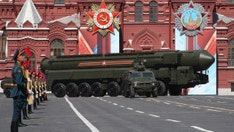
The result is the world’s largest inventory of theater-range missiles, backed by hardened underground facilities, mobile launchers and rapid shoot-and-scoot tactics designed to overwhelm U.S. defenses.

Despite China’s numerical edge, American forces still hold advantages Beijing has not yet matched — particularly in targeting and survivability. 

U.S. missiles, from Tomahawks to SM-6s to future hypersonic weapons, are tied into a global surveillance network the People’s Liberation Army cannot yet replicate. American targeting relies on satellites, undersea sensors, stealth drones and joint command tools matured over decades of combat experience.

‘The Chinese have not fought a war since the 1970s,’ Jones said. ‘We see lots of challenges with their ability to conduct joint operations across different services.’ 

The U.S., by contrast, has built multi-domain task forces in the Pacific to integrate cyber, space, electronic warfare and precision fires — a level of coordination analysts say China has yet to demonstrate.

Jones said China’s defense industry also faces major hurdles. 

‘Most of (China’s defense firms) are state-owned enterprises,’ he said. ‘We see massive inefficiency, the quality of the systems … we see a lot of maintenance challenges.’

Still, the United States faces a near-term problem of its own: missile stockpiles.

‘We still right now … would run out (of long-range munitions) after roughly a week or so of conflict over, say, Taiwan,’ Jones said.

Washington is trying to close that gap by rapidly expanding production of ground-launched weapons. New Army systems — Typhon launchers, high mobility artillery rocket system, batteries, precision strike missiles and long-range hypersonic weapons with a range exceeding 2,500 kilometers — are designed to hold Chinese forces at risk from much farther away.

Heginbotham said the shift is finally happening at scale. 

‘We’re buying anti-ship missiles like there’s no tomorrow,’ he said.

If current plans hold, U.S. forces will field roughly 15,000 long-range anti-ship missiles by 2035, up from about 2,500 today.

China’s missile-heavy strategy is built to overwhelm U.S. bases early in a conflict. The United States, meanwhile, relies on layered air defenses: Patriot batteries to protect airfields and logistics hubs, terminal high altitude area defense (THAAD) interceptors to engage ballistic missiles at high altitude, and Aegis-equipped destroyers that can intercept missiles far from shore.

Heginbotham warned the U.S. will need to widen that defensive mix. 

‘We really need a lot more and greater variety of missile defenses and preferably cheaper missile defenses,’ he said.

One of Washington’s biggest advantages is its ability to conduct long-range strikes from beneath the ocean. U.S. submarines can fire cruise missiles from virtually anywhere in the Western Pacific, without relying on allied basing and without exposing launchers to Chinese fire — a degree of stealth China does not yet possess.

Command integration is another area where Beijing continues to struggle. American units routinely train in multi-domain operations that knit together air, sea, cyber, space and ground-based fires. 

Jones and Heginbotham both noted that the People’s Liberation Army has far less experience coordinating forces across services and continues to grapple with doctrinal and organizational problems, including the dual commander–political commissar structure inside its missile brigades.

Alliances may be the most consequential difference. Japan, the Philippines, Australia and South Korea provide depth, intelligence sharing, logistics hubs and potential launch points for U.S. forces. 

China has no comparable network of partners, leaving it to operate from a much narrower geographic footprint. In a missile war, accuracy, integration and survivability often matter more than sheer volume — and in those areas the United States still holds meaningful advantages.

At the heart of this competition is geography. Missiles matter less than the places they can be launched from, and China’s ability to project power beyond its coastline remains sharply constrained.

‘They’ve got big power-projection problems right now,’ Jones said. ‘They don’t have a lot of basing as you get outside of the first island chain.’

The United States faces its own version of that challenge. Long-range Army and Marine Corps fires require host-nation permission, turning diplomacy into a form of firepower. 

‘It’s absolutely central,’ Heginbotham said. ‘You do need regional basing.’

Recent U.S. agreements with the Philippines, along with expanded cooperation with Japan and Australia, reflect a push to position American launchers close enough to matter without permanently stationing large ground forces there.

A U.S.–China land conflict would not involve armored columns maneuvering for territory. The decisive question is whether missile units on both sides can fire, relocate and fire again before being targeted.

China has invested heavily in survivability, dispersing its brigades across underground bunkers, tunnels and hardened sites. Many can fire and relocate within minutes. Mobile launchers, decoys and deeply buried storage complexes make them difficult to neutralize.

U.S. launchers in the Pacific would face intense Chinese surveillance and long-range missile attacks. After two decades focused on counterterrorism, the Pentagon is now reinvesting in deception, mobility and hardened infrastructure — capabilities critical to surviving the opening stages of a missile war.

Any U.S. intervention in a Taiwan conflict would also force Washington to confront a politically charged question: whether to strike missile bases on the Chinese mainland. Doing so risks escalation; avoiding it carries operational costs.

‘Yes … you can defend Taiwan without striking bases inside China,’ Heginbotham said. ‘But you are giving away a significant advantage.’

Holding back may help prevent the conflict from widening, but it also allows China to keep firing. 

‘It’s a reality of conflict in the nuclear age that almost any conflict is gonna be limited in some ways,’ Heginbotham said. ‘Then the question becomes where those boundaries are drawn, can you prevent it from spreading? What trade-offs you’re willing to accept?’

A U.S.–China clash on land would not be fought by massed armies. It would be a missile war shaped by geography, alliances and survivability — a contest where political access and command integration matter as much as raw firepower.

For the United States, the challenge is clear: build enough long-range missiles, secure the basing needed to use them and keep launchers alive under fire. For China, the question is whether its vast missile arsenal and continental depth can offset weaknesses in coordination, command structure and real-world combat experience.

The side that can shoot, relocate and sustain fire the longest will control the land domain — and may shape the outcome of a war in the Pacific.

This is the third installment of a series comparing U.S. and Chinese military capabilities. Feel free to check out earlier stories comparing sea and air capabilities.


This post appeared first on FOX NEWS

The Trump administration’s latest offensive move against Venezuela, the seizure of a tanker carrying U.S.-sanctioned oil, has triggered predictable outrage from Venezuelan President Nicolás Maduro’s government. 

But behind the rhetorical fire, analysts say the regime has few practical ways to hit back without doing even more damage to itself.

Experts say that Maduro could target U.S. oil interests in Venezuela, but doing so would almost certainly inflict more pain on his own cash-starved regime than on the United States.

Maduro could also halt U.S.-chartered deportation flights but again would be harming his own interests, experts say. 

‘Venezuelans are just leaving the country because of the terrible conditions the regime has created,’ said Connor Pfeiffer, a Western Hemisphere analyst at FDD Action. ‘By having people come back, even if they’re on U.S. charter deportation flights, it kind of counters that narrative.’

Western oil firms have significantly decreased their presence in Venezuela, home to world’s largest proven oil reserves, in recent years due to sanctions. 

But U.S.-owned Chevron does still maintain a license to operate there, on the condition that the Maduro regime does not financially benefit from its operations. Instead, Chevron hands over to Maduro half of its oil production as payment, according to multiple reports.

‘Chevron’s operations in Venezuela continue in full compliance with laws and regulations applicable to its business, as well as the sanctions frameworks provided for by the U.S. government,’ a Chevron spokesperson told Fox News Digital.  

Imports of Venezuelan crude have declined to roughly 130,000 barrels per day (bpd) to 150,000 bpd in recent months, below the nearly 300,000 bpd imported under the prior petroleum licensing regime under the Biden administration. Most of Venezuela’s exports are now routed to Asia, with the bulk landing in China through intermediaries, according to data from Kpler. 

Despite that flow of crude, analysts say the idea of Caracas striking back at Chevron is more potent as a talking point than as a viable policy option.

Shutting down or seizing the company’s operations would instantly cut off one of the few lifelines still feeding Venezuela’s collapsing oil sector. It also would risk triggering a swift and politically difficult American response, including a full reinstatement of the sanctions relief the regime has quietly relied on.

Pfeiffer noted that the Maduro government has been ‘very supportive of Chevron continuing to operate’ because the arrangement provides tens of thousands of barrels a day of oil with minimal investment from Venezuelan-owned Petróleos de Venezuela, S.A. Other analysts say that reality sharply limits Maduro’s room to maneuver, and that any attack on Chevron would strike at his own revenue stream first.

Another theoretical lever — military or maritime escalation — is widely viewed as even less credible. Venezuela has taken delivery of small Iranian-built fast attack craft equipped with anti-ship missiles, a fact that has fueled speculation Maduro could threaten U.S. or allied vessels.

But Venezuela’s navy suffers from years of maintenance failures and lacks the ability to sustain operations against American forces deployed in the Caribbean. Any aggressive move at sea would almost certainly invite a U.S. military response the regime is in no position to absorb.

Diplomatically, Caracas could suspend remaining channels with Washington or file legal challenges in U.S. courts or international forums. Yet previous efforts to contest sanctions-related seizures have gone nowhere, and Venezuela’s relationships in the hemisphere offer limited leverage. 

Regional bodies have little sway over U.S. sanctions law, and even supportive governments in Russia, China or Iran are unlikely to intervene beyond issuing critical statements. Beijing, now the primary destination for Venezuelan crude, has economic interests at stake but few practical avenues to challenge U.S. enforcement actions.

Absent direct military strikes, cracking down on sanctioned oil exports is one of the most potent ways the U.S. can weaken the regime, according to Pfeiffer. 

‘This is one of his main sources of revenue keeping the regime afloat,’ he said. 


This post appeared first on FOX NEWS

The State Department is so far refusing to comment on a growing corruption crisis engulfing the Balkan nation of Albania, a vital U.S. ally in the region. 

Following an Albanian court’s decision to remove Deputy Prime Minister Belinda Balluku from her position on allegations she interfered in two construction bids, socialist Prime Minister Edi Rama took the issue to the country’s Constitutional Court, which on Friday reinstated Balluku until a ‘final decision’ could be made, according to media reports.

The Special Anti-Corruption and Organized Crime Structure (SPAK) issued a criminal indictment against Balluku on Oct. 31, alleging she had been improperly influenced in her decision to favor one company in a tender for the construction of a 3.7-mile tunnel in southern Albania, Reuters reported. SPAK delivered an additional charge for violating rules in a Tirana road construction project on Nov. 21, the date when Balluku was removed from office.

The day before her November court appearance, Balluku told the country’s parliament the accusations against her amounted to ‘mudslinging, insinuations, half-truths and lies.’

As the second member of Rama’s cabinet to face corruption accusations since 2023, her charges have drawn the ire of Rama opponents.

Agim Nesho, former Albanian ambassador to the U.S. and the United Nations, told Fox News Digital that Balluku’s case demonstrates ‘the Rama government shows no sign of assuming moral responsibility or allowing justice the space to act independently. Instead, it appears intent on shielding Ms. Balluku, portraying the judiciary’s actions as an attack on the executive.’

Tirana’s ex-ambassador to Washington argued that ‘influencing the Constitutional Court may be an attempt to set a protective precedent — one that could prove useful if investigators ever seek to involve Mr. Rama himself in their investigations.’

‘It’s becoming increasingly clear that the emperor has no clothes,’ Nesho said, adding that Rama’s rule has amounted to ‘state capture’ as the ‘lack of checks and balances has enabled a recurring system of corruption across multiple of his terms.’

Nesho also claimed that Balluku had pointed to broader involvement of the Rama government in decision-making. Former Deputy Prime Minister Arben Ahmetaj, allegedly on the run after coming under SPAK investigation, has likewise alleged that Rama ‘directed all key decisions on tenders, finances and public assets,’ according to Nesho’s claims.

Ahmetaj’s accusations included allegations that Rama is involved with mafia bosses. Rama responded to these insinuations by saying Ahmetaj ‘should not be taken seriously. Albanian politics is not tainted by the mafia,’ Balkanweb reported.

The U.S. has funded efforts for judicial reforms in Albania to aid its efforts toward accession into the European Union by cutting down on corruption. However, those reforms have led to legal backlogs that have drawn frustration and violence from the public.

Nesho said ‘it is hard to see how a government that behaves like a banana republic gains accession to the EU.’ He said, ‘Albania is a living contradiction in terms of law and order.’ 

While Nesho says Rama’s opposition has been ‘decimated by ‘lawfare’ and the compromising of legal institutions,’ Rama remains in office despite ‘documented multibillion-dollar corruption scandals, documented electoral thefts across multiple voting cycles, and, most concerning, documented links to international drug cartels like the Sinaloa Cartel.’

Allegations that Rama is linked to the Sinaloa Cartel emerged after the prime minister met with Sinaloa-connected Luftar Hysa, who is sanctioned by the U.S. Department of Treasury. Rama told an Albanian news outlet he met with Hysa just once.

With Balluku’s removal, Nesho says ‘public anger is directed not only at [her] but also at the irresponsible conduct of a regime that rules without accountability, abuses public property and finances, and faces no consequences despite society’s reaction.’ 

Nesho said many in the country have given the prime minister the nickname ‘Ramaduro,’ saying it’s ‘a direct comparison to the Venezuelan dictator Nicolás Maduro.’

Rama’s press office told Fox News Digital it declined to comment on Nesho’s allegations against him.

In May 2021, the State Department sanctioned former Prime Minister Sali Berisha over corruption allegations, which forbade him from traveling to the U.S. Fox News Digital asked the State Department whether it had plans to issue similar sanctions against Balluku.

A State Department spokesperson told Fox News Digital, ‘We have no comment on ongoing legal matters.’

The U.S. Embassy in Tirana issued the same response to Fox News Digital when asked whether it would suspend Balluku’s visa as a result of her removal from office.


This post appeared first on FOX NEWS

The Trump administration’s latest offensive move against Venezuela, the seizure of a tanker carrying U.S.-sanctioned oil, has triggered predictable outrage from Venezuelan President Nicolás Maduro’s government. 

But behind the rhetorical fire, analysts say the regime has few practical ways to hit back without doing even more damage to itself.

Experts say that Maduro could target U.S. oil interests in Venezuela, but doing so would almost certainly inflict more pain on his own cash-starved regime than on the United States.

Maduro could also halt U.S.-chartered deportation flights, but again, would be harming his own interests, experts say. 

‘Venezuelans are just leaving the country because of the terrible conditions the regime has created,’ said Connor Pfeiffer, a Western Hemisphere analyst at FDD Action. ‘By having people come back, even if they’re on U.S. charter deportation flights, it kind of counters that narrative.’

Western oil firms have significantly decreased their presence in Venezuela, home to world’s largest proven oil reserves, in recent years due to sanctions. 

But U.S.-owned Chevron does still maintain a license to operate there, on the condition that the Maduro regime does not financially benefit from its operations. Instead, Chevron hands over to Maduro half of its oil production as payment, according to multiple reports.

‘Chevron’s operations in Venezuela continue in full compliance with laws and regulations applicable to its business, as well as the sanctions frameworks provided for by the U.S. government,’ a Chevron spokesperson told Fox News Digital.  

Imports of Venezuelan crude have declined to roughly 130,000 barrels per day (bpd) to 150,000 bpd in recent months, below the nearly 300,000 bpd seen under the prior petroleum licensing regime under the Biden administration. Most of Venezuela’s exports are now routed to Asia, with the bulk ultimately landing in China through intermediaries, according to data from Kplr. 

Despite that flow of crude, analysts say the idea of Caracas striking back at Chevron is more potent as a talking point than as a viable policy option.

Shutting down or seizing the company’s operations would instantly cut off one of the few lifelines still feeding Venezuela’s collapsing oil sector. It also would risk triggering a swift and politically difficult American response, including a full reinstatement of the sanctions relief the regime has quietly relied on.

Pfeiffer noted that the Maduro government has been ‘very supportive of Chevron continuing to operate’ because the arrangement provides tens of thousands of barrels a day of oil with minimal investment from Venezuelan-owned Petróleos de Venezuela, S.A. Other analysts say that reality sharply limits Maduro’s room to maneuver: any attack on Chevron would strike at his own revenue stream first.

Another theoretical lever — military or maritime escalation — is widely viewed as even less credible. Venezuela has taken delivery of small Iranian-built fast attack craft equipped with anti-ship missiles, a fact that has fueled speculation Maduro could threaten U.S. or allied vessels.

But Venezuela’s navy suffers from years of maintenance failures and lacks the ability to sustain operations against American forces deployed in the Caribbean. Any aggressive move at sea would almost certainly invite a U.S. military response the regime is in no position to absorb.

Diplomatically, Caracas could suspend remaining channels with Washington, or file legal challenges in U.S. courts or international forums. Yet previous efforts to contest sanctions-related seizures have gone nowhere, and Venezuela’s relationships in the hemisphere offer limited leverage. 

Regional bodies have little sway over U.S. sanctions law, and even supportive governments in Russia, China, or Iran are unlikely to intervene beyond issuing critical statements. Beijing, now the primary destination for Venezuelan crude, has economic interests at stake but few practical avenues to challenge U.S. enforcement actions.

Absent direct military strikes, cracking down on sanctioned oil exports is one of the most potent ways the U.S. can weaken the regime, according to Pfeiffer. 

‘This is one of his main sources of revenue keeping the regime afloat.’


This post appeared first on FOX NEWS