Author

admin

Browsing

OTC Markets Group Inc. (OTCQX: OTCM), operator of regulated markets for trading 12,000 U.S. and international securities, today announced Rua Gold INC. (TSX: RUA,OTC:NZAUF; OTCQX: NZAUF), an exploration company, has qualified to trade on the OTCQX® Best Market. Rua Gold INC. upgraded to OTCQX from the OTCQB® Venture Market.

Rua Gold INC. begins trading today on OTCQX under the symbol ‘NZAUF.’ U.S. investors can find current financial disclosure and Real-Time Level 2 quotes for the company on www.otcmarkets.com.

The OTCQX Market is designed for established, investor-focused U.S. and international companies. To qualify for OTCQX, companies must meet high financial standards, follow best practice corporate governance, and demonstrate compliance with applicable securities laws. Graduating to the OTCQX Market marks an important milestone for companies, enabling them to demonstrate their qualifications and build visibility among U.S. investors.

About Rua Gold INC.
Rua Gold is an exploration company, strategically focused on New Zealand. With decades of expertise, our team has successfully taken major discoveries into producing world-class mines across multiple continents. The team is now focused on maximizing the asset potential of Rua Gold’s two highly prospective high-grade gold projects. The Company controls the Reefton Gold District as the dominant landholder in the Reefton Goldfield on New Zealand’s South Island with over 120,000 hectares of tenements, in a district that historically produced over 2Moz of gold grading between 9 and 50g/t. The Company’s Glamorgan Project solidifies Rua Gold’s position as a leading high-grade gold explorer on New Zealand’s North Island. This highly prospective project is located within the North Islands’ Hauraki district, a region that has produced an impressive 15Moz of gold and 60Moz of silver. Glamorgan is adjacent to OceanaGold Corporation’s biggest gold mining project, Wharekirauponga.

About OTC Markets Group Inc.
OTC Markets Group Inc. (OTCQX: OTCM) operates regulated markets for trading 12,000 U.S. and international securities. Our data-driven disclosure standards form the foundation of our public markets: OTCQX® Best Market, OTCQB® Venture Market, OTCID™ Basic Market and Pink Limited™ Market. Our OTC Link® Alternative Trading Systems (ATSs) provide critical market infrastructure that broker-dealers rely on to facilitate trading. Our innovative model offers companies more efficient access to the U.S. financial markets.

OTC Link ATS, OTC Link ECN, OTC Link NQB, and MOON ATS™ are each SEC regulated ATS, operated by OTC Link LLC, a FINRA and SEC registered broker-dealer, member SIPC. To learn more about how we create better informed and more efficient markets, visit www.otcmarkets.com.

Media Contact:
OTC Markets Group Inc., +1 (212) 896-4428, media@otcmarkets.com

Primary Logo

News Provided by GlobeNewswire via QuoteMedia

This post appeared first on investingnews.com

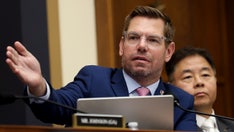
Rep. Eric Swalwell’s, D-Calif., gubernatorial campaign continues to be bankrolled by Keliang ‘Clay’ Zhu despite concerns over his ties to China and the Chinese Communist Party (CCP). 

Zhu donated another $25,000 to Swalwell’s campaign earlier this month after he had already donated $5,000 to Swalwell’s gubernatorial campaign in November and previously donated over $10,000 to his House campaigns. 

Zhu is a partner at DeHeng Law Offices PC, a top Beijing law firm that has deep ties to the Chinese Communist Party, and has also donated thousands to Swalwell’s gubernatorial campaign. The law firm’s website shows their lone ‘Silicon Valley Office,’ located in Pleasanton, Calif., appears to only have a single lawyer who works there – Zhu, who has a history of fighting for Chinese interests in the U.S.  

‘Once again, Congressman Swalwell got caught with his hand in the CCP cookie jar,’ lamented Michael Lucci, a top China expert and the founder and CEO of State Armor Action. ‘It’s simply outrageous that Congressman Swallwell would take even more money from Keliang Zhu after Zhu’s connections to the CCP were made public.’


A Fox News Digital review in January revealed that the law firm Zhu is a partner in was founded as the China Law Office, which was a subsidiary firm established by the CCP’s Ministry of Justice in the early 1990s before being renamed the DeHeng Law Offices in 1995. 

While the firm, which has over two dozen offices in China, portrays itself as independent, the firm and its lawyers continue to have longstanding cooperation with the Chinese government’s departments and major state-owned enterprises. Many of the firm’s China-based attorneys also have a history of working in Chinese politics.

Zhu, who is originally from China, touts several examples of how he has helped Chinese state-owned enterprises and other Chinese companies get a foothold in the United States, according to his bio on the law firm’s website. 

For example, he touts representing an ‘investment fund of a major state-owned enterprise in acquiring majority shares in one data analytics software company in the Silicon Valley,’ which he valued at $100 million. Another bio for Zhu touts how he ‘has assisted Chinese companies and funds to complete more than $9 billion investments in the fields of chips, unmanned vehicles, new energy, artificial intelligence, industrial automation, and biopharmaceuticals in the United States.’

‘On behalf of Chinese enterprises, he has negotiated with the U.S. Department of Commerce, the U.S. Department of Treasury and other organizations for many times and achieved compliance plans, which greatly reduced the compliance risks for Chinese clients in the United States,’ the bio continued.

The bios also indicate Zhu helped advise ‘a governmental investment fund from Shenzhen for its compliance with CFIUS regulations in the U.S.’ and represented ‘WeChat users in a historic lawsuit that sued President Trump and successfully stopped his WeChat ban in 2020.’ 

At the time, Trump’s first administration sounded the alarm over WeChat and said the ‘data collection threatens to allow the Chinese Communist Party access to Americans’ personal and proprietary information’ and was concerned that the CCP would use data to stalk dissenters or control messaging inside the United States, such as launching disinformation campaigns. Similar efforts to restrict WeChat have occurred in countries like Australia and India, according to the White House.

Meanwhile, after a federal judge dismissed a lawsuit intended to stop a Texas law banning Chinese nationals from owning or leasing land in the state, Zhu described the legislation as ‘unfair, unconstitutional and un-American,’ according to AsAmNews, a daily news site focused on Asian-American and Pacific-Islander communities. Zhu similarly expressed disfavor with a Florida law meant to prevent individuals from countries that are foreign adversaries to the United States, such as China, from buying up land.

DeHeng Law Office’s other China-based attorneys have a history of working in Chinese politics as well. This has largely been through the Chinese People’s Political Consultative Conference (CPPCC), which is a ‘key mechanism for multi-party cooperation and political consultation’ under the leadership of the CCP, according to the CPPCC website, and is a crucial tool of the United Front strategy to influence U.S. policy.

For example, Zhixu Wu, who is a ‘Director and Senior Partner’ of the Kunming, China-based office of DeHeng Law Offices, is a member of the ‘Standing Committee of the 13th Kunming Committee of the CPPCC’ and a member ‘of the 12th Yunnan Committee of the CPPCC.’ His bio also says he was previously awarded in 2017 with ‘the title of ‘Excellent League Member’ for the second assistance event of the National Lawyers Service Group,’ which was approved by the ‘Eight Bureau of United Front Work Department of CPC Central Committee, Guidance Department of Lawyer’s Notarization Work of the Ministry of Justice.’

Swalwell’s ties to China have come under scrutiny before, particularly after Chinese national, Christine Fang, also known as ‘Fang Fang,’ gained special access to him and his campaign. She was deemed by U.S. officials to be part of a counterintelligence effort linked to China meant to influence and get close to U.S. political figures.

Swalwell has repeatedly claimed he cut off ties as soon as U.S. intelligence officials warned him of the threat and a congressional ethics investigation into the matter eventually found no wrongdoing on Swalwell’s behalf. However, he was ultimately removed by Republicans from his post on the House Intelligence Committee, with then-House Speaker Kevin McCarthy citing Swalwell’s past run-in with a suspected Chinese spy.

Fox News Digital uncovered a previously unreported 2013 Facebook post by China’s San Francisco consulate last month showing Swalwell touting ‘great potential’ for U.S.-China cooperation during a meeting with a senior CCP diplomat early in his career, which came during the same time period when Swalwell was allegedly targeted by Chinese espionage efforts.

The Facebook post was also ‘liked’ by Fang Fang, Fox News Digital’s review found.

‘First, Swalwell had a fiery romance with Fang Fang, a CCP honeypot. Then he was caught taking campaign money from China’s favorite big law firm. Congressman Swalwell is either totally oblivious to the dangers of flirting with CCP operatives, or he doesn’t care and would take a check from Xi Jinping himself,’ Lucci told Fox News Digital. ‘Congress should pass a law to prohibit campaign cash from Communist China before Swalwell’s sweet tooth has him hunting for another CCP honey pot or cookie jar.’

The Swalwell campaign did not respond to Fox News Digital’s request for comment.

Related Article

Swalwell governor bid hit with residency questions after court filing alleges he doesn’t live in California

This post appeared first on FOX NEWS

President Donald Trump warned that Iran is working to build missiles that could ‘soon reach the United States of America,’ elevating concerns about a weapons program that already places U.S. forces across the Middle East within range.

Iran does not currently possess a missile capable of striking the U.S. homeland, officials say. But its existing ballistic missile arsenal can target major American military installations in the Gulf, and U.S. officials say the issue has emerged as a key sticking point in ongoing nuclear negotiations.

Here’s what Iran can hit now — and how close it is to reaching the U.S.

What Iran can hit right now

Iran is widely assessed by Western defense analysts to operate the largest ballistic missile force in the Middle East. Its arsenal consists primarily of short- and medium-range ballistic missiles with ranges of up to roughly 2,000 kilometers — about 1,200 miles.

That range places a broad network of U.S. military infrastructure across the Gulf within reach.

Among the installations inside that envelope:

  • Al Udeid Air Base in Qatar, forward headquarters for U.S. Central Command.
  • Naval Support Activity Bahrain, home to the U.S. 5th Fleet.
  • Camp Arifjan in Kuwait, a major Army logistics and command hub.
  • Ali Al Salem Air Base in Kuwait, used by U.S. Air Force units.
  • Prince Sultan Air Base in Saudi Arabia.
  • Al Dhafra Air Base in the United Arab Emirates.
  • Muwaffaq Salti Air Base in Jordan, which hosts U.S. aircraft.

U.S. forces have drawn down from some regional positions in recent months, including the transfer of Al Asad Air Base in Iraq back to Iraqi control earlier in 2026. But major Gulf installations remain within the range envelope of Iran’s current missile inventory.

Multiple U.S. officials told Fox News that staffing at the Navy’s 5th Fleet headquarters in Bahrain has been reduced to ‘mission critical’ levels amid heightened tensions. A separate U.S. official disputed that characterization, saying no ordered departure of personnel or dependents has been issued.

At the same time, the U.S. has surged significant naval and air assets into and around the region in recent days. 

The USS Abraham Lincoln Carrier Strike Group is operating in the Arabian Sea alongside multiple destroyers, while additional destroyers are positioned in the eastern Mediterranean, Red Sea and Persian Gulf. 

The USS Gerald R. Ford Carrier Strike Group is also headed toward the region. U.S. Air Force fighter aircraft — including F-15s, F-16s, F-35s and A-10s — are based across Jordan, Saudi Arabia and Bahrain, supported by aerial refueling tankers, early warning aircraft and surveillance platforms, according to a recent Fox News military briefing.

Iran has demonstrated its willingness to use ballistic missiles against U.S. targets before.

In January 2020, following the U.S. strike that killed Islamic Revolutionary Guard Corps Gen. Qassem Soleimani, Iran launched more than a dozen ballistic missiles at U.S. positions in Iraq. Dozens of American service members were later diagnosed with traumatic brain injuries.

That episode underscored the vulnerability of forward-deployed forces within reach of Iran’s missile arsenal.

 Can Iran reach Europe?

Most publicly known Iranian missile systems are assessed to have maximum ranges of around 2,000 kilometers. 

Depending on launch location, that could place parts of southeastern Europe — including Greece, Bulgaria and Romania — within potential reach. The U.S. has some 80,000 troops stationed across Europe, including in all three of these countries.

Reaching deeper into Europe would require longer-range systems than Iran has publicly demonstrated as operational.

Can Iran hit the US?

Iran does not currently field an intercontinental ballistic missile (ICBM) capable of striking the U.S. homeland.

To reach the U.S. East Coast, a missile would need a range of roughly 10,000 kilometers — far beyond Iran’s known operational capability.

However, U.S. intelligence agencies have warned that Iran’s space launch vehicle program could provide the technological foundation for a future long-range missile.

In a recent threat overview, the Defense Intelligence Agency stated that Iran ‘has space launch vehicles it could use to develop a militarily-viable ICBM by 2035 should Tehran decide to pursue the capability.’

That assessment places any potential Iranian intercontinental missile capability roughly a decade away — and contingent on a political decision by Tehran.

U.S. officials and defense analysts have pointed in particular to Iran’s recent space launches, including rockets such as the Zuljanah, which use solid-fuel propulsion. Solid-fuel motors can be stored and launched more quickly than liquid-fueled rockets — a feature that is also important for military ballistic missiles.

Space launch vehicles and long-range ballistic missiles rely on similar multi-stage rocket technology. Analysts say advances in Iran’s space program could shorten the pathway to an intercontinental-range missile if Tehran chose to adapt that technology for military use.

For now, however, Iran has not deployed an operational ICBM, and the U.S. homeland remains outside the reach of its current ballistic missile arsenal.

US missile defenses — capable but finite

The U.S. relies on layered missile defense systems — including Terminal High Altitude Area Defense (THAAD), Patriot and ship-based interceptors — to protect forces and allies from ballistic missile threats across the Middle East.

These systems are technically capable, but interceptor inventories are finite.

During the June 2025 Iran-Israel missile exchange, U.S. forces reportedly fired more than 150 THAAD interceptors — roughly a quarter of the total the Pentagon had funded to date, according to defense analysts.

The economics also highlight the imbalance: open-source estimates suggest Iranian short-range ballistic missiles can cost in the low hundreds of thousands of dollars apiece, while advanced U.S. interceptors such as THAAD run roughly $12 million or more per missile.

Precise inventory levels are classified. But experts who track Pentagon procurement data warn that replenishing advanced interceptors can take years, meaning a prolonged, high-intensity missile exchange could strain stockpiles even if U.S. defenses remain effective.

Missile program complicates negotiations

The ballistic missile issue has also emerged as a key fault line in ongoing diplomatic efforts between Washington and Tehran.

Secretary of State Marco Rubio has said Iran’s refusal to negotiate limits on its ballistic missile program is ‘a big problem,’ signaling that the administration views the arsenal as central to long-term regional security.

While current negotiations are focused primarily on Iran’s nuclear program and uranium enrichment activities, U.S. officials have argued that delivery systems — including ballistic missiles — cannot be separated from concerns about a potential nuclear weapon.

Iranian officials, however, have insisted their missile program is defensive in nature and not subject to negotiation as part of nuclear-focused talks.

As diplomacy continues, the strategic reality remains clear: Iran cannot currently strike the U.S. homeland with a ballistic missile. But U.S. forces across the Middle East remain within range of Tehran’s existing arsenal — and future capabilities remain a subject of intelligence concern.

Related Article

Iran announces test of new naval air defense missile in Strait of Hormuz as US military buildup continues

This post appeared first on FOX NEWS
The Department of Justice on Thursday sued five additional states, requesting that their election data be shared with the Trump administration amid its push for access to voter rolls from states across the country.

Four states President Donald Trump carried in the last three presidential elections — Utah, Oklahoma, Kentucky and West Virginia — were slapped with the latest legal action, along with New Jersey.

The DOJ has now sued more than two dozen states in efforts to access election records, with most of the states being controlled by Democrats.

Assistant Attorney General for Civil Rights Harmeet Dhillon suggested that state election officials were ‘choosing to fight us in court rather than show their work’ with voter roll access.

‘We will not be deterred, regardless of party affiliation, from carrying out critical election integrity legal duties,’ she said in a statement on Thursday.

‘The Justice Department will continue to fulfill its oversight role dutifully, neutrally, and transparently wherever Americans vote in federal elections,’ Dhillon said.

The Trump administration has intensified its efforts to take over elections in recent months even though the U.S. Constitution gives states, not federal officials, the authority to run elections. Most states have their secretary of state oversee elections.

Access to election information varies by state, but election officials generally release redacted versions of their voter rolls to the public and government agencies, according to Politico. However, the DOJ has demanded that states give the federal government unredacted files, including voters’ private data such as their driver’s license numbers and the last four digits of their Social Security numbers.

‘Accurate, well-maintained voter rolls are a requisite for the election integrity that the American people deserve,’ Attorney General Pam Bondi said in a statement. ‘This latest series of litigation underscores that this Department of Justice is fulfilling its duty to ensure transparency, voter roll maintenance, and secure elections across the country.’

The DOJ has argued the states are in violation of the Civil Rights Act of 1960, which affirms that the attorney general can request voter records from election officials, but state officials contend that the department is seeking an escalation of the administration’s wider attempts to become involved in state election proceedings.

‘Neither state nor federal law entitles the Department of Justice to collect private information on law-abiding American citizens. Utahns can be assured that my office will always follow the Constitution and the law, protect voters’ rights, and administer free and fair elections,’ Utah Lt. Gov. Deidre Henderson said in a statement to Politico.

Kentucky Secretary of State Michael Adams also criticized the lawsuit, saying the state’s elections were ‘a national success story.’

‘Kentucky law protects voters’ personal information, and I will not voluntarily commit a data breach by providing Kentuckians’ personal data to the federal bureaucracy unless a court order tells me to,’ he said in a statement to the outlet.

West Virginia Secretary of State Kris Warner’s office said it had not yet been served with a lawsuit.

‘Regardless, I think Secretary Warner’s comments to the DOJ were pretty clear. Bring it on! The federal government is not going to get any personal information on West Virginia voters as long as Kris Warner is Secretary of State,’ spokesperson Mike Queen said in a statement to Politico.

Earlier this month, the FBI executed a search warrant at an election office in Fulton County, Georgia, seizing ballots and other voting records from 2020, according to local officials. The Peach State went to former President Joe Biden in 2020, but Trump carried the state in 2024.

In efforts to ensure only American citizens are voting, Trump has also urged Congress to pass the SAVE America Act, which would require voters in federal elections to prove citizenship by providing a photo ID and other documentation, such as a passport or birth certificate.

Related Article

Georgia
Georgia’s Fulton County files motion seeking return of 2020 election materials seized by FBI

This post appeared first on FOX NEWS

As the Trump administration appoints Vice President JD Vance to lead a nationwide ‘War on Fraud,’ a coalition of conservative state financial officers says it has already uncovered and stopped billions in taxpayer waste and is pledging to partner with the White House to root out corruption nationwide.

In a Thursday letter to the White House, the State Financial Officers Foundation (SFOF) praised President Donald Trump’s focus on what he called fraud scandals that have ‘resulted in tens of billions of dollars being stolen from American taxpayers,’ writing that such corruption ‘shreds the fabric of a nation’ 

SFOF CEO OJ Oleka told Vance that the group’s 40 conservative state treasurers, auditors and comptrollers across 28 states stand ready to support the administration’s anti-fraud mission, noting they collectively oversee more than $3 trillion in state funds.

The letter accompanied SFOF’s inaugural 2025 Oversight Report, which claims that affiliated state financial officers safeguarded more than $28 billion of waste, fraud, and abuse in 2025 alone.

The report highlights some of the most egregious examples within that $28 billion including in Florida, where Chief Financial Officer Blaise Ingoglia just under $2 billion in excessive spending and in Kentucky, where Auditor Allison Ball found more than $836 million in improper Medicaid payments.

Medicaid fraud has been of particular interest to the Trump administration given the massive fraud scandal that has unfolded in Minnesota and Vance said on Wednesday the administration has ‘decided to temporarily halt certain amounts of Medicaid funding that are going to the state of Minnesota in order to ensure that the state of Minnesota takes its obligations seriously to be good stewards of the American people’s tax money.’

The report also highlights North Carolina, where it says State Auditor Dave Boliek discovered more than $1 billion in lapsed salaries from long term vacancies in the state. Additionally, Utah auditor Tina Cannon identified more than $518 million in fraud, waste and abuse across agencies and nonprofits receiving state and federal funds.

In his letter, Oleka told Vance that SFOF’s members are ‘allies already on the battlefield’ and stand ready to assist the administration in protecting taxpayer dollars.

‘The American people deserve nothing less,’ he wrote.

SFOF argues that state-level financial watchdogs, often elected independently of governors and legislatures, are uniquely positioned to expose mismanagement and enforce fiscal discipline.

With billions already identified at the state level, the group says a coordinated federal-state approach could dramatically expand the scope of fraud detection nationwide, potentially reshaping how taxpayer dollars are safeguarded across the country.

‘By working together, we can protect our nation’s treasure to the fullest extent against every foe and every plot to endanger it,’ Oleka wrote.

Related Article

JD Vance spearheads
JD Vance spearheads ‘war on fraud,’ promises to root out taxpayer money ‘stolen’ by illegal immigrants

This post appeared first on FOX NEWS

Former President Bill Clinton will testify to the House Oversight Committee in a high-stakes deposition for the committee’s probe into Jeffrey Epstein on Friday.

The closed-door meeting is expected to take place at 11 a.m. at the Chappaqua Performing Arts Center in Westchester County, N.Y.

Chappaqua has been the Clintons’ primary residence since they left the White House at the end of the former president’s tenure.

Republicans have been eager to question Bill Clinton about his ties to Epstein for months as the committee has gone back and forth with his lawyers about terms of the interview.

Both Democrats and Republicans are expected to grill Clinton, as well as committee staff on both sides.

His sitdown comes a day after his wife, former Secretary of State Hillary Clinton, appeared before the panel for her own lengthy deposition in the Epstein probe.

However, House Oversight Chairman James Comer, R-Ky., told reporters on Thursday that he anticipated Bill Clinton’s deposition would be ‘even longer’ than his wife’s.

He also stressed Thursday that neither of the Clintons are being accused of wrongdoing tied to Epstein.

‘No one’s accusing, at this moment, the Clintons of any wrongdoing. They’re going to have due process,’ Comer said. ‘But we have a lot of questions, and the purpose of the whole investigation is to try to understand many things about Epstein.’

Both depositions will be released on video sometime later.

Hillary Clinton told lawmakers in her opening statement that she could not recall any contact with Epstein, nor did she have any more information for the committee past what she sent in a Jan. 13 statement.

She also criticized the probe’s attention on her as a ‘fishing expedition’ and accused Republicans of trying to use her to pull attention from Trump.

‘A committee endeavoring to stop human trafficking would seek to understand what specific steps are needed to fix a system that allowed Epstein to get away with his crimes in 2008,’ she told the panel, according to her opening remarks.

‘But that’s not happening. Instead, you have compelled me to testify, fully aware that I have no knowledge that would assist your investigation, in order to distract attention from President Trump’s actions and to cover them up despite legitimate calls for answers.’

Unlike his wife, however, Bill Clinton had a well-documented relationship with Epstein before his federal probes related to prostitution of minors and sex trafficking.

Bill Clinton’s name and photo appear numerous times in documents released by the federal government on Epstein, and flight records show he did ride Epstein’s plane.

But neither he nor Hillary Clinton have been implicated in Epstein’s crimes.

The committee has also interviewed two former Trump administration officials, ex-Attorney General Bill Barr and ex-Labor Secretary Alex Acosta.

Their testimonies come weeks after the House nearly voted on holding both Clintons in contempt of Congress for defying Comer’s subpoena. House leaders dropped the effort after the Clintons said they would comply.

Related Article

Democrats dodge questions as House GOP prepares contempt votes against the Clintons

This post appeared first on FOX NEWS

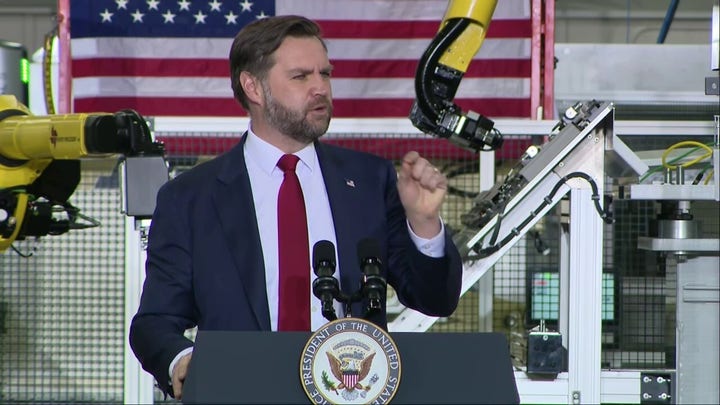
As President Donald Trump pressures Iran to abandon its nuclear ambitions amid rising tensions, Vice President JD Vance told The Washington Post there is ‘no chance’ the U.S. will enter a yearslong war in the Middle East.

‘The idea that we’re going to be in a Middle Eastern war for years with no end in sight — there is no chance that will happen,’ Vance said on Thursday, according to the outlet.

‘I think we all prefer the diplomatic option,’ he said, according to the Post. ‘But it really depends on what the Iranians do and what they say.’

‘I do think we have to avoid repeating the mistakes of the past. I also think that we have to avoid overlearning the lessons of the past. Just because one president screwed up a military conflict doesn’t mean we can never engage in military conflict again. We’ve got to be careful about it, but I think the president is being careful,’ Vance told the outlet.

Fox News Digital reached out to Vance’s office and the White House on Friday morning.

Trump said during his State of the Union address on Tuesday night, ‘My preference is to solve this problem through diplomacy. But one thing is certain: I will never allow the world’s number-one sponsor of terror — which they are by far — to have a nuclear weapon.’

Vance, after SOTU, says

In a Truth Social post regarding Iran on Monday, the president said that he ‘would rather have a Deal than not but, if we don’t make a Deal, it will be a very bad day for that Country and, very sadly, its people, because they are great and wonderful, and something like this should never have happened to them.’

Related Article

Iran rejects Trump demands despite
Iran rejects Trump demands despite ‘significant progress’ in nuclear talks

This post appeared first on FOX NEWS

On February 11, the Congressional Budget Office (CBO) published its annual Budget and Economic Outlook report, covering 2026 to 2036. Among the projections, the report found that Social Security’s Old-Age and Survivors Insurance will be unable to pay full benefits in 2032 (a year earlier than projected in last year’s report). This is due to the higher projected cost-of-living adjustments and lower projected revenues. To put that in perspective, Social Security will be unable to pay full benefits before the program turns 100. 

Social Security is in desperate need of reform, but doing so is easier said than done. Perhaps the worst cultural consequence of Social Security is that this unsustainable program is pitting generations of Americans against one another. The young support benefit cuts while the old support higher payroll taxes. Successful reform means balancing the interests between these generational divides to prevent political backlashes, which may jeopardize future reforms. 

What Social Security Is and Is Not 

In 2007, AIER published “What You Need to Know About Social Security.” This Economic Education Bulletin outlines Social Security’s history, some myths and realities about the program, as well as options for reform and what individuals planning for retirement could do in the meantime. Many of the bulletin’s lessons are still applicable. 

Chief among them is the nature of the program. Social Security is not a system of individual retirement accounts. Nor is it a defined benefit pension program. It is a pay-as-you-go structure, where payroll taxes collected from working Americans go to fund benefit payments for the elderly. Despite being sold to Americans as an earned benefit, the true nature of the program is much closer to a Ponzi scheme than many care to admit. 

This means that the program relies upon working Americans to pay into the system outnumbering retirees. That number has dwindled, and it currently sits at 2.7 workers per Social Security recipient, an unsustainable ratio. Minor adjustments are not a feasible solution. The program needs structural reform. 

Possible Reforms  

Properly reforming Social Security requires a structural transition to a system based on ownership, savings, and investment. Universal Savings Accounts (USAs) can help anchor the transition if they are paired with policies that address the generational divide over the program. 

One such proposal made by the AIER Bulletin, as well as others, is a transition to a flat benefit. While this would drastically improve the program’s solvency, it risks immense political backlash. Current retirees and those near-retirement are planning on specific levels of benefits. Changing those overnight will likely result in voters 50 and over (one of the largest and fastest-growing voting blocs) punishing politicians who supported reforms by supporting challengers in primary and general elections. Furthermore, that punishment at the polls will make incumbents reluctant to offer other reforms in the future.  

To mitigate this political risk, policymakers can consider cohort differentiation. This would mean that current retirees and near-retirees receive all accrued benefits, financed transparently through general revenues, while the youngest cohorts transition out of the traditional program entirely and have access to USAs, which provide them with control over their finances and the portability to take those savings with them regardless of career or location changes. 

Additionally, Social Security’s Old Age Insurance could be separate from Disability Insurance and Survivors’ Insurance. The combined OASDI framework encourages benefit creep, especially as old-age insurance costs increase. Stand-alone programs can help prevent the re-expansion of the old-age system through cross-subsidization. 

The AIER Bulletin also notes that, while total privatization of retirement savings would be ideal, offering a smaller, flat benefit could encourage people to save more. Furthermore, the bulletin recommends encouraging saving through tax policies that incentivize savings over consumption (such as a decrease in reliance on income taxes). Additionally, policymakers can make it easier for Americans to save by replacing the myriad savings vehicles in the tax code with a broader universal savings account system without restrictions on how that money is used. 

There is also the possibility of devolving the program to state governments and having states manage these funds like defined benefit pensions. This would enable benefits to be connected to earnings. One such drawback, however, is state management of defined benefit pension plans is mixed at best. A defined benefit system at the federal level may exacerbate the knowledge and incentive problems that occur at the state level. 

Finally, long-term success will be determined by the institutional constraints in place. These include hard cohort cutoffs and a supermajority requirement for benefit expansions. Without such constraints, we will likely see a reversion to what we have now, with the same empty promises that the system would be fully self-funded, only to saddle Americans with massive tax obligations. 

Institutional Reform — or Generational Reckoning

Social Security reform is no longer a choice; it is the only way to avoid a very unfortunate future. Ignoring that reality will mean higher taxes on working Americans and benefit cuts to retirees. Enacting sustainable policy solutions can help avoid disaster without leaving Americans, young and old, destitute. The best hedge against the failures of the status quo, however, is to take control of one’s plans for the future instead of expecting the government to manage the future for us.

What US industry is the most subsidized and regulated by the federal government? If you answered nuclear power, you are correct. 

As a result, the 70-year “Atoms for Peace” program represents the most expensive failure (malinvestment) in US business with a history of uncompleted projects and massive cost overruns, as well as future decommissioning liabilities.  

Still, President Trump is all-in with nuclear, setting a goal of ten new reactors in construction by 2030 and a quadrupling of total US capacity by 2050. Biden was bullish too, and George W. Bush had his turn at a “nuclear renaissance.” Each failed, but in the nuclear space, hope springs eternal. 

Commercial fission began in the 1950s amid government and scientific fanfare. The promise was virtually limitless, emission-free, affordable electricity compared to coal-fired generation. But the technology was experimental and encumbered by a fear of radioactive contamination. Electric utilities and municipalities resisted. It would take open-ended (federal) research and development, insurance subsidies, and free enriched uranium, and rate-base returns under state regulation, to birth nuclear power.  

Scale economies and learning-by-doing were expected by vendors General Electric, Westinghouse, and others. Their turnkey projects guaranteeing cost and delivery, which produced a “bandwagon effect” of new orders in the 1960s, backfired. Almost half of the plant cost had to be absorbed by vendor stockholders. Cost-plus contracts would ensue with captive ratepayers in tow. 

In the 1970s, cost overruns, completion delays, and cancellations marked the end of the nuclear boom. With the Three Mile Island accident in 1979, a regulatory ratchet accelerated. “Federal regulations used to take up two volumes on our shelves,” one participant told Congress. “We now have 20 volumes to explain how to use the first two volumes.” Legalistic, overly prescriptive, retroactive rules now came from adversarial hearings and “the way of the institutions of government.” 

At the same time, turbine engines fueled by oil and natural gas took off. Cogeneration and combined cycle plants set a new competitive standard for nuclear, not only coal. Such technology used far fewer parts and was much more serviceable than a fission plant. 

Today, 94 active reactors produce dependable power to reinforce a grid weakened by intermittent wind and solar. With high up-front capital expense sunk, marginal-cost economics supports their continued operation. But for new capacity, large necessary government subsidies confirm an enduring reality: nuclear fission is the most complicated, fraught, expensive way to boil water to produce steam to drive electrical turbines

Hyperbole abounds about new reactor design. Small Modular Reactors (SMRs) are newsworthy, but is a turnkey project being offered to ensure timeliness and performance? Or does the fine print of the contracts offer the buyer “outs”? This question should be asked of those promising to buy or develop gigawatts of new nuclear capacity in the next decade. 

What now for nuclear policy to enable affordability and reliability? In a nutshell, the twin evils of overregulation and oversubsidization should give way to a real free market. The Nuclear Regulatory Commission should yield its civilian responsibilities to the best practices established by the Institute for Nuclear Power Operations, an industry collaborative created after Three Mile Island. Federal insurance via the Price-Anderson Act of 1957 (extended seven times to date) should be replaced by private insurance per each “safe” reactor.  

Federal grants, loans, and tax preferences for nuclear should end. Antitrust constraints on industry collaboration should cease, and waste storage and decommissioning should be the responsibility of owners. 

Nuclear fission today is an essential component of a reliable electric grid. But economics and incentives matter, and U.S. taxpayers and ratepayers should not bear the costs of an uncompetitive technology. Neutral government is best for all competing energy sources, after all, in contrast to the energy designs of both Republicans and Democrats. 

Read more from this author:  Nuclear Power: A Free Market Approach

Pakistan’s defense minister declared an ‘open war’ with Afghanistan on Friday after the two sides exchanged heavy fire along their shared border on Thursday, according to multiple reports.

Defense Minister Khawaja Mohammad Asif said in a post on X that Pakistan had hoped the Taliban would bring stability after NATO’s withdrawal, but instead accused the group of turning Afghanistan ‘into a colony of India’ and ‘exporting terrorism.’

‘Our patience has now run out. Now it is open war between us,’ he said.

The clashes came after the Taliban said it launched retaliatory strikes on Pakistani military positions, while Islamabad said it was responding to unprovoked fire in the area.

Reuters reported that both forces clashed for more than two hours along their roughly 2,600-kilometer (1,615-mile) border, threatening a ceasefire that had been agreed to in 2025 after fighting.

Thursday’s flare-up came after Pakistani forces carried out airstrikes inside Afghanistan earlier this week, with Taliban officials saying the strikes killed at least 18 people, Reuters reported Feb. 24.

Pakistan said it targeted militant hideouts and rejected claims that civilians were targeted.

The Taliban described an ‘extensive’ military operation against Pakistani army positions in response to the strikes.

‘In response to repeated provocations, extensive preemptive operations have been launched against Pakistani military positions along the Durand Line,’ Taliban spokesperson Zabihullah Mujahid wrote on X.

 In a separate statement, he said ‘specialized laser units’ were operating at night.

Taliban military spokesman Mawlawi Wahidullah Mohammadi also said in a video shared with Reuters that the ‘retaliatory operation’ began Thursday evening.

Mujahid said ‘numerous’ Pakistani soldiers had been killed and some were also captured. Reuters said it could not independently verify those claims.

In another post on X, Mujahid said, ‘The cowardly Pakistani army has bombed some places in Kabul, Kandahar, and Paktia. Praise be to God, no one was harmed.’  

Pakistan has since rejected the Taliban’s account. 

The Ministry of Information and Broadcasting said on X that the Afghanistan Taliban’s ‘unprovoked action along the Pakistan-Afghanistan border’ was given an ‘immediate and effective response.’

The ministry said Taliban forces had ‘miscalculated and opened unprovoked fire on multiple locations’ along the border in Khyber Pakhtunkhwa province.

The post said the fire was being met with an ‘immediate and effective response by Pakistan’s security forces.’

‘Early reports confirm heavy casualties on the Afghan side with multiple posts and equipment destroyed,’ the ministry said. 

‘Pakistan will take all necessary measures to ensure its territorial integrity and the safety and security of its citizens.’

Pakistani security sources also told Reuters that 22 Taliban personnel had been killed, and several quadcopters were shot down.

The fighting follows Pakistan’s accusations that the Taliban is sheltering TTP militants behind a surge in violence and suicide attacks. 

The Afghan Taliban denies the claim. A day before February’s strikes, Pakistani officials said they had ‘irrefutable evidence’ that militants were launching attacks from Afghan soil, Reuters reported.

Related Article

Thailand launches airstrikes along Cambodia border as tensions escalate

This post appeared first on FOX NEWS