Author

admin

Browsing

Osisko Metals Incorporated (the ‘Company or ‘Osisko Metals’) (TSX: OM,OTC:OMZNF; OTCQX: OMZNF; FRANKFURT: 0B51) is pleased to announce the appointment of Ms. Victoria Vargas to its board of directors, effective immediately.

Ms. Vargas brings over 25 years of extensive knowledge of the mining industry and North American capital markets, and a wealth of expertise in environmental, social and governance. She has a Bachelor of Arts (Hons. Economics) from Lima (Peru) University and an MBA Finance from Simon Bolivar University in Venezuela.

Ms. Vargas currently serves as the Chief Financial Officer of VMS Mining and is a director and chair of the corporate government relations committee of Lithium Universe Canada. She previously served as Vice President Investor Relations for Minera Alamos Inc., and as a director, chair of the corporate governance and nominating committee and a member of the audit committee of Silver Mountain Resources Inc.

About Osisko Metals

Osisko Metals Incorporated is a Canadian exploration and development company creating value in the critical metals sector, with a focus on copper and zinc. The Company acquired a 100% interest in the past-producing Gaspé Copper mine from Glencore Canada Corporation in July 2023. The Gaspé Copper mine is located near Murdochville in Québec‘s Gaspé Peninsula. The Company is currently focused on resource expansion of the Gaspé Copper system, with current Indicated Mineral Resources of 824 Mt averaging 0.34% CuEq and Inferred Mineral Resources of 670 Mt averaging 0.38% CuEq (in compliance with NI 43-101). For more information, see Osisko Metals’ November 14, 2024 news release entitled ‘Osisko Metals Announces Significant Increase in Mineral Resource at Gaspé Copper’. Gaspé Copper hosts the largest undeveloped copper resource in eastern North America, strategically located near existing infrastructure in the mining-friendly province of Québec.

In addition to the Gaspé Copper project, the Company is working with Appian Capital Advisory LLP through the Pine Point Mining Limited joint venture to advance one of Canada‘s largest past-producing zinc mining camps, the Pine Point project, located in the Northwest Territories. The current mineral resource estimate for the Pine Point project consists of Indicated Mineral Resources of 49.5 Mt averaging 5.52% ZnEq and Inferred Mineral Resources of 8.3 Mt averaging 5.64% ZnEq (in compliance with NI 43-101). For more information, see Osisko Metals‘ June 25, 2024 news release entitled ‘Osisko Metals releases Pine Point mineral resource estimate: 49.5 million tonnes of indicated resources at 5.52% ZnEq’. The Pine Point project is located on the south shore of Great Slave Lake, NWT, close to infrastructure, with paved road access, an electrical substation and 100 kilometres of viable haul roads.

For further information on this news release, visit www.osiskometals.com or contact:

Don Njegovan, President
Email: info@osiskometals.com
Phone: 416-500-4129 

Primary Logo

News Provided by GlobeNewswire via QuoteMedia

This post appeared first on investingnews.com

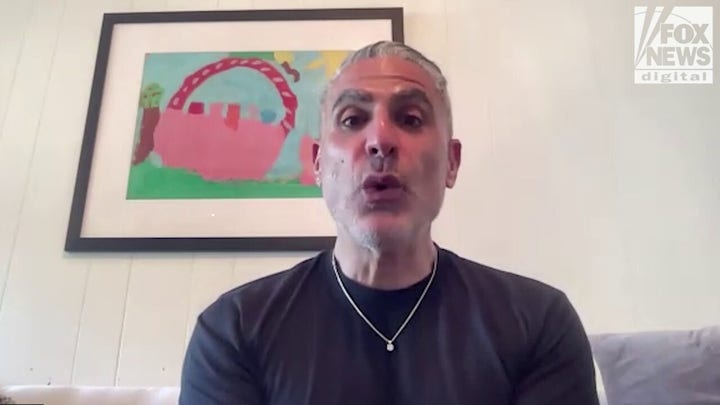
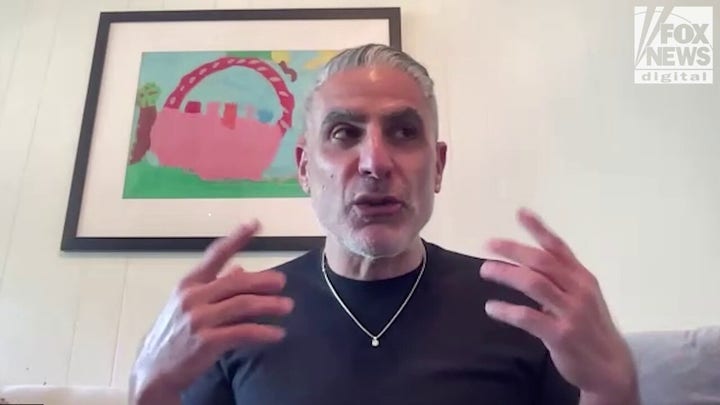
‘Shahs of Sunset’ star Reza Farahan is speaking out about the United States and Israel’s military action against Iran. 

During an interview with Fox News Digital, the Iranian-born 52-year-old reality star, who authored the forthcoming book ‘Memoirs of a Gay Shah,’ explained that he and his family came to America on a family trip in 1977 and ended up staying after unrest in Iran escalated into revolution.

During the 1979 Iranian Revolution, the country’s former monarch, Shah Mohammad Reza Pahlavi, was overthrown and replaced by Ayatollah Ruhollah Khomeini, who established an Islamic Republic that transformed the country into a theocratic state governed by strict religious rule. 

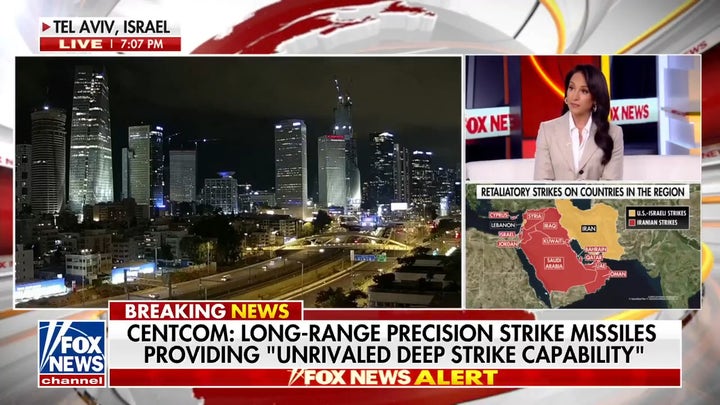
Last weekend, U.S. President Donald Trump and Israeli Prime Minister Benjamin Netanyahu launched coordinated strikes on Iranian military and nuclear targets, during which Iran’s Supreme Leader Ayatollah Ali Khamenei was killed. Iran retaliated with missile and drone strikes against Israel and U.S. military bases in several Middle Eastern states. 

The conflict comes on the heels of widespread anti-government protests in Iran that erupted in December 2025 and were met with brutal crackdowns by the government that left thousands dead.

During an interview with Fox News Digital, Farahan shared his insight into how Iranians living in the country have reacted to the U.S. and Israel-led strikes. 

‘I’ve spoken to relatives and friends who are in Iran, and I know it’s hard for non-Iranians to understand this, but the Iranians in Iran are so happy that there is military intervention that has come to help rescue them from the Islamic Republic,’ he said. 

‘I know, especially for people that are anti-our President, they can’t understand why,’ Farahan continued. ‘Why are the people in Iran happy? They’re happy because the prospect of freedom is something that they’ve dreamed of for so many years.’ 

‘I urge the American population to do their own research, keep an open mind, and think about what the Iranians inside of Iran are begging for,’ he added. 

Farahan also described the response that he was seeing in the Iranian-American community. 

‘Utter elation and gratitude for the prospect that there could be potential regime change and freedom for people that have been oppressed by a fanatical religious dictator for 47 years,’ he told Fox News Digital.  

According to a recent Fox News poll, American opinion on the U.S. military action against Iran is sharply divided. While 65% of voters see Iran as a serious national security threat, about 50% of those polled approve of the strikes and about 50% disapprove.

Support and opposition broke down strongly along partisan lines. According to the survey, more than 8 in 10 Republicans approve of the current U.S. use of force, while only 6 in 10 say the president’s actions on Iran are making the U.S. safer.

Nearly 8 in 10 Democrats disapprove of the U.S. strikes and think things are less safe because of Trump’s performance, while 6 in 10 or more independents think the same on both counts.

Meanwhile, two-thirds of voters said they were generally concerned that Trump’s use of executive orders and acting without Congressional approval may be permanently altering the country’s system of checks and balances.

‘Shahs of Sunset’ star Reza Farahan says Iranians support U.S.-led military intervention for ‘prospect of freedom’

During his interview with Fox News Digital, Farahan addressed critics of the military action, arguing that partisan politics shouldn’t cloud judgment. He also warned that Americans opposing the action may be underestimating the threat posed by the Islamic Republic and the country’s primary military branch, the Islamic Revolutionary Guard Corps (IRGC).

‘My message to people criticizing the action in Iran is one: please don’t allow your political bias to interfere with understanding that freeing Iran is making the world a safer place,’ he said. ‘When the creed and motto of a dictator is ‘Death to America,’ and they force the people to chant that all the livelong day, believe them.’ 

‘That’s not just a message, it’s their goal,’ Farahan continued. ‘They just don’t have the ballistic missiles that will reach America currently, but that is what they’re working towards. And freeing Iranians from the IRGC and the Islamic Republic not only helps them, it helps us for generations to come.’

Farahan has previously said that he first came out as gay to his mother at the age of 21. He became one of the first openly gay Persian-American reality TV stars when ‘Shahs of Sunset’ premiered on Bravo in March 2012. Farahan’s relationship with his now husband Adam Neely was prominently featured on the show with the duo tying the knot in an episode of the show that aired in October 2015.

Farahan remained a member of the main cast throughout the show’s nine-season run until August 2021. He went on to appear in other reality shows including ‘Worst Cooks in America’ and ‘The Traitors.’ Farahan is currently starring on the Peacock reality series ‘The Valley: Persian Style.’ 

While speaking with Fox News Digital, Farahan shared his view on the Iranian-American experience and explained how he was grateful as an openly gay man to be living in America. 

Iranian-born ‘Shahs of Sunset’ star Reza Farahan says conflict strengthened his pride in being American

‘We are a minority group that assimilated and worked our butts off in this country to contribute and show our gratitude to this new homeland that we have,’ he said. ‘And there’s not a day that goes by that I don’t express gratitude to my father-in-law, who’s a retired Air Force Colonel, or anyone that serves in the U.S. Armed Forces that protects me and my family and this beautiful country and allows me to be free here. ‘

He continued, ‘Because if I were in Iran, 100% I wouldn’t — I would not have made it to this age. I would have been killed. Gay people are stoned to death or hung from cranes regularly.’

Farahan told Fox News Digital that the current conflict in Iran has ‘strengthened my pride in being an American citizenHe explained that when he was growing up, he had recurring nightmares of being sent back to Iran.

‘Shahs of Sunset’ star Reza Farahan shares powerful message he hopes readers take from his memoir

‘I’m so proud to have a U.S. passport,’ he said. ‘The thought of not being in America anymore was just so scary to me. So for anyone out there listening: God bless America. I love this country, and I’m grateful for it every single day.’

Farahan acknowledged he may face financial losses for his political views, but he said he feels obligated to speak for those in Iran killed for defying Islamic dress codes — including the legal requirement for women to cover their hair with a hijab — or their sexual orientation.

‘I think to myself: I have a duty,’ he said. ‘And I may suffer financially because people may not buy my book because they may not like what I have to say politically, but I have a duty to those people who were killed because their hair was exposed, or their acid was thrown in their faces of these beautiful women because they didn’t observe the hijab rules.’ 

‘I have a duty to those people because I’ve benefited from living in this beautiful country for basically my entire life,’ he continued. ‘I was three and a half years old when we left Iran. So whatever backlash I get, hopefully it’ll be worth it for speaking for the ones who can’t speak.’

Farahan’s book ‘Memoirs of a Gay Shah’ follows his journey from moving to the U.S. as a child just before the Islamic Revolution to growing up as an immigrant in Beverly Hills and becoming an openly gay reality television star. He told Fox News Digital that his memoir is also an immigrant success story and a celebration of the American Dream. 

‘I want the people that read my book to know that this little brown kid came to a country at a time when people were side-eyeing my parents, looking at them like they were related to the terrorists that were holding those American hostages in captivity, yet somehow I found the beauty here,’ he said. ‘And I was able to find my dreams and prosper like no one else has. So when I tell you that America is the land of the home, is the home of the brave, the land of the free, and that you can have anything you want in this beautiful country, regardless of how you look and who you are, believe me, because I did it.’

‘If you wanna know how I did, read the book,’ he continued. ‘But the net result is this country is the greatest place on earth. And I’m so grateful because I was able to fulfill my dreams here. And if I had stayed in Iran, I’d be six feet under.’

‘Memoirs of a Gay Shah’ will be released on April 7.

Fox News Digital’s Dana Blanton contributed to this report.

Related Article

US unleashes Operation Epic Fury, strikes 1,700 Iran targets in 72 hours

This post appeared first on FOX NEWS

Iran launched a new wave of attacks on Thursday, with explosions reported in the region and Tehran threatening that the U.S. would ‘bitterly regret’ sinking an Iranian warship.

Iran’s strikes on Thursday targeted Israel, American bases and countries in the region. Israel announced multiple incoming missile attacks as air raid sirens blared in Tel Aviv and Jerusalem.

Azerbaijan’s Ministry of Defense on Thursday said Iran used unmanned aerial vehicles (UAVs) in an attack on Nakhchivan International Airport and other civilian infrastructure. The ministry said the details of the attack and the capabilities of the UAVs were being investigated.

‘The Ministry of Defense of the Republic of Azerbaijan strongly condemns the attacks carried out by the armed forces of the Islamic Republic of Iran against civilian infrastructure on the territory of Azerbaijan in the absence of any military necessity. The Islamic Republic of Iran bears the entire responsibility for the incident,’ the ministry’s statement read.

Iran has not acknowledged targeting Azerbaijan, despite the country’s ministry of defense pointing the finger at Tehran.

Qatar evacuated residents near the U.S. Embassy in Doha on Thursday, with its Ministry of Defense confirming that the country was ‘subjected to a missile attack’ and that its air defense systems were able to intercept it. The ministry urged the public to remain calm and avoid unofficial information.

Abu Dhabi announced that its authorities were responding to an incident involving falling debris in ICAD 2, which is part of the Industrial City of Abu Dhabi. Six people, identified by Abu Dhabi as Pakistani and Nepali nationals, suffered minor to moderate injuries.

Iran has carried out retaliatory strikes since the launch of Operation Epic Fury, with the latest wave coming one day after the U.S. sunk an Iranian warship, killing at least 87 Iranian sailors. Sri Lankan navy spokesman Cmdr. Buddhika Sampath said 32 people were rescued from the wreck and were admitted to a hospital.

Secretary of War Pete Hegseth defended the move during a news briefing at the Pentagon.

‘An American submarine sunk an Iranian warship that thought it was safe in international waters. Instead, it was sunk by a torpedo — Quiet Death. The first sinking of an enemy ship by a torpedo since World War II. Like in that war, back when we were still the War Department, we are fighting to win,’ Hegseth said.

Iranian leaders condemned the attack, with Foreign Minister Abbas Araghchi accusing the U.S. Navy of committing ‘an atrocity at sea.’ Meanwhile, Ayatollah Abdollah Javadi Amoli appeared on state television and called for the shedding of Israeli and ‘Trump’s blood.’

‘Fight the oppressive America, his blood is on my shoulders,’ he said in a rare call for violence from an ayatollah, one of the highest ranks within the clergy of Shiite Islam.

The U.S. and Israel launched the war on Saturday with strikes targeting Iran’s leadership, including the supreme leader, Ayatollah Ali Khamenei, who was killed. Iran’s missile arsenal and nuclear facilities were also hit.

The Associated Press contributed to this report.

Related Article

Israel hammers Iranian internal security command centers to open door to uprising

This post appeared first on FOX NEWS

I spent decades inside the Pentagon watching technology reshape warfare. I saw precision munitions change the battlefield. I watched satellites compress decision cycles. But nothing compares to what is happening now.

Artificial intelligence has moved the lab to the kill chain.

And the showdown between Secretary of War Pete Hegseth and AI firm Anthropic is not a contract dispute. It is the opening battle over who controls the most powerful military technology of the 21st century.

AI is already transforming war

Look at Ukraine.

Western officials report that drones now account for roughly 70-80% of battlefield casualties in that war. But the real revolution occurs when AI is added. Reports indicate AI-guided navigation can increase drone strike accuracy from 10–20% to as high as 70–80%.

That is not incremental change. That is a transformation in battlefield lethality.

The same dynamic is emerging in U.S. operations involving Iran and other theaters. AI tools are being used for intelligence analysis, targeting refinement, pattern recognition, and operational simulations. These systems compress time, reduce uncertainty and accelerate decisions.

AI is not theoretical. It is operational.

CENTCOM releases new details on US military

Which brings us to Washington.

What the Hegseth–Anthropic standoff is really about

On Feb. 27, Hegseth designated Anthropic a ‘supply chain risk to national security.’ President Donald Trump ordered federal agencies to cease using its Claude AI model after Anthropic refused to remove two guardrails:

A prohibition on fully autonomous weapons.

A prohibition on mass domestic surveillance.

Artificial intelligence has moved the lab to the kill chain.

The Pentagon argues that military commanders must be able to use AI tools for all lawful defense purposes without seeking permission from a private company in real time.

Anthropic argues that removing safeguards could enable autonomous killing systems or unconstitutional domestic spying.

Both concerns are legitimate.

But here is the deeper problem: America has outsourced strategic control of its most sensitive military algorithms to private contractors.

That is unsustainable.

Draw the right line

Let me be clear about what must not happen.

We must not expand domestic surveillance of American citizens under the banner of AI efficiency. The Fourth Amendment does not disappear in the age of algorithms.

Second, we must keep a human being in the kill chain. I served under lawful command authority. Life-and-death decisions carry moral accountability. They cannot be delegated entirely to autonomous systems.

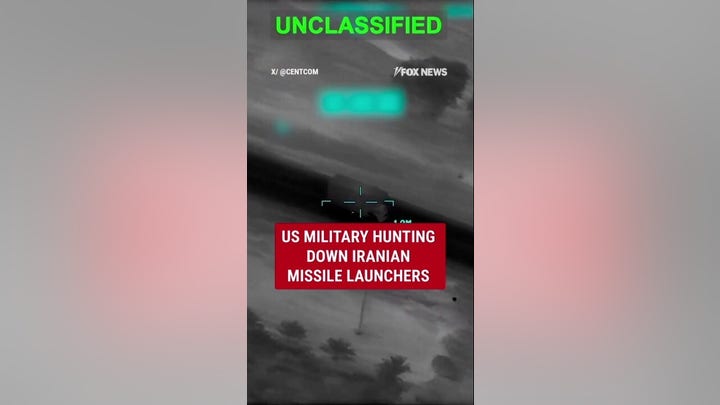
US military HUNTING DOWN Iranian missile launchers

Those are firm boundaries.

But here is the other boundary: no private corporation should hold an effective veto over how America defends itself.

Washington’s contractor addiction

For decades, the federal government has grown dependent on contractors for critical defense functions — logistics, cyber infrastructure, analytics and intelligence support. AI is simply the next frontier in that pattern.

But frontier AI models are not spare parts or uniforms. They are strategic infrastructure. They influence targeting, operational tempo and potentially deterrence modeling.

That level of sensitivity cannot remain under corporate ownership.

During World War II, the United States built the atomic bomb through the Manhattan Project under centralized national authority. It was not governed by venture-backed boards setting independent usage policies. It was directed by the U.S. government with a clear strategic mandate.

We need a similar mindset for our most sensitive AI systems.

Government must own core military algorithms. Not lease them. Not subscribe to them. Own them.

AI tools are being used for intelligence analysis, targeting refinement, pattern recognition, and operational simulations. These systems compress time, reduce uncertainty and accelerate decisions.

If AI is the new strategic high ground, America cannot subcontract the high ground.

China isn’t hesitating

As I argue in ‘The New AI Cold War,’ Beijing does not struggle with these dilemmas.

China fuses AI development directly to the state. There are no Silicon Valley executives in Beijing refusing military access. AI is treated as national infrastructure.

Russia and other nations are moving in similar directions. They are not debating internal guardrails while field-testing AI-enabled systems.

Strategic competition does not pause while we litigate contract language.

US military forces destroy Iranian fighters, drones in latest strikes

What must happen next

First, Congress must draw bright lines: no AI-enabled mass domestic surveillance of Americans without strict constitutional safeguards.

Second, codify meaningful human control over lethal force decisions.

Third — and most critically — build sovereign AI capacity inside government.

That means:

  • Government-controlled AI research for classified applications
  • Government ownership of core defense algorithms
  • Reduced reliance on private frontier labs for sensitive military systems
  • Long-term pipelines of cleared AI engineers

Anthropic argues that removing safeguards could enable autonomous killing systems or unconstitutional domestic spying.

Private industry will continue to innovate. But America’s most sensitive warfighting tools cannot remain dependent on companies whose corporate policies can override national defense requirements.

The real issue is sovereignty

The Pentagon–Anthropic feud is not about personalities. It is about sovereignty.

Rebecca Grant discusses US strategy for Iran nuclear talks, military threats

Who controls the algorithms that guide American force?

Who owns the code?

Who decides how it is used?

In the new AI Cold War, power will belong to those who control the models — not merely those who rent access to them.

America must protect liberty. We must reject AI-driven domestic surveillance. We must preserve human moral accountability in the use of force.

First, Congress must draw bright lines: no AI-enabled mass domestic surveillance of Americans without strict constitutional safeguards.

But we must also end the illusion that venture-backed firms can function as ultimate gatekeepers of national defense.

The AI Cold War is not hypothetical. It is unfolding on battlefields abroad and in policy fights at home.

This moment is not about one company. It is about whether the United States will treat artificial intelligence as strategic national infrastructure — or as a contractor service.

The answer will shape the next generation of warfare.

And history will not wait for us to decide.

Related Article

Trump admin sought redactions on key China war game report warning of US military readiness gaps

This post appeared first on FOX NEWS

The highest-ranking Minnesotan in Congress is calling for a deeper investigation into allegations that leaders in his state government knowingly ignored evidence of welfare fraud, and he called for those leaders to even face incarceration if proven true.

‘People are sick and tired of elected officials having a double standard, being treated differently than they are. They’re held accountable for things that they should be held accountable for, when their elected officials are not,’ House Majority Whip Tom Emmer, R-Minn., told Fox News Digital. 

‘If these two guys are dirty, they should be held accountable, and they should serve jail time.’

He was referring to Minnesota Gov. Tim Walz and state Attorney General Keith Ellison, two of several witnesses at a high-profile hearing on fraud conducted by the House Oversight Committee on Wednesday.

Both Walz and Ellison insisted that they were serious about prosecuting fraud in the state’s social programs and that they took action to stop it once it was brought to their attention.

But Emmer cited a report by the House Oversight Committee that accused them both of knowing about the fraud earlier than previously thought and delaying public accountability for fear of political retribution from progressives in the state — particularly the Somali community in Minneapolis, who Republicans have accused of taking advantage of the state’s welfare system.

‘They might have been able to qualify it enough that it wasn’t black and white, but if they lied to the committee this morning about knowing about the fraud and when they knew about the fraud and the FBI investigation, that is a criminal act of its own,’ Emmer told Fox News Digital.

‘So I do believe, depending on this report and what else the majority staff is doing, they very well may want to call them back in and depose them under oath.’

He added at another point, ‘You have maybe 80 to 100,000 Somalis in Minnesota. Tim Walz won with 52%. They made a difference. Keith Ellison won by less than 1%. I think it was 20,000 votes. Makes a difference. So if those are connected, yeah, I mean, this is campaign fraud.’

‘I’ve taken accountability for this. I’m not going to run again. I need to spend the time fixing this,’ Walz said during the hearing. ‘This does undermine trust in government. Do I wish there were things that could have happened earlier? Yes. But in this job, ‘wish’ didn’t do it. I’m looking into where I see it.’

At another point, Walz attributed the rise in fraud statistics to an increase in prosecutions, telling Republicans, ‘When you catch people and prosecute them, it shows up as a fraud increase.’

He also dismissed accusations that he kept whistle-blowers quiet over fear of being seen as Islamophobic, ‘I can’t speak to it because it’s not anything I would say.’

Ellison, meanwhile, said he was happy to work across bipartisan lines to prosecute fraud.

‘I am here to work to improve this system, and there are improvements that can be made,’ he said. ‘If we can get out of fixing the blame and get to fixing the problem, that would be an enormous thing for me.’

But Emmer, who maintained that further investigation was needed, suggested he doubted their intentions.

‘It’s power. They want power. In order for them to get power, they need to be elected. In order for them to get elected, they have to cheat in different ways. And that is exactly what they did,’ Emmer said. ‘If the Somali community is being used by these public officials to get themselves into office…it sure does look suspect, it needs to be investigated.’

Related Article

GREGG JARRETT: If Walz is charged in Minnesota fraud scandal, his best defense is incompetence

This post appeared first on FOX NEWS

Precious metals prices are down on potential for economic fallout from escalating US-Iran War.

Volatility has returned to the precious metals market this past week. All eyes are on the breakout of a full-scale war across the Middle East prompted by a coordinated assault on Iran by the United States and its ally Israel. Oil prices are up, which means inflation risks are once again on the minds of Federal Reserve board members as they contemplate upcoming interest rate decisions.

Let’s take a look at what’s got the precious metals moving over the past week.

Gold price

The price of gold is showing remarkable resilience in the face of strong volatility this past seven very eventful days. On Thursday (February 26), the yellow metal managed an intraday high of US$5,200 per ounce, well above the low of US$4,440 per ounce reached in the first few days of February following US President Donald Trump’s nomination of Kevin Warsh, a former Federal Reserve governor, to replace Jerome Powell as the next Fed chair.

Gold continued this upward trend on Friday (February 27) rising to an intraday high of US$5,270 per ounce. Over the weekend, tensions in the Middle East erupted into a full-scale war as the US and Israel launched a massive military campaign targeting multiple locations across Iran. Consequently, Iran quickly escalated the conflict into a large-scale regional war including missile strikes and drone attacks in Israel, Cyprus, the United Arab Emirates, Saudi Arabia, Qatar, Bahrain and Kuwait.

The events lit a fire of safe-haven demand for gold, pushing prices up over US$5,400 per ounce on Monday (March 2). However, the yellow metal just as quickly reversed course on profit-taking and dropped as low as US$5,263 per ounce before recovering to a close of US$5,328 per ounce.

By Tuesday (March 3), the precious metal had lost further ground, following slightly below the psychologically important US$5,000 mark during morning trading, before finishing the day at US$5,088 per ounce.

Gold was trading back up at US$5,195 per ounce early Wednesday morning, as investors sought to buy the dip–a sign that strong confidence remains in the long-term bullish outlook for the metal. Gold closed the day at US$5,145.24 per ounce as investors balance safe-haven demand with the potential for higher interest rates for longer.

Gold price chart, February 25, 2026 to March 4, 2026.

Gold price chart, February 25, 2026 to March 4, 2026.

Here are the primary drivers for gold this past week:

  • Geopolitical conflict in the Middle East remains the primary driver for safe-haven gold this week. Investors once again flocked to safe-haven gold, pushing the precious metal to near-record highs.
  • Expected profit-taking brought a healthy correction to the gold market, which contributed to the sharp, short-term drop on Tuesday.
  • Investor faith in gold’s long-term value brought on a buy-the-dip sentiment, giving the metal a strong level of support.
  • Concerns that rising oil prices as a result of the US-Iran war will lead to increased inflation is likely to place pressure on the Federal Reserve to delay interest rate cuts until later in the year. This takes a bit of the wind out of the sails for gold prices.
  • The likelihood of interest rates staying pat for longer strengthened the US Dollar and raised 10-year Treasury yields, both of which are also price negative for gold.

In other gold news, the World Gold Council reported that for the first time in more than a decade the Bank of Korea will begin investing in overseas-listed physical gold ETFs.

In gold mining sector news, SSR Mining (NASDAQ:SSRM,TSX:SSRM,OTCPL:SSRGF) has agreed to sell its majority stake in the Çöpler gold mine in Turkey for US$1.5 billion in cash.

Silver price

Silver has also experienced a volatile week of trading influenced by geopolitical tensions and concerns over the Fed’s next monetary policy moves.

Still well below its all-time high of more than US$120 per ounce it reached on January 29, 2026. The white metal traded at an intraday high of US$88.95 Thursday (February 26) before surging as high as US$94.14 per ounce the following day.

For Monday (March 2), silver continued higher to reach US$95.71 per ounce in early morning trading. Tracking gold’s decline, silver prices touched as low as US$86.61 that day before recovering to close at US$89.34 per ounce.

Tuesday’s (March 3) dip saw silver sink as low as US$79.734 per ounce in early morning trading before closing up at US$82.05 per ounce. Silver managed to hold on to those gains Wednesday (March 4) to close the trading day at US$83.56 per ounce

Silver price chart, February 25, 2026 to March 4, 2026.

Silver price chart, February 25, 2026 to March 4, 2026.

As the world’s most electrically and thermally conductive metal, silver is still receiving strong support from industrial demand. The entrenched silver supply deficit also continues to provide a floor of support for the metal’s price.

In silver mining news, major silver producer Fresnillo (LSE:FRES,OTCPL:FNLPF), reported earnings before interest, tax, depreciation, and amortization of US$2.80-billion for the 12 months ended December 31, 2025, up more than 80 percent over the previous year. This allowed the company to payout a total of US$950-million, or 128.92 cents per share, to shareholders for 2025.

Platinum price

Platinum prices were trading well above the US$2,200 mark on Thursday (February 26), reaching as high as US$2287.50 per ounce. Friday brought further gains, with the precious metal pushing up past the US$2,400 per ounce level, although only slightly and very briefly.

However, by Monday (March 2) the price of platinum had slid as low as US$2,291.50 in the morning trade before finishing the day at a four-week high of US$2,325.70 per ounce.Tuesday (March 3) brought further volatility for platinum prices as they sank as low as US$2,015.70 as part of a broader liquidation event in the commodities markets. Yet, platinum managed to swing back slightly above the US$2,100 level by the end of the trading day.

Wednesday (March 4) saw platinum hanging on to those gains and moving upward to close at US$2,165.80 per ounce.

Platinum price chart, February 25, 2026 to March 4, 2026.

Platinum price chart, February 25, 2026 to March 4, 2026.

Platinum prices this week were supported by a March 3 report from the World Platinum Investment Council (WPIC) highlighting the fourth consecutive annual platinum market deficit with a 240,000 ounce shortfall expected in 2026. Although that is much lower than the 1.1 million ounce deficit recorded in 2025.

Demand is being driven by the metal’s essential role in the emerging hydrogen economy. The WPIC reports it sees support for platinum will come from a 7 percent rise in hydrogen stationary applications in 2026.

Palladium price

Palladium also succumbed to the downward trend for precious metals prices this past seven days. On Thursday (February 26), palladium retreated from the one-month highs above the US$1,900 level experienced last week to slip as low as US$1,770.50 per ounce in morning trading and struggled to finish the day close to US$1,800 per ounce. Friday found the metal back up to an intraday high of US$1,856.50 per ounce.

On Monday (March 2), palladium lost ground again, dipping to a low of US$1,781 per ounce before closing out the day at US$1,803 per ounce. However, the following day palladium’s price tracked its sister metals in a runaway slide that brought prices to a low of US$1,631 per ounce. By the end of the trading day it had only managed to claw back to US$1,672 per ounce.

After rebounding to US$1,730 per ounce in early morning trading Wednesday, palladium closed out the day at the US$1,700 level.

Palladium price chart, February 25, 2026 to March 4, 2026.

Palladium price chart, February 25, 2026 to March 4, 2026.

It seems investors are reassessing palladium’s value with a focus on broader economic risks to industrial demand brought about from potential shipping route closures in the Strait of Hormuz.

Market tightness persists due to output disruptions in South Africa and uncertainty over Russian exports, which provide a partial floor for prices.

Securities Disclosure: I, Melissa Pistilli, hold no direct investment interest in any company mentioned in this article.

This post appeared first on investingnews.com

Oreterra Metals Corp. (TSXV: OTMC) (OTCID: OTMCF) (OTCID: RMIOD) (FSE: D4R0) (WKN: A421RQ)(‘Oreterra’ or the ‘Company’) is pleased to announce that, further to its press releases of February 10, 2026, February 12, 2026, February 18, 2026, February 19, 2026 and March 2, 2026, it has closed the second and final tranche of its oversubscribed and upsized non-brokered private placement with the placement of 154,444 hard-dollar units (‘HD Units’) of the Company at a price of $0.45 per HD Unit for gross proceeds of $69,500 and the placement of 660,000 flow-through units (‘FT Units’) at a price of $0.50 per FT Unit for gross proceeds of $330,000 (collectively, the ‘Final Closing’). Combined with the first closing of $9.3M, gross proceeds from the placement totaled $9.7M.

Offering Details:

The non-brokered private placement was upsized multiple times to $9,684,000 through the issuance of a combination of $5,500,000 in hard-dollar units (‘HD Units‘) of the Company at a price of $0.45 per HD Unit and $4,184,000 in flow-through units (‘FT Units‘) at a price of $0.50 per FT Unit (collectively, the ‘Offering‘).

Each HD Unit, priced at $0.45, comprised one (1) common share of the Company and one (1) common share purchase warrant (each a ‘HD Warrant‘). Each HD Warrant entitles the holder to acquire one additional common share of the Company at an exercise price of $0.60 per share for three years following the closing of the Offering.

Each FT Unit, priced at $0.50, comprised one (1) flow-through share of the Company (each a ‘FT Share‘) and one (1) common share purchase warrant (each an ‘FT Warrant‘). Each FT Warrant entitles the holder to acquire one additional common share of the Company at an exercise price of $0.60 per share for three years following the closing of the Offering.

Final Closing Details:

The Company paid one eligible finder a cash commission of $6,900 and issued 13,800 broker warrants (each a ‘Broker Warrant‘). Each Broker Warrant entitles the holder thereof to acquire one additional common share of the Company at an exercise price of $0.60 per share for three years following the closing of the Offering.

Canaccord Genuity Corp. acted as financial advisor to the Company and received 62,777 HD Units as compensation for its $28,250 advisory fee (inclusive of HST).

All securities issued under the Final Closing are subject to a hold period expiring on July 5, 2026.

The securities described herein have not been offered or sold within the United States. This press release does not constitute an offer to sell or a solicitation to buy any securities in any jurisdiction.

The FT Shares qualify as ‘flow-through shares’ within the meaning of subsection 66(15) of the Income Tax Act (Canada) (the ‘Tax Act’). An amount equal to the proceeds received from the issuance of the FT Shares will be used to incur eligible resource exploration expenses which will qualify as (i) ‘Canadian exploration expenses’ (as defined in the Tax Act), and (ii) as ‘flow-through critical mineral mining expenditures’ (as defined in subsection 127(9) of the Tax Act) (collectively, the ‘Qualifying Expenditures‘).

Expenditures in an aggregate amount not less than the proceeds raised from the issue of the FT Shares will be incurred (or deemed to be incurred) by the Company on or before December 31, 2027 and will be renounced by the Company to the purchasers of the FT Shares with an effective date no later than December 31, 2026. The net proceeds from the issuance of HD Units will be primarily used for exploration activities at the Company’s Trek property, as well as for general working capital purposes.

Early Warning Disclosure Regarding Anastasios Drivas

Anastasios Drivas (‘Tom Drivas‘) previously filed an early warning report with respect to the securities of Oreterra on July 16, 2025. As a result of an increase in the issued and outstanding capital of Oreterra pursuant to the Offering, including the acquisition by Tom Drivas and affiliates of 690,000 FT Units (the ‘690,000 FT Units‘) pursuant to the Offering and the expiry of 833,333 warrants and 800,000 stock options held by Tom Drivas, the direct and indirect interest of Tom Drivas in Oreterra has been reduced to approximately 7.54% of the issued and outstanding common shares of Oreterra on a non-diluted basis and 8.72% on a partially diluted basis, assuming the exercise of the warrants held directly or indirectly by Tom Drivas. Therefore, Tom Drivas is no longer required to file an early warning report under National Instrument 62-103.

Tom Drivas has advised that the 690,000 FT Units were acquired for investment purposes and that he has no present intention to either increase or decrease his direct or indirect holdings in the Company. Notwithstanding the foregoing, he has advised that he may increase or decrease his beneficial ownership, control or direction over common shares of the Company through market transactions, private agreements, other treasury issuances or otherwise.

This news release is issued pursuant to National Instrument 62-103 – The Early Warning System and related Take-Over Bid and Insider Reporting Issues of the Canadian Securities Administrators, which also requires an early warning report to be filed with the applicable securities regulators containing additional information with respect to the foregoing matters. A copy of this early warning report in respect of this transaction will be available on Oreterra’s issuer profile on SEDAR+ at www.sedarplus.ca.

Adoption of the 2025 Stock Option Plan

At the Annual General and Special Meeting of Shareholders of the Company held on January 16, 2026, the Shareholders adopted the new 2025 Stock Option Plan (the ‘2025 SOP‘). The 2025 SOP was appended to the Company’s Management Information Circular (the ‘Information Circular‘) dated November 28, 2025 as Schedule ‘C’, a copy of which Information Circular was filed on sedarplus.com on December 10, 2025. All changes to the 2017 Stock Option Plan made pursuant to the 2025 SOP are set out in a black-lined version of the 2025 SOP appended as Schedule ‘D’ to the Information Circular. The Company wishes to bring to the attention of shareholders the following amendments to the 2017 Stock Option Plan resulting from the adoption of the 2025 SOP. The 2025 SOP requires that the Company obtain disinterested shareholder approval of any decrease in the exercise price of or extensions to any stock options granted to individuals that are insiders at the time of the proposed amendment. In addition, the 2025 SOP clarifies the fact that any option that has an expiry date that occurs within ten (10) Business Days from the end of a Blackout Period shall not be extended and shall expire if unexercised by the original expiry date.

In addition, the amendments to the 2025 SOP provide that both the Company and any Optionee that is an Employee or Consultant are responsible for ensuring that such Optionee is a bone fide Employee or Consultant of the Company and that any adjustments to options, other than pursuant to a stock split or consolidation, are subject to prior acceptance by the TSX Venture Exchange. Other minor clarifications with respect to the 10% limit applicable to Insiders and limits on options granted to persons providing investor relations services in the event of an acceleration of the Expiry Date are reflected in the 2025 SOP.

About Oreterra Metals Corp.

Oreterra Metals Corp. commenced trading on February 2, 2026, under the new ticker OTMC, following a months-long effort to restructure the former Romios Gold Resources Inc. Management took on the task because it believes the Company’s wholly-owned Trek South porphyry copper-gold prospect represents, based upon the impressive results of the spectrum of geosciences applied to the target area to date, among the finest new targets of its kind in BC’s Golden Triangle. The Company recently released (news, January 22, 2026) a National Instrument 43-101 Technical Report for the Trek property which recommends two initial phases of drilling at Trek South, for execution in the approaching 2026 field season. A copy of the Technical Report is available on the Company’s website at www.oreterra.com, and on the Company’s SEDAR+ issuer profile at www.sedarplus.com.

Additional wholly-owned Company property interests include two former producers in Nevada: the Kinkaid claims in the Walker Lane trend covering numerous shallow Au-Ag-Cu workings over what is believed to be one or more porphyry centres (source: J.Biczok, P.Geo, June 2025, Kinkaid Gold-Copper-Silver Project, www.oreterra.com), and the Scossa mine property in the Sleeper trend which is a former high-grade gold producer (source: J.Biczok, P.Geo, July 2025, Scossa Historic Gold Mine Property, www.oreterra.com). The Company also holds a 100% interest in the large Lundmark-Akow Lake Au-Cu property adjacent to the northwest of the Musselwhite Mine in northwestern Ontario, where drilling by the Company has produced highly encouraging, broad VMS-style Au-Cu intersections.

For further information, visit www.oreterra.com or contact:

Kevin M. Keough
Chief Executive Officer
Tel: 613 622-1916
Email: kkeough@oreterra.com
Stephen Burega
President
Tel: 647 515-3734
Email: sburega@oreterra.com


Neither the TSX Venture Exchange nor its Regulation Services Provider (as that term is defined in the policies of the TSX Venture Exchange) accepts responsibility for the adequacy or accuracy of this release.

Cautionary Statement Regarding Forward-Looking Information

This news release includes certain ‘forward-looking statements’ which are not comprised of historical facts. Forward-looking statements include estimates and statements that describe the Company’s future plans, objectives or goals, including words to the effect that the Company or management expects a stated condition or result to occur. Forward-looking statements may be identified by such terms as ‘believes’, ‘anticipates’, ‘expects’, ‘estimates’, ‘may’, ‘could’, ‘would’, ‘will’, or ‘plan’. Since forward-looking statements are based on assumptions and address future events and conditions, by their very nature they involve inherent risks and uncertainties. Although these statements are based on information currently available to the Company, the Company provides no assurance that actual results will meet management’s expectations. Risks, uncertainties and other factors involved with forward-looking information could cause actual events, results, performance, prospects and opportunities to differ materially from those expressed or implied by such forward-looking information. Factors that could cause actual results to differ materially from such forward-looking information include, but are not limited to failure to identify mineral resources, delays in obtaining or failures to obtain required governmental, environmental or other project approvals, political risks, inability to fulfill the duty to accommodate First Nations, uncertainties relating to the availability and costs of financing needed in the future, changes in equity markets, inflation, changes in exchange rates, fluctuations in commodity prices, delays in the development of projects, capital and operating costs varying significantly from estimates and the other risks involved in the mineral exploration and development industry, and those risks set out in the Company’s public documents filed on SEDAR+. Although the Company believes that the assumptions and factors used in preparing the forward-looking information in this news release are reasonable, undue reliance should not be placed on such information, which only applies as of the date of this news release, and no assurance can be given that such events will occur in the disclosed time frames or at all. The Company disclaims any intention or obligation to update or revise any forward-looking information, whether as a result of new information, future events or otherwise, other than as required by law.

NOT FOR DISSEMINATION, DISTRIBUTION, RELEASE, OR PUBLICATION, DIRECTLY OR INDIRECTLY, IN OR INTO THE UNITED STATES OR FOR DISTRIBUTION TO U.S. NEWSWIRE SERVICES

Corporate Logo

To view the source version of this press release, please visit https://www.newsfilecorp.com/release/286347

News Provided by TMX Newsfile via QuoteMedia

This post appeared first on investingnews.com

Copper Quest Exploration Inc. (CSE: CQX,OTC:IMIMF; OTCQB: IMIMF; FRA: 3MX) (‘Copper Quest’ or the ‘Company’) is pleased to announce the completion of its AI-driven geological analysis at its 100%-owned Kitimat Copper-Gold Project (‘Kitimat’) in northwestern British Columbia confirming a large conductive anomaly consistent with a buried porphyry center.

Brian Thurston, CEO of Copper Quest, stated, ‘The completion of our AI-driven analysis marks a significant step forward at Kitimat. The AI generation of this very large conductive anomaly positioned along a structural magnetic boundary in fertile arc volcanics could very easily represent a concealed intrusive porphyry center. The historical mineralization drilled nearby delivered significant near-surface copper-gold intercepts that remain open and conforms with our geologic interpretation that those intercepts may represent the outer expression of a much larger porphyry system, perhaps of the AI generated anomaly now observed.’

Copper Quest announced its strategic partnership with U.S. based Exploration Technologies Inc. (‘ExploreTech’) on Decemeber 1, 2025, to deploy generative artificial intelligence across its project portfolio, beginning with the Kitimat Copper–Gold Project in British Columbia. Using the ExplorTech platform, historical information from the Kitimat project was integrated and reprocessed, including historical diamond drilling (including 2010 Jeannette Cu-Au Zone drilling), government airborne magnetics, VTEM conductivity data, structural and lithological interpretations, 2025 field observations and alteration mapping, as well as soil and rock geochemistry. The platform integrated this historical information into a unified probabilistic 3D geological framework while the AI system generated thousands of subsurface geological scenarios, ranking probability clusters for concealed intrusive centers and sulphide-rich alteration zones.

Alex Miltenberger, PhD, CEO of ExploreTech commented, ‘Our generative AI platform evaluates thousands of geological and geophysical permutations to identify the highest-probability mineralized centers. At Kitimat, the integrated magnetic, VTEM, drilling and geological datasets produce a coherent target architecture consistent with buried intrusive-related mineralization. This platform has been successfully applied on multiple porphyry systems worldwide and we look forward to supporting Copper Quest as they advance this project toward drill confirmation.’

AI modeling has identified a large, buried conductive body measuring approximately 1.5 km by 1.5 km in lateral extent. The anomaly demonstrates strong vertical continuity to at least 1 km depth—the maximum limit of the analysis—and begins just 50 meters below surface, concealed beneath sedimentary cover. The conductor is situated within a pronounced magnetic gradient/dipole corridor, with a spatial relationship suggestive of an intrusive contact or alteration boundary. It also lies in proximity to documented volcanic-hosted sulphide mineralization.

The geological setting—Lower Jurassic Hazelton Group volcanics intruded by Coast Plutonic rocks—further supports the exploration model. Collectively, these characteristics are interpreted by the Company as indicative of a concealed, sulphide-rich hydrothermal center. Permitting has been initiated for a 2026 Induced Polarization survey followed by a diamond drill program to test this compelling target.

These AI results have materially refined and strengthened Copper Quest’s theory that the project area hosts a large hydrothermal copper-gold porphyry system. ExploreTech’s modeling supports the geologic interpretation that the 2010 drilling at the Jeannette Zone may represent a peripheral expression of a larger concealed intrusive center (Figure 1), represented by the AI interpreted kilometer-scale conductive anomaly.
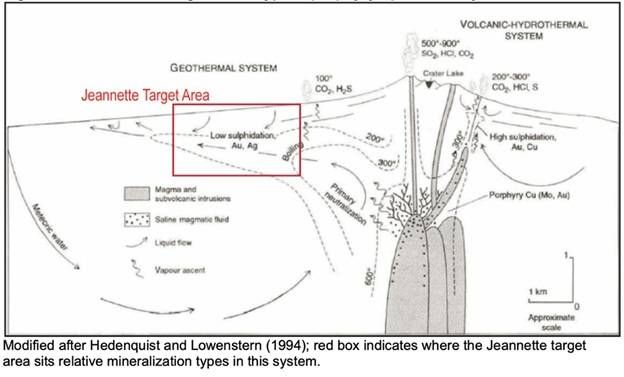
Presumed geological setting of the Jeannette zone within the larger Kitimat claim block taken from National Instrument 43-101 report written on the Kitimat property by Jeremy Hanson, P.Geo, in 2020.

Figure 1: Presumed geological setting of the Jeannette zone within the larger Kitimat claim block taken from National Instrument 43-101 report written on the Kitimat property by Jeremy Hanson, P.Geo, in 2020.

The Kitimat Project hosts significant historical copper-gold drill intersections, mostly completed by Decade Resources Ltd. in 2010 at the Jeannette Zone. Notable intervals include 117.07m grading 0.54% Cu and 1.03 g/t Au (Hole J-7), 103.65m grading 0.55% Cu and 1.00 g/t Au (Hole J-1), 107.01m grading 0.45% Cu and 0.80 g/t Au (Hole J-2), and 112.20 m grading 0.33% Cu and 0.41 g/t Au (Hole J-8).

INFRASTRUCTURE ADVANTAGE

The Kitimat Project is supported by outstanding infrastructure that meaningfully strengthens its development potential. The property benefits from established road access via historic logging and exploration roads, proximity to rail infrastructure, access to high-voltage hydroelectric power, and deep-water port facilities at Kitimat. Located just 10 kilometers from the city within a stable, mining-friendly jurisdiction, the project is exceptionally well positioned. Collectively, this infrastructure base has the potential to materially enhance project economics in the event of a discovery.

QUALIFIED PERSON

Brian G. Thurston, P.Geo., the Company’s President and CEO and a qualified person as defined by National Instrument 43-101 – Standards of Disclosure for Mineral Projects, has reviewed and approved the technical information in this news release.

COPPER: GLOBAL SUPPLY DEFICIT & CRITICAL METAL

Global copper demand is accelerating at an unprecedented pace, fueled by electrification, electric vehicles, renewable energy deployment, expanding data centers, AI infrastructure, and large-scale grid modernization. At the same time, the industry faces mounting constraints while ore grades at existing mines continue to decline, new discoveries become increasingly rare, permitting timelines are lengthening, and meaningful supply deficits are projected over the coming decade.

In this environment, advancing new copper discoveries in stable, mining-friendly jurisdictions such as Canada and the USA has become essential to Western energy security and long-term economic growth. Copper Quest is strategically positioned to help deliver the next generation of North American copper discoveries.

ABOUT EXPLORETECH

ExploreTech is a mineral exploration company which specializes in AI-driven exploration workflows, including geological modeling, geophysical inversion, and drill-target optimization, to find concealed mineralized systems. ExploreTech is led by Alex Miltenberger, PhD, and Tyler Hall, PhD, both graduates of Stanford University in Geophysics and Geology respectively, with professional backgrounds in exploration and mining. The ExploreTech platform integrates geophysics, drilling, geochemistry, structural interpretation, and satellite data into a probabilistic 3D geological framework designed to rapidly identify possible concealed intrusive centers and mineralized systems. ExploreTech has successfully leveraged their technology on a number of different projects, with a particular strength in revealing hidden porphyry targets. More information on ExploreTech can be found at www.exploretech.ai

ABOUT Copper Quest Exploration Inc.

The company’s land holdings comprise 8 projects that span over 46,000 hectares in great mining jurisdictions of Canada and the USA. Copper Quest is committed to building shareholder value through acquisitions, discovery-driven exploration, and responsible development of its North American portfolio of assets. The Company’s common shares are principally listed on the Canadian Stock Exchange under the symbol ‘CQX’. For more information on Copper Quest, please visit the Company’s website at www.copper.quest.

Copper Quest has a 100% interest in the past-producing Alpine Gold Mine located approximately 20 kilometers northeast of the City of Nelson British Columbia, spanning 4,611.49 hectares with a 2018 National Instrument 43-101 Standards of Disclosure for Mineral Projects historical inferred resource of 268,000 tonnes, estimated using a cut-off grade of 5.0 g/t Au and an average grade of 16.52 g/t Au, that represents an inferred resource of 142,000 oz of gold (McCuaig & Giroux, 2018)*. Apart from the Alpine Mine itself the property hosts 4 other less explored significant vein systems including the past-producing King Solomon vein workings, the Black Prince and the Cold Blow veins system, and the Gold Crown vein system. *The Company has not yet completed sufficient work to verify the 2018 historic inferred resource results.

Copper Quest has a 100% interest in the road accessible Stars Porphyry Copper-Molybdenum Property, spanning 9,693 hectares in central British Columbia’s Bulkley Porphyry Belt with Tana Zone discovery drill intersection highlights of 0.466% Cu over 195.07m* in drill hole DD18SS004 from 23.47m, 0.200% Cu over 396.67m* in drill hole DD18SS010 from 29.37m, and 0.205% Cu over 207.27m* in drill hole DD18SS015 from 163.98m. This highly prospective, approximately 5 X 2.5 kilometer annular magnetic anomaly is interpreted to represent an altered monzonite intrusion and surrounding hornfels.

Copper Quest has a 100% interest in the road accessible Kitimat Copper-Gold Property, spanning 2,954 hectares within the Skeena Mining Division of northwestern British Columbia located northwest of the deep-water port community of Kitimat, British Columbia. The property benefits from exceptional infrastructure, being within 10 km of tidewater, 1.5 km of rail, and 6 km of high-voltage hydroelectric transmission lines. Exploration on the Kitimat property dates to the late 1960s, with the most significant historical work conducted by Decade Resources Ltd. (2010), which completed 16 diamond drill holes totaling 4,437.5 meters in the Jeannette Cu-Au Zone, and drill intersection highlights of 1.03 g/t Au, 0.54% Cu over 117.07 m in Hole J-7 from 1.52 m, 1.00 g/t Au, 0.55% Cu over 103.65m in Hole J-1 from 9.15 m, 0.80 g/t Au, 0.45% Cu over 107.01m in Hole J-2 from 6.10 m, and 0.41 g/t Au, 0.33% Cu over 112.20m in Hole J-8 from 11.89 m.

Copper Quest has a 100% interest in the Nekash Copper-Gold Project, a porphyry exploration opportunity located in Lemhi County, Idaho, USA, along the prolific Idaho-Montana porphyry copper belt that hosts world-class systems such as Butte and CUMO. The project is fully road-accessible via maintained U.S. highways and forest service roads and consists of 70 unpatented federal lode claims covering 585 hectares.

Copper Quest has an option to earn 100% interest in the past-producing road accessible Auxer Gold Mine, spanning 1,087 hectares located in Bonner County, Idaho, USA. This orogenic gold opportunity is positioned along one of the region’s most significant structural corridors located within the prolific Hope Fault system. Historical exploration has demonstrated exceptional gold grades, with the 1936 Platts report documenting up to 21.0 g/t Au in surface samples and underground workings showing consistent mineralization over 4.3-meter widths averaging 9.42 g/t Au at an 18-meter depth.

Copper Quest has a 100% interest in the road accessible Stellar Property, spanning 5,389-hectares in British Columbia’s Bulkley Porphyry Belt contiguous to the Stars Property.

Copper Quest has a 100% interest in the Thane Project located in the Quesnel Terrane of Northern British Columbia spanning over 20,658 hectares with 10 priority targets identified demonstrating significant copper and precious metal mineralization potential.

Copper Quest has an earn-in option of up to 80% and joint-venture agreement on the road accessible Rip Porphyry Copper-Molybdenum Project, spanning 4,700-hectares located in the Bulkley Porphyry Belt in central British Columbia.

On behalf of the Board of Copper Quest Exploration Inc.

Brian Thurston, P.Geo.
Chief Executive Officer and Director
Tel: 778-949-1829

For further information contact:

Investor Relations
info@copper.quest

https://x.com/CSECQX 
https://ca.linkedin.com/company/copper-quest

Forward Looking Information

This news release contains certain ‘forward-looking information’ and ‘forward-looking statements’ (collectively, ‘forward-looking statements‘) within the meaning of applicable securities legislation. All statements, other than statements of historical fact included herein, including without limitation, future operations and activities of Copper Quest, are forward-looking statements. Forward-looking statements are frequently, but not always, identified by words such as ‘expects’, ‘anticipates’, ‘believes’, ‘intends’, ‘estimates’, ‘potential’, ‘possible’, and similar expressions, or statements that events, conditions, or results ‘will’, ‘may’, ‘could’, or ‘should’ occur or be achieved. Forward-looking statements reflect the beliefs, opinions and projections on the date the statements are made and are based upon a number of assumptions and estimates based on or related to many of these factors. Such factors include, without limitation, risks associated with possible accidents and other risks associated with mineral exploration operations, the risk that the Company will encounter unanticipated geological factors, risks associated with the interpretation of exploration results, the possibility that the Company may not be able to secure permitting and other governmental clearances necessary to carry out the Company’s exploration plans, the risk that the Company will not be able to raise sufficient funds to carry out its business plans, and the risk of political uncertainties and regulatory or legal changes that might interfere with the Company’s business and prospects. Readers should not place undue reliance on the forward-looking statements and information contained in this news release concerning these items. The Company does not assume any obligation to update the forward-looking statements of beliefs, opinions, projections, or other factors, should they change, except as required by applicable securities laws.

The Canadian Securities Exchange has not reviewed, approved or disapproved the contents of this press release, and does not accept responsibility for the adequacy or accuracy of this release.

A photo accompanying this announcement is available at https://www.globenewswire.com/NewsRoom/AttachmentNg/bc390adc-89c5-4413-bc0a-bd350735d023


Primary Logo

News Provided by GlobeNewswire via QuoteMedia

This post appeared first on investingnews.com

New Found Gold Corp. (TSXV: NFG) (NYSE American: NFGC) (‘New Found Gold’ or the ‘Company’) is pleased to announce that it has entered into a non-binding term sheet for an up to US$75,000,000 loan facility (the ‘Loan Facility’).

The proceeds from the Loan Facility will be used as financing for the development of the Company’s 100% owned Queensway Gold Project (‘Queensway‘ or the ‘Project‘) in Newfoundland and Labrador, Canada, including the procurement of long lead items, early construction activities, upgrading and expanding the Company’s 100% owned Pine Cove Mill to accommodate Queensway Phase 1 off-site milling, and general working capital purposes. The Loan Facility, alongside cashflow from the Hammerdown Gold Project (‘Hammerdown‘), is an important component of the Company’s overall finance strategy.

‘We are pleased to enter into the term sheet for this debt financing, which will support Phase 1 of our flagship Queensway Gold Project and enable us to remain on track with the development timeline outlined in our 2025 PEA,’ commented Keith Boyle, CEO of New Found Gold. ‘Once the Loan Facility is in place, we will be well capitalized as we advance towards a formal construction decision later this year, taking us closer to production at Queensway, which showcases a solid low-cost production profile via a phased mine plan, near-term cash flow generation and significant upside through exploration, as we aim for first production in late 2027.’1

Pursuant to the non-binding term sheet, the Loan Facility will be documented by way of a senior secured debenture and advanced in two tranches: US$50,000,000 to be funded at closing (‘Tranche 1‘) and, subject to the satisfaction of certain conditions and if required by the Company, an additional US$25,000,000 to be funded no later than 15 months after closing (‘Tranche 2‘) at no additional standby fee. Both tranches will be subject to customary arrangement fees. The Loan Facility will bear interest at a fixed annual rate of 9.25% payable quarterly in arrears and will have a term of 24 months, and will be subject to a quarterly administration fee based on a fixed annual fee of 0.50%. The Company will have the option to extend the term by an additional six months. The funds to be advanced reflect principal amounts subject to an original issue discount, which will increase if the term is extended.

In connection with the Loan Facility and subject to the approval of the TSX Venture Exchange (‘TSXV‘), the Company will issue to Nebari Natural Resources Credit Fund II, LP (the ‘Lender‘) at closing non-transferable warrants for the purchase of common shares in the Company. The warrants issued in connection with Tranche 1 will have an aggregate value of US$3,750,000, and the warrants issued in connection with Tranche 2 will have an aggregate value of US$1,875,000. Each warrant will be exercisable for one common share of the Company at an exercise price equal to a 25% premium to the lower of the volume weighted average price of the common shares of the Company on the TSXV for the 20 trading days prior to (a) the date hereof, and (b) the date the warrants are issued, provided that the exercise price will not be below the market price as determined by the TSXV. The warrants will be exercisable for a period of 24 months following closing. If the Company extends the term of the loan by an additional six months, the expiration date of the warrants will also be extended by six months if permitted by the TSXV.

All direct and indirect subsidiaries of the Company will guarantee the Loan Facility. The Company and such guarantors will secure the Loan Facility with first-lien security interests over all of their present and after-acquired real and personal property.

The provision of the Loan Facility remains subject to customary conditions precedent, such as the negotiation, execution, delivery and registration of definitive financing documents, completion of due diligence to the Lender’s satisfaction, receipt of all necessary corporate and regulatory approvals (including approval of the TSXV), and approval by the Lender’s Investment Committee. The term sheet includes a mutual break fee in the event of a termination by either party prior to closing.

Cutfield Freeman & Co. Ltd. (‘CF&Co‘), an independent global mining finance advisory firm, is acting as financial advisors to the Company in relation to the Loan Facility and its overall project finance strategy (see the New Found Gold press release dated November 28, 2025).

The Company appreciates the interest from other finance providers who were willing to support New Found Gold and were eager to be part of our Company’s growth.

This press release shall not constitute an offer to sell or the solicitation of an offer to buy nor shall there be any sale of warrants in any state in which such offer, solicitation or sale would be unlawful. The warrants have not been, nor will they be, registered under the United States Securities Act of 1933, as amended (the ‘U.S. Securities Act‘) and may not be offered or sold in the United States absent registration or an applicable exemption from the registration requirements of the U.S. Securities Act, and applicable state securities laws.

About New Found Gold Corp.

New Found Gold is an emerging Canadian gold producer with assets in Newfoundland and Labrador, Canada. The Company holds a 100% interest in Queensway and Hammerdown, which includes the Hammerdown deposit and fully permitted milling and tailings facilities. The Company is currently focused on advancing its flagship Queensway to production and bringing the Hammerdown deposit into commercial gold production.

In July 2025, the Company completed a PEA at Queensway (see New Found Gold press release dated July 21, 2025). Recent drilling continues to yield new discoveries along strike and down dip of known gold zones, pointing to the district-scale potential that covers a +110 km strike extent along two prospective fault zones at Queensway.

Through 2025 New Found Gold built a new board of directors and management team and has a solid shareholder base which includes cornerstone investor Eric Sprott. The Company is focused on growth and value creation.

Keith Boyle, P.Eng.
Chief Executive Officer
New Found Gold Corp.

Contact

For further information on New Found Gold contact us through our investor inquiry form at https://newfoundgold.ca/contact/ or contact:

Fiona Childe, Ph.D., P.Geo.
Vice President, Communications and Corporate Development
Phone: +1 (416) 910-4653
Email: contact@newfoundgold.ca

Follow us on social media at https://www.linkedin.com/company/newfound-gold-corp and https://x.com/newfoundgold.

Neither the TSX Venture Exchange nor its Regulation Services Provider (as that term is defined in the policies of the TSX Venture Exchange) accepts responsibility for the adequacy or accuracy of this release.

Forward-Looking Information
This press release contains certain ‘forward-looking statements’ within the meaning of Canadian and United States securities legislation, including statements regarding the non-binding term sheet for the Loan Facility; the proposed terms of the Loan Facility, including the amounts to be funded and the timing thereof; the arrangement and administration fees; the interest rate; the term of the Loan Facility; the terms of the warrants to be issued in connection with the Loan Facility, including the aggregate value of each tranche, the calculation of the exercise price and the exercise period; the guarantees and security interests to be granted in connection with the Loan Facility; the expected use of proceeds; the Company’s overall finance strategy; the Company’s advancement towards a formal construction decision at Queensway; the future production at Queensway; and the Company’s focus on growth and value creation. Although the Company believes that such statements are reasonable, it can give no assurance that such expectations will prove to be correct. Forward-looking statements are statements that are not historical facts; they are generally, but not always, identified by the words ‘expects’, ‘plans’, ‘anticipates’, ‘believes’, ‘interpreted’, ‘intends’, ‘estimates’, ‘projects’, ‘aims’, ‘suggests’, ‘indicate’, ‘often’, ‘target’, ‘future’, ‘likely’, ‘pending’, ‘potential’, ‘encouraging’, ‘goal’, ‘objective’, ‘prospective’, ‘possibly’, ‘preliminary’, and similar expressions, or that events or conditions ‘will’, ‘would’, ‘may’, ‘can’, ‘could’ or ‘should’ occur, or are those statements, which, by their nature, refer to future events. The Company cautions that forward-looking statements are based on the beliefs, estimates and opinions of the Company’s management on the date the statements are made, and they involve a number of risks and uncertainties. Consequently, there can be no assurances that such statements will prove to be accurate and actual results and future events could differ materially from those anticipated in such statements. Except to the extent required by applicable securities laws and the policies of the TSX Venture Exchange and NYSE American, the Company undertakes no obligation to update these forward-looking statements if management’s beliefs, estimates or opinions, or other factors, should change. Factors that could cause future results to differ materially from those anticipated in these forward-looking statements include risks associated with the Company’s ability to complete exploration and drilling programs as expected, possible accidents and other risks associated with mineral exploration operations, the risk that the Company will encounter unanticipated geological factors, risks associated with the interpretation of exploration results and the results of the metallurgical testing program, the possibility that the Company may not be able to secure permitting and other governmental clearances necessary to carry out the Company’s exploration plans, the risk that the Company will not be able to raise sufficient funds to carry out its business plans, and the risk of political uncertainties and regulatory or legal changes that might interfere with the Company’s business and prospects. The reader is urged to refer to the Company’s Annual Information Form and Management’s Discussion and Analysis, publicly available through the Canadian Securities Administrators’ System for Electronic Document Analysis and Retrieval (SEDAR+) at www.sedarplus.ca and on the website of the United States Securities and Exchange Commission at www.sec.gov for a more complete discussion of such risk factors and their potential effects.

1 See the New Found Gold technical report titled ‘NI 43-101 Technical Report for the Queensway Gold Project, Newfoundland and Labrador, Canada’, dated Sept. 2, 2025 prepared by SLR Consulting (Canada) Ltd.

Corporate Logo

To view the source version of this press release, please visit https://www.newsfilecorp.com/release/286276

News Provided by TMX Newsfile via QuoteMedia

This post appeared first on investingnews.com

Iran’s tyrannical and ruthless regime is disintegrating. After yet again massacring thousands of its own citizens for voicing their dreams for liberty and better governance, the Iranian regime meantime resumed pursuing nuclear capability and its aggressive ICBM program. The regime’s overconfidence in U.S. inaction cost it its leader and its core military capabilities are going up in smoke. Against this backdrop, the conflict has spread to the Gulf, threatening the Strait of Hormuz, a chokepoint for roughly one-fifth of the world’s petroleum, and forcing the rest of the world to rethink how it prices energy risk and political alignment.

This is not another regional flare-up. This is a rupture of an old equilibrium in which sanctioned oil, shadow fleets and calibrated escalation kept markets stable enough to function. That equilibrium is now breaking. A rapid political-military shift in the Middle East is unfolding alongside a restructuring of the global energy order.

When I was in Afghanistan during the surge, Tehran’s active support for the insurgency fighting the United States and Afghan forces fomented instability and amplified violence for which civilians paid the biggest price, a dynamic that so many across several nations have tragically encountered for decades. But Iran was never a contained regional problem.

While its terrorism was widely perceived as a Middle East issue, its cyber and intelligence operations spanned continents, with assassination plots that included the American president. As to global effects, Iran’s energy has always made its regime globally significant.

At this stage of the conflict, the most economically significant and immediate geography is the Strait of Hormuz which Iran is working to choke off. Roughly one-fifth of global petroleum and a substantial portion of liquefied natural gas move through that narrow corridor. As strikes intensified, vessels paused transit, insurers reassessed exposure and operators rerouted cargoes. Markets adjusted immediately. Energy security and geopolitical stability are now inseparable; maritime risk has become the pressure valve through which regional conflict spills into global consequence. 

This realignment did not begin in the Gulf this weekend. It started with U.S. actions in Venezuela. Caracas holds the world’s largest proven crude reserves — about 303 billion barrels — and even marginal normalization under a more U.S.-cooperative government alters the supply calculus for Washington and its allies.

The new U.S.–Venezuela arrangement has already generated roughly $2 billion in transactions in just weeks, pulling Venezuelan barrels back into wider circulation and altering the discount ecosystem Moscow had grown accustomed to. Stack that with a post-crisis Iran re-entering markets on different terms, and the shadow ecosystem of discounted, sanctioned crude — Russia, Iran, Venezuela — begins to fracture and reprice simultaneously.

But the most consequential energy recalibration runs through Beijing. China is essentially Iran’s oil export market. In 2025, China bought more than 80% of Iran’s shipped oil, averaging ~1.38 million barrels per day, about 13.4% of China’s seaborne crude imports—meaning Beijing is simultaneously Tehran’s economic lifeline and its strategic choke chain.

Oil tanker blazes near the coast of Oman in

By turning a sanctioned producer into a quasi-captive supply relationship — sustained through gray-market routing, reflagging and intermediary hubs — Beijing secured discounted barrels in normal times and leverage in crisis. Any sustained disruption of Iranian flows forces China into replacement buying that tightens global markets and exposes China’s own energy security; Iran exports about 1.6 million bpd mainly to China and such disruptions pushes Beijing to pivot to alternatives.

The relationship is therefore best understood as a dependency loop: Iran needs China for revenue and sanctions relief-by-proxy; China uses Iran as a discount supplier and as a pressure valve in the sanctioned crude system — one that can be tightened or loosened depending on Beijing’s broader negotiation posture with Washington and its appetite for risk in the Gulf. That Iran-China dependency is no longer stable.  With Iranian oil flows disrupted, China faces a choice between turning to alternative suppliers at higher cost or even tapping strategic reserves. Tightening global crude markets resulting from U.S. actions in Venezuela and now Iran give Washington leverage in energy pricing.

Beyond the tanker decks, this shift underscores the larger theme of reconfiguration: resources once bundled to manage sanctions are now subject to heightened geopolitical risk, forcing China to rethink dependencies while the U.S. and its partners are positioning to shape the post-conflict energy order. Energy supply patterns will restructure global power relations. And where China is recalibrating exposure, Russia is recalculating opportunity.

The same forces reshaping China’s calculations are altering Moscow’s. As India trims Russian purchases, Moscow has been pushing more barrels into China, and Reuters reports China’s Russian crude imports hitting new records in February while Russian sellers widened discounts to keep demand — Urals trading roughly $9–$11 below Brent for China deliveries, and other Russian grades also cutting hard as sellers chase Chinese refiners.

The new U.S.–Venezuela arrangement has already generated roughly $2 billion in transactions in just weeks, pulling Venezuelan barrels back into wider circulation and altering the discount ecosystem Moscow had grown accustomed to. 

This matters because China is also the anchor buyer for sanctioned Iranian crude; the ‘discount market’ is not infinite, so Russia and Iran are now competing for the same limited pool of Chinese buyers, driving deeper concessions and leaving cargoes idling — exactly the kind of sanctions-economy dynamic.

Add the West’s tightening focus on Russia’s ‘shadow fleet’ and the risk of seizures or insurance denial, and you get an energy chessboard where coercion moves from rhetoric to logistics: who can ship, insure and clear payments reliably becomes as strategic as who can produce.

In that context, Russia’s loud warnings about Hormuz disruption are not just diplomacy, they are a reminder that Moscow profits from volatility, but also needs a functioning gray-market channel to China, and Iran’s crisis threatens to scramble the very discount ecosystem Russia has used to finance its war in Ukraine. Structural realignment threatens the very gray-market architecture on which Moscow has relied.

Energy is only one layer of a global shift. Strategic minerals remain critical. The Trump administration has increased economic and maritime pressure on Cuba, tightening an effective oil blockade that choked off fuel imports. President Donald Trump has authorized tariffs targeting countries supplying oil to Havana.

WATCH: US forces board Veronica III crude oil tanker

This is not simply punitive policy. It reflects a broader strategic doctrine: deny adversarial regimes energy lifelines while repositioning the Western Hemisphere’s resource base toward U.S. leverage. Oil is only one domain. Rare earth elements are a strategic asset. Cuba’s nickel and cobalt output, combined with China’s tightening grip through rare-earth export controls indicates that leverage is not just oil fields but also supply chains. America achieving rare earth elements sovereignty will remain a strategic goal and such a global realignment on this front is much needed.

By the close of the first weekend, Iran appeared intent on accelerating its own collapse by compounding strategic error with strategic error. Iran felt it wise to respond to U.S. and Israeli strikes by pushing a half dozen other nations against it. On Saturday afternoon, Feb. 28, Iran launched attacks on seven sovereign nations – Bahrain, Saudi Arabia, UAE, Kuwait, Qatar, Jordan and Israel. It added Oman shortly after.

These nations now have a legal and political basis to deepen security ties with the U.S. and Israel that they could never have justified domestically before today. Iran has arguably done more to consolidate the anti-Iran regional architecture in one afternoon than a decade of American diplomacy. Watch for accelerated Abraham Accords-adjacent normalization with Saudi Arabia in the coming weeks.

Any sustained disruption of Iranian flows forces China into replacement buying that tightens global markets and exposes China’s own energy security…

After massacring thousands of its own citizens for demanding better governance, the regime’s long-standing presumption of U.S. inaction cost the 1979 Revolution its dream of ruling over Iranians perpetually. After 47 years, its leader is gone, and its core military capabilities are being dismantled.

The lesson is not simply that the Iranian regime is falling. It is that when it falls amid energy chokepoints and great-power competition, supply chains, alliances and leverage structures shift simultaneously. Iran’s collapse is not the end of the story; it is the catalyst for a broader redistribution of power across energy, alliances, and great-power leverage. America should exploit these shifting dynamics fully. 

The views expressed here are his and do not reflect the policy or positions of the Department of Homeland Security, Homeland Security Advisory Council, U.S. Army or Department of Defense. 

Related Article

Gas prices could jump as Middle East tensions threaten global oil supply

This post appeared first on FOX NEWS