Author

admin

Browsing

NOT FOR DISTRIBUTION TO UNITED STATES NEWSWIRE SERVICES OR FOR DISSEMINATION IN THE UNITED STATES

Brunswick Exploration Inc. (TSX-V: BRW, OTCQB: BRWXF; ‘ BRW ‘ or the ‘ Corporation ‘) is pleased to announce a non-brokered private placement (the ‘ Offering ‘) of up to 7,500,000 common share of the Corporation to be sold as ‘flow-through shares’ within the meaning of the Income Tax Act (Canada) (the ‘ Tax Act ‘) and the Taxation Act (Québec) (the ‘ FT Shares ‘) at a price of $0.20 per FT Share for gross proceeds of up to $1,500,000.

Killian Charles, President & CEO of BRW, commented: ‘After the stellar results from our maiden campaign at Anatacau, we will be returning in early Q1 to begin a 2,500 to 3,000 meters drill program. We see significant potential to continue expanding the known pegmatites and uncover new targets across the project. With the forthcoming resource at Mirage, we believe BRW will have an exciting start to the year across its portfolio in Quebec, Greenland, Saudi Arabia and further afield.’

The Corporation intends to use the proceeds raised from the Offering for the second phase of its drilling campaign at the Anatacau project, located in the Eeyou Istchee-James Bay region of Québec. Proceeds from the sale of FT Shares will be used to incur ‘Canadian exploration expenses’ as defined in subsection 66.1(6) of the Tax Act and ‘flow through critical mineral mining expenditures’ as defined in subsection 127(9) of the Tax Act. Such proceeds will be renounced to the subscribers with an effective date not later than December 31, 2025, in the aggregate amount of not less than the total amount of gross proceeds raised from the sale of FT Shares.

The Offering is scheduled to close on or around December 16, 2025 and is subject to certain conditions including, but not limited to, receipt of all necessary approvals including the approval of the TSX Venture Exchange (‘ TSX-V ‘).

The FT Shares will be subject to a statutory four month and one day hold period. The FT Shares have not been, and will not be, registered under the United States Securities Act, or any state securities laws, and accordingly may not be offered or sold within the United States except in compliance with the registration requirements of the U.S. Securities Act and applicable state securities requirements or pursuant to exemptions therefrom. This press release does not constitute an offer to sell or a solicitation to buy any securities in any jurisdiction.

About Brunswick Exploration Inc.

BRW is a Montreal-based mineral exploration company focused on grassroots exploration for lithium, a critical metal necessary to global decarbonization and energy transition. The Corporation is rapidly advancing its extensive portfolio of grassroots lithium properties and projects in Québec (Mirage and Anatacau), Greenland (Nuuk Lithium) and the Kingdom of Saudi Arabia.

Investor Relations/information

Mr. Killian Charles, President ( info@BRWexplo.com )

Cautionary Statement on Forward-Looking Information

This news release contains ‘forward-looking information’ within the meaning of applicable Canadian securities legislation based on expectations, estimates and projections as at the date of this news release. Such forward-looking information includes, but is not limited to, statements concerning the Corporation’s expectations with respect to the use of proceeds and the use of the available funds following completion of the Offering; the completion of the Offering and the date of such completion. Forward-looking information involves risks, uncertainties and other factors that could cause actual events, results, performance, prospects and opportunities to differ materially from those expressed or implied by such forward-looking information. Factors that could cause actual results to differ materially from such forward-looking information include, but are not limited to, delays in obtaining or failures to obtain required governmental, environmental or other project approvals; uncertainties relating to the availability and costs of financing needed in the future; changes in equity markets; inflation; fluctuations in commodity prices; delays in the development of projects; the other risks involved in the mineral exploration and development industry; and those risks set out in the Corporation’s public documents filed on SEDAR+ at www.sedarplus.ca. Although the Corporation believes that the assumptions and factors used in preparing the forward-looking information in this news release are reasonable, undue reliance should not be placed on such information, which only applies as of the date of this news release, and no assurance can be given that such events will occur in the disclosed time frames or at all. The Corporation disclaims any intention or obligation to update or revise any forward-looking information, whether as a result of new information, future events or otherwise, other than as required by law.

Neither the TSX-V nor its Regulation Services Provider (as that term is defined in the policies of the TSX-V) accepts responsibility for the adequacy or accuracy of this news release.

Primary Logo

News Provided by GlobeNewswire via QuoteMedia

This post appeared first on investingnews.com

Secretary of War Pete Hegseth chastised the press following media reports that he signed off on a second strike against an alleged drug boat after the first one left survivors. 

The Trump administration has come under renewed scrutiny for its strikes in the Caribbean targeting alleged drug smugglers, after the Washington Post reported on Friday that Hegseth verbally ordered everyone onboard the alleged drug boat to be killed in a Sept. 2 operation. The Post reported that a second strike was conducted to take out the remaining survivors on the boat. 

On Monday, the White House confirmed that a second strike had occurred, but disputed that Hegseth ever gave an initial order to ensure that everyone on board was killed, when asked specifically about Hegseth’s instructions.

Hegseth said that he watched the first strike live, but did not see any survivors at that time amid the fire and the smoke — and blasted the press for their reporting.

‘This is called the fog of war. This is what you in the press don’t understand,’ Hegseth told reporters at a Cabinet meeting on Tuesday. ‘You sit in your air-conditioned offices or up on Capitol Hill and you nit pick, and you plant fake stories in the Washington Post about ‘kill everybody’ phrases on anonymous sources not based in anything, not based in any truth at all. And then you want to throw out really irresponsible terms about American heroes, about the judgment that they made.’ 

Hegseth said that after watching the first strike, he left for a meeting and later learned of the second strike. The White House said Monday that Hegseth had authorized Adm. Frank ‘Mitch’ Bradley to conduct the strikes, and that Bradley was the one who ordered and directed the second one. 

At the time of the Sept. 2 strike, Bradley was serving as the commander of Joint Special Operations Command, which falls under U.S. Special Operations Command. He is now the head of U.S. Special Operations Command.

According to Hegseth, carrying out a subsequent strike on the alleged drug boat was the right call. 

‘Admiral Bradley made the correct decision to ultimately sink the boat and eliminate the threat,’ Hegseth said Tuesday. 

Meanwhile, reports of the second strike have attracted even more scrutiny from lawmakers on both sides of the aisle on Capitol Hill and calls for greater oversight, amid questions about the strikes’ legality. 

‘This committee is committed to providing rigorous oversight of the Department of Defense’s military operations in the Caribbean,’ Reps. Mike Rogers, R-Ala., and Adam Smith, D-Wash., who lead the House Armed Services Committee, said in a statement on Saturday. ‘We take seriously the reports of follow-on strikes on boats alleged to be ferrying narcotics in the SOUTHCOM region and are taking bipartisan action to gather a full accounting of the operation in question.’

Hegseth said Tuesday that although there has been a pause in strikes in the Caribbean because alleged drug boats are becoming harder to find, the Trump administration’s campaign against the influx of drugs will continue. 

‘We’ve only just begun striking narco-boats and putting narco-terrorists at the bottom of the ocean because they’ve been poisoning the American people,’ Hegseth said. 

The Trump administration has carried out more than 20 strikes against alleged drug boats in Latin American waters, and has bolstered its military presence in the Caribbean to align with Trump’s goal to crack down on the influx of drugs into the U.S.


This post appeared first on FOX NEWS
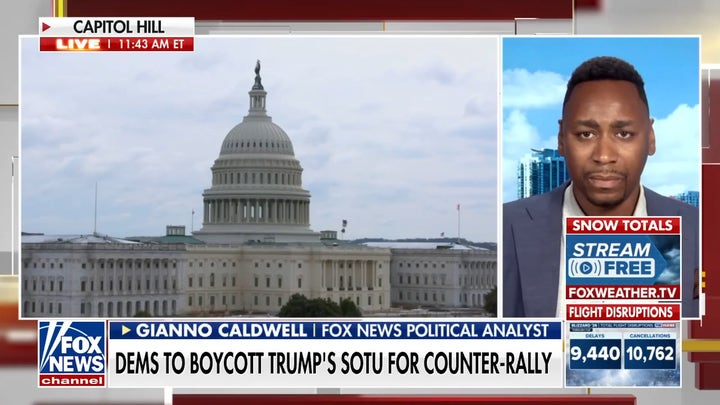
President Donald Trump announced in a Truth Social post on Tuesday that he would ‘fully and completely’ terminate any documents signed by former President Joe Biden’s autopen, including pardons and commutations.

‘Any and all Documents, Proclamations, Executive Orders, Memorandums, or Contracts, signed by Order of the now infamous and unauthorized ‘AUTOPEN,’ within the Administration of Joseph R. Biden Jr., are hereby null, void, and of no further force or effect,’ Trump wrote.

‘Anyone receiving ‘Pardons,’ ‘Commutations,’ or any other Legal Document so signed, please be advised that said Document has been fully and completely terminated, and is of no Legal effect. Thank you for your attention to this matter!’


This post appeared first on FOX NEWS

Secretary of War Pete Hegseth chastised the press following media reports that he signed off on a second strike against an alleged drug boat after the first one left survivors. 

The Trump administration has come under renewed scrutiny for its strikes in the Caribbean targeting alleged drug smugglers, after the Washington Post reported on Friday that Hegseth verbally ordered everyone onboard the alleged drug boat to be killed in a Sept. 2 operation. The Post reported that a second strike was conducted to take out the remaining survivors on the boat. 

On Monday, the White House confirmed that a second strike had occurred, but disputed that Hegseth ever gave an initial order to ensure that everyone on board was killed, when asked specifically about Hegseth’s instructions.

Hegseth said that he watched the first strike live, but did not see any survivors at that time amid the fire and the smoke — and blasted the press for their reporting.

‘This is called the fog of war. This is what you in the press don’t understand,’ Hegseth told reporters at a Cabinet meeting on Tuesday. ‘You sit in your air-conditioned offices or up on Capitol Hill and you nit pick, and you plant fake stories in the Washington Post about ‘kill everybody’ phrases on anonymous sources not based in anything, not based in any truth at all. And then you want to throw out really irresponsible terms about American heroes, about the judgment that they made.’ 

Hegseth said that after watching the first strike, he left for a meeting and later learned of the second strike. The White House said Monday that Hegseth had authorized Adm. Frank ‘Mitch’ Bradley to conduct the strikes, and that Bradley was the one who ordered and directed the second one. 

At the time of the Sept. 2 strike, Bradley was serving as the commander of Joint Special Operations Command, which falls under U.S. Special Operations Command. He is now the head of U.S. Special Operations Command.

According to Hegseth, carrying out a subsequent strike on the alleged drug boat was the right call. 

‘Admiral Bradley made the correct decision to ultimately sink the boat and eliminate the threat,’ Hegseth said Tuesday. 

Meanwhile, reports of the second strike have attracted even more scrutiny from lawmakers on both sides of the aisle on Capitol Hill and calls for greater oversight, amid questions about the strikes’ legality. 

‘This committee is committed to providing rigorous oversight of the Department of Defense’s military operations in the Caribbean,’ Reps. Mike Rogers, R-Ala., and Adam Smith, D-Wash., who lead the House Armed Services Committee, said in a statement on Saturday. ‘We take seriously the reports of follow-on strikes on boats alleged to be ferrying narcotics in the SOUTHCOM region and are taking bipartisan action to gather a full accounting of the operation in question.’

Hegseth said Tuesday that although there has been a pause in strikes in the Caribbean because alleged drug boats are becoming harder to find, the Trump administration’s campaign against the influx of drugs will continue. 

‘We’ve only just begun striking narco-boats and putting narco-terrorists at the bottom of the ocean because they’ve been poisoning the American people,’ Hegseth said. 

The Trump administration has carried out more than 20 strikes against alleged drug boats in Latin American waters, and has bolstered its military presence in the Caribbean to align with Trump’s goal to crack down on the influx of drugs into the U.S.


This post appeared first on FOX NEWS

The National Archives and Records Administration (NARA) is seeking to reform the funding structure for presidential libraries in an effort to reduce reliance on taxpayer funding for operational costs and allow NARA to focus more on preserving and providing access to records. 

Fourteen presidential libraries fall under the National Archives system, and that number is expected to jump to 16 for presidential libraries dedicated to Trump and former President Joe Biden. 

While NARA and the presidential foundations have their own individual agreements outlining cost-sharing burdens for these presidential libraries, taxpayer funding is going toward maintenance costs, including mowing lawns, painting walls and cleaning toilets at nearly all these buildings, according to NARA. 

Additionally, the government contracting process for quick repairs like broken door hinges filters through an approval process in Washington and can take weeks or months to be addressed, the agency said. 

As a result, NARA is in the process of negotiating with each presidential foundation on an individual basis so they can take greater ownership of the operational responsibilities for their specific library, Jim Byron, senior advisor to the archivist, told Fox News Digital.

‘Despite decades of well-intentioned oversight and stewardship of America’s presidential libraries by the National Archives, reality now dictates that operational changes can and should be made to ensure the long-term health of these American treasures,’ Byron said in a statement to Fox News Digital Monday. 

‘Presidential libraries have grown in scope and purpose, and with that growth — and with anticipated future additions to the system — comes increased expenditures to be borne by the American taxpayers.’ 

NARA spends $91 million annually on presidential libraries from appropriations, and the deferred maintenance costs across the entire library system total roughly $123 million. 

Under current negotiations that launched in the spring between NARA and the presidential foundations, shifting some of the costs to the presidential foundations is expected to save NARA $27 million. These funds will then be shifted toward NARA’s primary mission of preserving and sharing records, including digitizing and releasing more files, Byron said.

In the event that changes aren’t made to shift more operational costs to presidential foundations, NARA’s ability to focus on its mission will be jeopardized, according to Byron. 

‘The alternative is to do nothing and allow NARA’s appropriations to go to lawn care and toilet cleaning at the expense of FOIA processing, to close all presidential libraries when the government shuts down, to allow a deferred maintenance backlog to grow and to regret that presidential library structures were not addressed,’ Byron said. ‘The National Archives is committed to making sure that doesn’t happen while delivering for the American people.’

Luke Nichter, a history professor at Chapman University who said he averages 100 days annually for research and interviews with former government officials, told Fox News Digital that, given the constraints of the federal budget, it’s necessary for presidential foundations to shoulder more of the cost for upkeep of these presidential libraries.

‘It now takes about as much money to build a presidential library as it does to run for president — about a billion dollars,’ Nichter said in an email to Fox News Digital Tuesday. ‘The American taxpayer should not bear that. The administration deserves credit for starting an important conversation about the future of these cherished institutions.

‘In the future, the National Archives will have to focus more closely on what it does well — the preservation of federal and presidential records — and leave other functions to the presidential foundations.’ 

This most recent effort aligns with other initiatives underway at the National Archives aimed at redirecting efforts to the agency’s mission, including working with other agencies to release the John F. Kennedy, Martin Luther King Jr., and Amelia Earhart files. 

The presidential library structure varies, and NARA and each presidential foundation have their own separate public-private agreements. Typically, though, private funds are used to create a presidential library, which NARA then oversees using federal funding.

But this isn’t always the case. For example, the Obama Foundation is an entirely private entity and did not choose to construct a library for NARA to store documents, instead opting to build a private presidential center and private museum. As a result, NARA digitized and stored Obama presidential records at an existing NARA site and still oversees preserving and providing access to those records. 

Previous efforts to revamp the funding partnership between government and private entities successfully occurred in 2018, when NARA coordinated with each presidential foundation to discuss which operations it could take on amid increased budget constraints. Ultimately, those negotiations led to NARA and the George W. Bush Foundation securing a new deal splitting operational costs. 


This post appeared first on FOX NEWS

Senate Republicans are divided on their view of the deadly Sept. 2 strikes in the Caribbean as congressional inquiries into the matter mount, with some arguing that subduing suspected drug boats is the right move while others question the legality of the so-called double-tap attacks.

The Senate and House Armed Services committees are gearing up for hearings into the strikes after reports that Secretary of War Pete Hegseth, later confirmed by the White House, authorized a second strike to eliminate survivors on a suspected drug boat in the Caribbean.

But there is a growing tension among Republicans over what to do. Some support the desire of Senate Armed Services Committee Chair Roger Wicker, R-Miss., for stringent oversight of the incident, while others see the strikes as part of the Trump administration’s crackdown on drugs flowing into the country.

Sen. Bernie Moreno, R-Ohio, told Fox News Digital he was ‘very, very, very supportive of killing drug dealers. I think the more narco-terrorists that we kill, that we save American lives.’

‘I’m not concerned about killing people whose intent was to kill Americans at all,’ Moreno said.

White House press secretary Karoline Leavitt confirmed that Hegseth gave the green light for the second strike, but noted that it was Adm. Frank Bradley, the head of U.S. Special Operations Command, who ordered and directed it.

That confirmation came after a report from The Washington Post claimed Hegseth had ordered to ‘kill them all,’ which some on the Hill have disputed.

Sen. John Kennedy, R-La., said he read the article and charged that there ‘wasn’t an exact quote from Secretary Hegseth. There was an anonymous source paraphrased what the secretary allegedly said.’

‘So, here we’ve got a story in The Washington Post, which is known to hate Trump and Republicans, by a reporter who is citing an anonymous source that supposedly is saying that Hegseth said it before the strike even happened, but they don’t know exactly what he said,’ Kennedy said. ‘That is a waste of your time and mine.’

When pressed about Leavitt’s confirmation of the authorization, Kennedy said, ‘I don’t care what the White House press secretary said.’

Still, some Republicans want answers to what exactly happened.

Senate Majority Leader John Thune, R-S.D., reiterated that he believed that the Senate and House Armed Services committees’ impending probes into the matter was a ‘natural place’ to look at what happened with the strikes, but he stopped short of weighing in on whether a second strike was right or wrong. 

Well, I don’t know the particulars yet, and that’s why we’re gonna have the — we’ll look,’ Thune said. 

Sen. Thom Tillis, R-N.C., said that since the report came out, ‘We want to get to the facts.’

‘Obviously, if there was a direction to take a second shot and kill people, that’s a violation of an ethical, moral or legal code,’ Tillis said. ‘We need to get to the bottom of it. But right now, it could be, I think, was it Oxford that the word of the year is ‘rage bait’? Could be rage bait too. So we want to get to the facts.’

Senate Democrats are demanding a fulsome dive into the incident, and toeing the line of whether what transpired was a war crime.

Sen. Jack Reed, D-R.I., the top-ranking Democrat on the Senate Armed Services Committee, said he expected to have a briefing with Bradley this week.

When asked what questions he wanted to be answered, Reed said the top priority was to find out whether the strikes comported with ‘the law of war and [Uniform Code of Military Justice] and international law.’

‘I think one of the easiest ways to begin to dispel the question is to make public the video of the strikes,’ Reed said.

Sen. Tim Kaine, D-Va., has, time and again this Congress, remained a staunch critic of action taken in Iran and in the Caribbean and moved to curtail the administration’s actions through resolutions that would stymie President Donald Trump’s war powers.

He said lawmakers needed to get to the bottom of ‘whether a war crime has been committed.’

Sen. Mark Kelly, D-Ariz., was cautious not to fully paint the incident as a war crime before getting more facts, adding that he hoped the reports of the strikes were ‘not accurate.’

‘I will say, though you know as somebody who has sunk two ships myself, that folks in the military need to understand, you know, the law of the sea, the Geneva Conventions, what the law says,’ Kelly said. ‘And I’m concerned that if there were, in fact, as reported, you know, survivors clinging to a damaged vessel, that could be, you know, over a line. I hope it’s not the case.’


This post appeared first on FOX NEWS
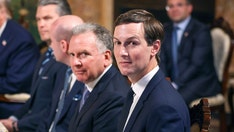
President Donald Trump said Tuesday he still likes ‘Elon a lot,’ despite their high-profile split earlier this year over the One Big Beautiful Bill Act.

At the end of the administration’s monthly Cabinet meeting, FOX Business’ Edward Lawrence asked Trump whether Musk was ‘back in [his] circle of friends’ after their falling-out.

Trump responded:Well, I really don’t know. I mean, I like Elon a lot.’ He praised Musk’s endorsement during the 2024 campaign before noting their disagreement over electric-vehicle policy.

Musk was a fixture in the White House in the early days of the second Trump administration as he took on the role as the Department of Government Efficiency’s de facto leader. He served as a special government employee with the Trump administration to help lead DOGE, frequently attending Cabinet meetings and joining Trump during public events. Musk’s tenure with DOGE wrapped up at the end of May. 

Musk had also championed Trump during the 2024 election cycle, criss-crossing battleground states that ultimately all voted for the Republican candidate over former Vice President Kamala Harris. 

Trump repeatedly celebrated Musk for his efforts at DOGE to remove potential federal overspending, fraud and mismanagement – an effort assailed by government employees and Democrats who protested both the Trump administration and Musk repeatedly earlier this year. 

The cozy friendship fell to pieces in June, however, when Musk began publicly ridiculing the ‘One Big Beautiful Bill,’ which was a massive piece of legislation Trump signed into law in July that advances his agenda on taxes, immigration, energy, defense and the national debt. 

Musk railed against the legislation, which Trump had been rallying Republican lawmakers to pass since the beginning of his second term, posting on X that it would be the ‘BIGGEST DEBT ceiling increase in HISTORY’ and also claimed in a personal attack on Trump that ‘@RealDonaldTrump is in the Epstein files.’ 

Trump previously told the media that his relationship with Musk changed when he began discussing plans to eliminate the electic vehicle mandate, which would affect Musk’s signature electric company, Tesla. Trump signed a trio of congressional resolutions in June ending California’s restrictive rules for diesel engines and mandates on electric vehicle sales, with Trump celebrating that his signature ‘will kill the California mandates forever.’

The pair abruptly parted ways in June, with Musk weeks later offering some support to Trump’s presidential actions on social media, such as praising a ceasefire deal between Israel and Gaza in July.

Musk was seen physically back in Trump’s orbit in September during the memorial service for Charlie Kirk, Turning Point USA’s founder who was assassinated on Sept. 10. The pair was seen sitting next to each other and chatting during the ceremony. 

Musk most recently attended a Trump event on Nov. 18 at the White House for a dinner with Crown Prince Mohammed bin Salman of Saudi Arabia, as well as dozens of high-profile business leaders. 

Trump’s latest remarks on Musk unfolded during his Cabinet meeting, which marked his ninth such meeting since the start of his second administration and matched the total number of full Cabinet meetings former President Joe Biden held across his four-year tenure. 


This post appeared first on FOX NEWS
China has reportedly issued the first batch of streamlined rare earth export permits to several magnet makers since its implementation of a new rare earth licensing regime following the recent Trump–Xi summit.

According to a Reuters exclusive, the source said at least three major producers received “general licenses” allowing faster exports to some clients.

These include: JL Mag Rare Earth (HKEX:6680), Ningbo Yunsheng (SHA:600366) and Beijing Zhong Ke San Huan High-Tech (SZSE:000970). JL Mag secured approval to ship to nearly all of its customers, while the two others obtained permits covering part of their client base.

All three companies, along with the Ministry of Commerce, declined to comment on the matter.

The new licenses stem from negotiations launched after President Donald Trump and President Xi Jinping met in late October, easing a stretch of trade tensions that had intensified when Beijing expanded rare earth export restrictions in April and again in October.

China began drafting a streamlined regime shortly after the meeting, but industry insiders cautioned that the changes would fall short of Washington’s hopes for a full rollback.

For months, exporters have been required to obtain a license for every shipment—an onerous process that buyers say caused weeks-long delays and even temporary shortages.

The rules slowed the approval of more than 2,000 EU applications, just over half of which were cleared.

The White House said after the summit that Beijing had agreed to introduce general licenses, framing the step as the “de facto end” of China’s export controls, though Chinese officials have not publicly confirmed any broader easing.

Rare earth firms innovate to bypass tightening restrictions

Facing long waits, or even outright denials, for exports containing restricted heavy rare earths, companies have turned to redesigning magnet formulas to avoid them entirely.

Employees from several leading manufacturers told the Wall Street Journal that firms have refined production techniques, including grinding materials into extremely fine particles to improve heat resistance without relying on the regulated elements.

The result is a new class of magnets that can operate at temperatures around 300 degrees Fahrenheit, suitable for many appliances though not always for automotive and aerospace applications.

Western buyers are embracing the products despite concerns about performance, with traders describing the choice as one between imperfect magnets and no magnets at all.

Other companies have turned to entirely different strategies. Because magnets themselves require licenses but assembled components do not, Chinese producers are increasingly partnering with local suppliers to embed magnets into motors or other parts before exporting them.

The practice has grown as Beijing intensifies scrutiny on smuggling and as magnet makers appoint compliance officers to ensure shipments adhere to the law.

But regulators have also moved to close loopholes. After firms began substituting holmium for other restricted elements, China added holmium to its control list in October, though enforcement has been delayed for one year under the Trump–Xi agreement.

Industry executives warn that Beijing could tighten restrictions again, given its dominant role in rare earth processing and its subsequent use as a geopolitical leverage.

Securities Disclosure: I, Giann Liguid, hold no direct investment interest in any company mentioned in this article.

This post appeared first on investingnews.com

Oil prices climbed on Monday (December 1) as the escalation in the US-Venezuela tensions reached a fever pitch, offsetting weeks of losses driven by oversupply expectations.

The market’s shift also came after the Caspian Pipeline Consortium (CPC)—a key transit route that carries about 1 percent of global oil—halted operations over the weekend. The company reported that a mooring point at its Russian Black Sea terminal had been damaged in a Ukrainian drone attack, which temporarily curbed exports.

Ukraine has also targeted two oil tankers heading toward Novorossiysk, further rattling market sentiment.

The supply shock landed just as OPEC+ opted to leave production levels unchanged for the first quarter of 2026. The group had signaled the possibility of a pause as early as November, seeking to avoid exacerbating what analysts feared could become a sizeable glut.

The decision provided a modest anchor for traders recalibrating expectations for early-2026 supply.

“For some time, the narrative has centred on an oil glut, so OPEC+’s decision to maintain its production target provided some relief and helped stabilise expectations for supply growth in the coming months,” LSEG senior analyst Anh Pham told Reuters.

Even with Monday’s rise, both Brent and WTI futures settled lower last Friday. This marked their fourth straight monthly decline and the longest losing streak since 2023.

Venezuela condemns US “colonialist threat”

A far more dramatic source of volatility also emerged from Washington over the weekend. On Saturday, US President Donald Trump declared that “the airspace above and surrounding Venezuela” should be considered closed.

“To all Airlines, Pilots, Drug Dealers, and Human Traffickers, please consider THE AIRSPACE ABOVE AND SURROUNDING VENEZUELA TO BE CLOSED IN ITS ENTIRETY,” the Chief Executive warned on Truth Social.

Trump also told service members last week that US forces would “very soon” begin land-based operations targeting Venezuelan drug-trafficking networks.

Further, reports surfaced that the White House and Caracas held a tense, last-ditch phone call aimed at defusing a worsening standoff.

According to sources cited by the Miami Herald, Washington told President Nicolás Maduro he could secure safe passage for himself, his wife Cilia Flores, and his son only if he stepped down immediately.

The conversation stalled as Venezuela refused to surrender control of the armed forces or accept an immediate resignation.

Washington itself has been increasingly aggressive toward what it describes as Venezuela’s Cartel de los Soles, which US officials accuse Maduro and senior leaders of operating.

Last month, the State Department’s decision to designate the cartel as a Foreign Terrorist Organization placed Maduro, Diosdado Cabello, and Vladimir Padrino López in the same legal category as al-Qaeda and ISIS.

Caracas condemned the aggression, labeling it as a “colonialist threat” seeking support from its allies. On Sunday, Maduro issued an appeal to fellow OPEC members, urging the bloc to help counter what he described as “growing and illegal threats” from the United States.

In a letter published by state broadcaster TeleSUR, he accused Washington of trying to “seize” Venezuela’s oil reserves and warned that US military pressure could disrupt the global energy market.

“I hope to count on your best efforts to help stop this aggression, which is growing stronger and seriously threatens the balance of the international energy market, both for producing and consuming countries,” Maduro wrote.

Venezuela exported just US$4.05 billion in crude oil in 2023, far below other major producers, due largely to US sanctions imposed during Trump’s first term.

Brent crude stood at US$62.76 a barrel on Tuesday morning (December 2), while US West Texas Intermediate (WTI) traded at US$58.93.

Securities Disclosure: I, Giann Liguid, hold no direct investment interest in any company mentioned in this article.

This post appeared first on investingnews.com

Southern Cross Gold (TSX:SXGC,ASX:SXG,OTCQX:SXGCF) has received work plan approval for an exploration tunnel at its Sunday Creek gold-antimony project in Victoria, Australia.

The company said in a November 27 announcement that the exploration tunnel will provide underground access to high-grade mineralization at Sunday Creek.

Southern Cross will then be able to perform detailed geological mapping and sampling of mineralized structures, and execute precision underground drilling to expand and define the resource along strike and at depth.

It will also be able to collect geotechnical data essential for future mine design, and assess various mining methods and equipment selection for potential future operations.

“This approval is a pivotal milestone in Sunday Creek’s evolution from exploration discovery to future potential mine development,” said Southern Cross President and CEO Michael Hudson, adding that underground access builds on Sunday Creek’s other key attributes, including strategic freehold land ownership and proven metallurgy.

Hudson also noted that there are currently 10 operational surface drill rigs at the site, with the company planning to add an additional 12 drill rigs underground after the decline is complete for 22 rigs in total.

That will give Sunday Creek the largest pre-development drill program in Australia.

The Minerals Council of Australia said the exploration tunnel approval is a major step forward in Victoria’s status as the sole Australian source of antimony. Interest in antimony is on the rise as the critical mineral has immense strategic importance for defense, as well as for solar panels, batteries, semiconductors and flame retardants.

“The approval of the exploration tunnel at Sunday Creek, along with October’s approval of the Catalyst Metals (ASX:CYL,OTC Pink:CTYMF)/Hancock Prospecting joint venture Boyd’s Dam gold project, sends a clear message that Victoria is open for business in advanced minerals exploration approvals for deeper mineral deposits,” wrote James Sorahan, the Minerals Council of Australia’s executive director for Victoria.

“To support Victoria’s emerging critical minerals and existing gold sectors, exploration spending needs to increase after a recent decline from record high levels,” he added.

Southern Cross said that site establishment activities are scheduled to commence within the next month.

The company is also progressing secondary approvals under the Water Act and Environment Protection Act, as well as other relevant agencies, before underground work commences.

Underground construction is projected to take six to nine months.

Securities Disclosure: I, Gabrielle de la Cruz, hold no direct investment interest in any company mentioned in this article.

This post appeared first on investingnews.com