One of my earliest memories growing up in Kalamazoo, Michigan, was a visit to the bakery at the A&P grocery store at 5800 Gull Road. It was one of a handful of places my parents could afford to shop at in the midst of the great stagflation of the 1970s. My mother made amazing birthday cakes for us as kids, and I presume she was there for some ideas. I had other things in mind. They gave away free “donut holes” to kids who were presumably well-behaved, leading to my temporarily angelic behavior whenever we went there.
Little did I know then, A&P was once regarded as a retail behemoth. A monopoly needing to be cut down to size. Their crime? Volume discounts. This allegedly nefarious practice was at the center of anti-chain-store sentiment that reached a fever pitch with the passage of the Robinson-Patman Act in 1936.
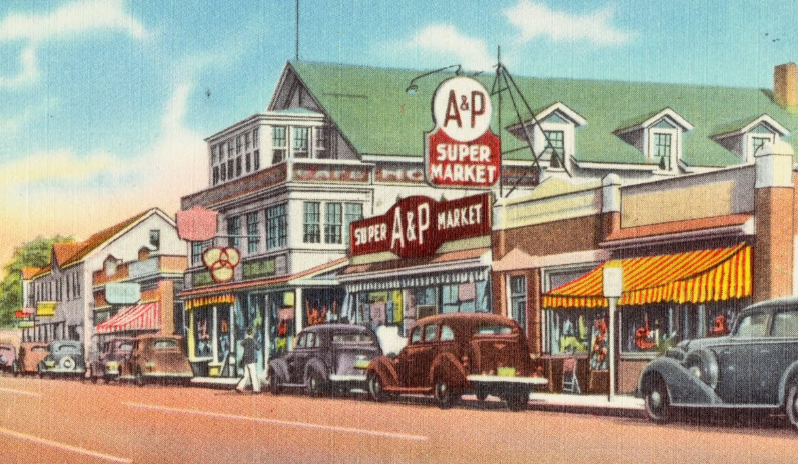
Casting chain-store grocers like A&P as greedy villains during the Great Depression, the populist Texan US Representative Wright Patman rode a wave of sentiment from smaller grocers to take down the nationwide grocer. In response to the Supreme Court striking down FDR’s National Industrial Recovery Act (NIRA), Patman sought to reimpose portions of the NIRA, which would have faced enormous opposition and risked being struck down by the Supreme Court. Instead, he cleverly decided, along with co-sponsor Senator Joseph Robinson of Arkansas, to impose the bill as an amendment to the long-standing Clayton Antitrust Act (1914).
Entitled the Robinson-Patman Antidiscrimination Act, it was popularly known as the “Anti-Chain-Store Act”, but more aptly known as “The Wholesale Grocers’ Protection Act.” Indeed, it was largely written by the wholesalers’ trade association. The bill aimed to protect smaller competitors from the allegedly anti-competitive restraints on trade posed by retail giants like A&P. This was an easy sell to the public at a time when unemployment was at 18 percent, with many small-town retailers closing up shop.
In order to secure passage, the legislators amended Section 2 of the Clayton Antitrust Act of 1914, with enforcement assigned to the Federal Trade Commission (FTC), a move that helped minimize opposition.. That section was intended to “supplement existing laws against unlawful restraints and monopolies, and for other purposes”. The “other purposes” would eventually be made known, to the detriment of consumers throughout the nation.
The specific wording of the Robinson-Patman Act reveals its fundamental economic error. It made it unlawful for “any person engaged in commerce…to be a party to, or assist in, any transaction of sale, or contract to sell, which discriminates to his knowledge against competitors of the purchaser.” In frank language, it became illegal for a wholesaler to offer a bulk discount to larger retailers like A&P. This essentially prohibited suppliers from offering A&P the volume discounts their efficiency and scale had earned, and passed on to their beleaguered consumers. A single offense could land the wholesaler in hot water with the FTC, with potential fines up to $5,000 and up to a year in prison, or both.
This law wasn’t designed to enhance competition, protect grocers, or serve customers. Rather, its design was to impose a price floor that protected wholesalers from the retailers who had enough market knowledge and a good enough reputation to work with competing wholesalers willing to sell for less. Hence, the more fitting title: The Wholesale Grocers’ Protection Act.
In an ironic twist, the Roosevelt administration — which had created the NIRA and imposed higher retail prices — opposed the bill. They objected on the grounds that it would prohibit the kind of discount pricing by retailers that the Depression-ridden public needed to make ends meet. But Congress had its way on this matter. Historian Marc Levinson observed that the Robinson-Patman Act “had less to do with economics than trying to hold together a society that was fraying badly after six years of the Depression.” It wasn’t about sound economics; it was about populist PR.
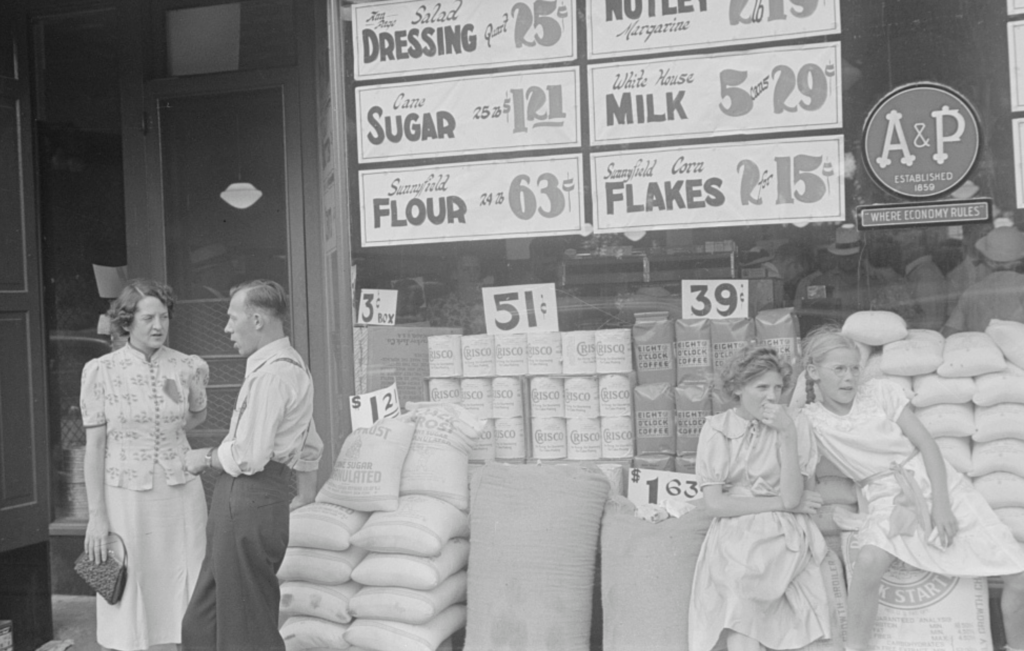
More than seventy years after its passage, the bipartisan Antitrust Modernization Commission (AMC) recommended its repeal. The commission concluded that “the RPA protects competitors over competition and punishes the very price discounting and innovation in distribution methods that the antitrust laws otherwise encourage.”
Independent grocers from the 1930s weren’t being victimized by A&P. They were losing out to a model that better served customers. The Robinson-Patman Act was designed to prevent discounts before they could be passed on to consumers. Dominic Armentano, writing in 1986, made it even clearer that both the Clayton Antitrust Act, Section 2 and the RPA “explicitly intend to restrict price rivalry in the name of preserving competition. Government antitrust suits against firms that price discriminate almost always result in the defendant firm raising some of its prices to comply with the law.”
This historic record shows that Main Street populism has unintended consequences. By limiting competition in defense of the so-called “mom and pop” stores, the RPA delivered higher prices that hurt the lowest-income households throughout the US at the height of the Great Depression. What was sold to the public as a fight for the little man was in reality a tax on consumers to subsidize local merchants.
Although the act saw minimal enforcement by the FTC or the Department of Justice throughout its history, it reared its ugly head under the Biden administration in 2024. In December of that year, the FTC filed suit against Southern Glazer’s Wine & Spirits, the nation’s largest wine and spirits distributor. The agency alleged that it was offering that most heinous of crimes: bulk discounts to large retailers. A similar suit was then filed against the PepsiCo. While the PepsiCo suit has been summarily dismissed, the litigation against Southern Glazer continues. The current FTC Chair, Andrew Ferguson, wrote a clarion dissent against the Biden administration’s use of the RPA and while litigation continues, this bodes well for Southern Glazer. If the FTC prevails, however, the pain will immediately be felt by consumers who are the beneficiaries of their discounts.
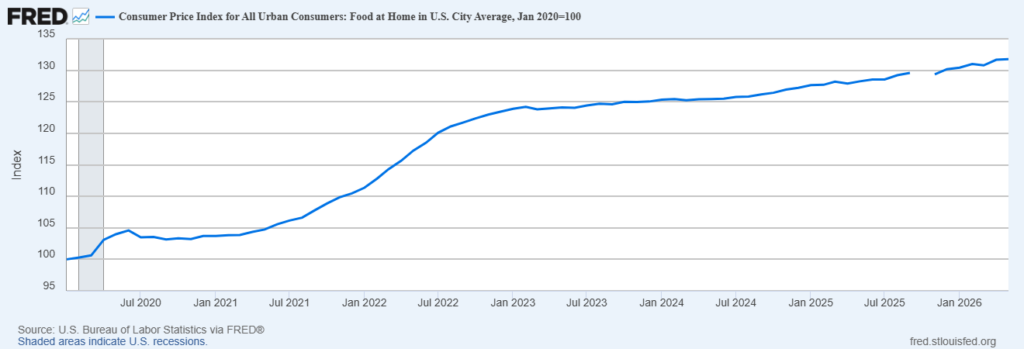
While my childhood visits to A&P are now distant memories, the feeling of middle-class families needing to stretch their dollars in an inflationary environment is as fresh as those donuts I enjoyed as a kid. With the Consumer Price Index (CPI) for food at home up 31.8 percent since 2020, grocery store discounts are what’s holding some households together. The time is long past for retiring the Robinson-Patman Act. As Alden Abbott has eloquently put it, “repeal remains the first-best response to a law long criticized as ‘corporate welfare at consumers’ expense.’”
