Author

admin

Browsing

A Tuesday Senate hearing is set to expose billions in fraud in Minnesota as well as foreign backing for anti-ICE agitators across the country, Sen. Josh Hawley’s office told Fox News Digital.

The hearing before the Homeland Security Subcommittee on Disaster Management, which Hawley chairs, will feature testimony from a Minnesota state senator and representatives of third-party watchdog groups. Systemic fraud backed by transnational groups has stolen billions from child nutrition, FEMA assistance, housing, Medicaid and substance abuse services, the testimony is expected to say.

‘American taxpayers are getting robbed blind—billions stolen in Minnesota, and hundreds of billions siphoned out of the country by transnational criminals every year—all while foreign actors coordinate chaos on our streets,’ Hawley told Fox News in a statement.

‘Enough is enough. It’s time to root out the dark money and shut down the foreign influence,’ he added.

Minnesota State Sen. Mark Koran’s testimony will highlight the role Minnesota Gov. Tim Walz and Attorney General Keith Ellison played in allowing fraud to fester and spread across the state in what he calls the ‘largest expansion and fastest acceleration of fraud this country has ever seen.’

Witnesses are expected to say that senior officials were not only aware of the fraud but have also taken steps to hide it from public scrutiny by backdating audit records and cracking down on whistleblowers.

A Minnesota Department of Human Services (DHS) whistleblower told Fox News that she was the victim of a ‘smear campaign’ after raising red flags about fraud in the state since 2019.

Federal prosecutors estimate that up to $9 billion was stolen through a network of fraudulent fronts posing as daycare centers, food programs and health clinics. The majority of those charged, so far, in the ongoing investigation are part of Minnesota’s Somali population.

In addition to Koran, lawmakers will hear testimony from Seamus Bruner, the vice president of the Government Accountability Institute; Dylan Hedtler-Gaudette, the acting vice president of Policy & Government Affairs for the Project on Government Oversight, and Haywood Talcove, the CEO of LexisNexis Risk Solutions, Government.

Minnesota whistleblower claims lawmakers IGNORED fraud for YEARS

Talcove’s testimony will focus on transnational groups that he says are exploiting federal assistance programs and using stolen funds support ‘organized crime, drug trafficking, human exploitation, and, in some cases, terrorist-affiliated or hostile foreign actors.’

Bruner’s testimony will also focus on foreign influence, linking the funding streams to foreign actors, including individuals with ties to the Chinese Communist Party.


This post appeared first on FOX NEWS

The Republican-led House Committee on Ways and Means is set to hold a hearing on Tuesday morning digging into foreign influence in American nonprofits, with several NGOs and far-left funding networks expected to be on the hot seat. 

At 10 a.m. on Tuesday, House Committee on Ways and Means Chair Jason Smith will oversee a hearing, ‘Foreign Influence in American Non-profits: Unmasking Threats from Beijing and Beyond.’ The hearing will be broadcast online at the committee’s website.

Witnesses at the hearing will include Capital Research Center president Scott Walter, Americans for Public Trust Executive director Caitlin Sutherland, Narravance CEO Adam Sohn, Dubinsky Consulting founder Bruce Dubinsky and Public Citizen co-founder Robert Weissman.

In a press release, the committee said the hearing will focus on the ‘ways foreign actors have funneled millions of dollars through networks of tax-exempt organizations to create, support, and fuel disruption and illegal activity across the country.’

The hearing is expected to examine a network of nonprofits, including organizations funded by Neville Roy Singham, an American-born tech tycoon and self-styled Marxist-Leninist, living in Shanghai. Singham has funded nonprofit groups, including the People’s Forum, CodePink, BreakThrough BT Media, the ANSWER Coalition and the Party for Socialism and Liberation, which have worked closely with Democratic Socialists of America in dispatching socialist, Marxist-Leninist and communist foot soldiers into the streets to disrupt federal immigration law enforcement agents and stoke chaos.

‘For too long, foreign actors have gotten away with abusing our tax-exempt sector to [sow] division and chaos in our country,’ Smith posted on X on Tuesday morning. ‘Today, we’re putting them on notice. Going to be a late night in China for Shanghai Singham!’

Over the past year, Fox News Digital has documented a pattern of coordinated protests by socialist, communist and Marxist groups, revealing a synchronized ecosystem of funding, media amplification, ideological framing and street-level mobilization that aligns with the strategic interests of hostile foreign governments, including the People’s Republic of China.

‘Tax-exempt status is a privilege not a right,’ Smith told Fox News Digital. ‘Nonprofits must remain accountable and refuse to act as instruments of hostile foreign governments.’

The Ways and Means Committee ‘continues to investigate how foreign money and foreign-linked networks are funneled through tax-exempt entities to sow discord and unrest in our society,’ he said. ‘That’s why we’re demanding answers from Tricontinental and BreakThrough about their funding streams, activities and communications with CCP-linked individuals, including Neville Roy Singham.’

Hours before the hearing, Fox News Digital reported that Smith escalated his investigation into Singham, who has allegedly been ‘sowing chaos and spreading Chinese propaganda, possibly in coordination with a foreign government.’

In separate letters, Smith demanded records from BreakThrough and Tricontinental, warning that both tax-exempt organizations may be operating outside their lawful purpose as possible unregistered foreign agents, while helping to fuel domestic unrest under the guise of journalism and academic research.

Congressional investigators say the Singham network sits at the center of a malign foreign influence operation that allegedly exploits U.S. nonprofit laws to inject anti-American propaganda into domestic protest movements and sow discord from within the United States.

The letters describe a full-spectrum operation, with funding aligned with foreign interests flowing into tax-exempt nonprofits that produce ideological research, media narratives and social media messaging, which are then deployed onto U.S. streets through tightly choreographed protests.

‘If the evidence shows these groups are acting as conduits for CCP-aligned propaganda or functioning like foreign agents while enjoying U.S. tax benefits, their tax-exempt status should be revoked immediately,’ Smith said. ‘We’re going to follow the money and demand accountability to put a stop to Beijing’s exploitation of our tax-exempt sector.’


This post appeared first on FOX NEWS

Relationship Represents Potential Long Term Scalability of High Efficiency Supply Chain from Demonstration to Commercial Scale

Syntholene Energy CORP (TSXV: ESAF) (FSE: 3DD0) (OTCQB: SYNTF) (‘Syntholene’ or the ‘Company’) announces that it has selected Dynelectro ApS (Denmark) as the electrolyzer technology vendor for its planned synthetic fuel demonstration facility in Iceland. Dynelectro is the developer of what it describes as the world’s most efficient electrolyzer platform, purpose-built for high-performance hydrogen production in power-to-liquids applications for synthetic fuel (‘eFuel’) and, more specifically, synthetic sustainable aviation fuel (‘eSAF’).

Dynelectro’s electrolyzer platform has demonstrated industry-leading energy efficiency in the production of hydrogen, a key feedstock to eFuels, while maintaining durability under continuous industrial operation at variable load. The system architecture emphasizes reduced balance-of-plant complexity, high current density operation, and modular deployment, characteristics that align closely with Syntholene’s objective of developing capital-efficient, repeatable synthetic fuel infrastructure.

The planned demonstration facility is intended to validate the Company’s integrated approach to producing low-cost hydrogen as a feedstock to eSAF and other eFuels, with a focus on scalability, energy efficiency, and long-term cost competitiveness with fossil fuels.

‘Syntholene’s eSAF production plans are a perfect match for Dynelectro’s electrolyser solution,’ explains Sune Lilbaek, CEO at Dynelectro ApS. ‘To be successful in the eSAF market, the lowest possible cost of hydrogen over the lifespan of the plant is a necessity. Dynelectro’s unique take on SOEC electrolysers seeks to enable the lowest possible energy consumption and maintenance cost. When integrated with Syntholene’s proprietary hybrid thermal production system, it is possible to convert up to 90% of the renewable electrical energy supplied into clean hydrogen. Together, we expect to be deploying the most cost-effective, energy-efficient solution for production of sustainable aviation fuel on the market today.’

The vendor selection represents a key technical milestone for Syntholene as it advances engineering and procurement activities associated with its first demonstration-scale facility.

‘The selection of Dynelectro is the result of a rigorous two-year technical and commercial evaluation process across all major vendors focused on efficiency, reliability, and long-term scalability,’ said Dan Sutton, CEO of Syntholene. ‘Electrolyzer performance coupled with low-cost clean energy are the primary drivers of synthetic fuel economics. Partnering with a technology provider that prioritizes energy efficiency and industrial robustness is critical as we move from demonstration toward multi-megawatt commercial deployment.’

About Syntholene

Syntholene is actively commercializing its novel Hybrid Thermal Production System for low-cost clean fuel synthesis. The target output is ultrapure synthetic jet fuel, manufactured at 70% lower cost than the nearest competing technology today. The company’s mission is to deliver the world’s first truly high-performance, low-cost, and carbon-neutral synthetic fuel at an industrial scale, unlocking the potential to produce clean synthetic fuel at lower cost than fossil fuels, for the first time.

Syntholene’s power-to-liquid strategy harnesses thermal energy to power proprietary integrations of hydrogen production and fuel synthesis. Syntholene has secured 20MW of dedicated energy to support the Company’s upcoming demonstration facility and commercial scale-up.

Founded by experienced operators across advanced energy infrastructure, nuclear technology, low-emissions steel refining, process engineering, and capital markets, Syntholene aims to be the first team to deliver a scalable modular production platform for cost-competitive synthetic fuel, thus accelerating the commercialization of carbon-neutral eFuels across global markets.

About Dynelectro

Dynelectro is a Danish SOE electrolyser OEM at the forefront of developing advanced, sustainable energy solutions. Utilising cutting-edge solid-oxide electrolysis technology, Dynelectro achieves unprecedented system performance and lifespan, enabling a five-fold improvement in lifetime performance through a novel approach to stack control and integration. Their innovations enable operators to seamlessly adjust production based on the availability of cost-effective renewable energy.

The company commercialises MW-scale Dynamic Electrolyser Units (DEUs), producing clean hydrogen to unlock syngas and e-fuel production. Dynelectro was founded in 2018 and is headquartered in the capital region of Denmark. Visit www.dynelectro.dk

For further information, please contact:
Dan Sutton, CEO
comms@syntholene.com
www.syntholene.com

Investor Relations
KIN Communications Inc.
604-684-6730
ESAF@kincommunications.com

Forward-Looking Statements
This press release contains forward-looking statements within the meaning of applicable securities laws. The use of any of the words ‘expect’, ‘anticipate’, ‘aims’, ‘continue’, ‘estimate’, ‘objective’, ‘may’, ‘will’, ‘project’, ‘should’, ‘believe’, ‘plans’, ‘intends’ and similar expressions are intended to identify forward-looking information or statements. All statements, other than statements of historical fact, including but not limited to statements regarding the use of a particular vendor, the services to be provided and standard of delivery, expected benefits of engagement of certain service providers, development of the Company’s test facility, commercial scalability, technical and economic viability, anticipated geothermal power availability, anticipated benefit of eFuel, the Company’s business plans, and future commercial opportunities, are forward-looking statements.

The forward-looking statements and information are based on certain key expectations and assumptions made by the Company, including without limitation the assumption that the Company will be able to execute its business plan, that the eFuel will have its expected benefits, that the selected vendor will be able to complete their deliverables on time and to the standard expected, that the test facility will be completed as planned, that there will be market adoption, and that the Company will be able to access financing as needed to fund its business plan. Although the Company believes that the expectations and assumptions on which such forward-looking statements and information are based are reasonable, undue reliance should not be placed on the forward-looking statements and information because the Company can give no assurance that they will prove to be correct. Since forward-looking statements and information address future events and conditions, by their very nature, they involve inherent risks and uncertainties.

Actual results could differ materially from those currently anticipated due to a number of factors and risks, including, without limitation, Syntholene’s ability to meet production targets, realize projected economic benefits, meet targeted timelines for development, overcome technical challenges, secure financing, maintain regulatory compliance, manage geopolitical risks, and successfully negotiate definitive terms. Syntholene does not undertake any obligation to update or revise these forward-looking statements, except as required by applicable securities laws.

Readers are advised to exercise caution and not to place undue reliance on these forward-looking statements.

Corporate Logo

To view the source version of this press release, please visit https://www.newsfilecorp.com/release/283350

News Provided by TMX Newsfile via QuoteMedia

This post appeared first on investingnews.com

President Donald Trump vowed to impose ‘very severe consequences’ on Russia in 2025 if it didn’t commit to a deal to end its war on Ukraine.

As the war nears its four-year anniversary in late February, national security experts tell Fox News Digital that Russia is facing tangible consequences for the war. Those are through its network of proxy countries that have directly endured the might of the U.S. military and subsequently left Russia with fewer streams of revenue and resources, they say. 

‘The President’s moves as it pertains to Russia are really strategic,’ Morgan Murphy, who previously served as the senior public diplomacy advisor to the president’s special envoy to Ukraine in 2025, told Fox News Digital. ‘So if you look at what he’s done with Iran and with Venezuela, these are two Russian proxies, right? Iran is a close ally of Russia.’

‘They sell a lot of drones to Russia,’ Murphy, who is running as a GOP Senate candidate to represent Alabama, continued. ‘Venezuela was again a proxy of Russia here in our hemisphere, and Trump is in the process of taking Iran off the table. He’s certainly taken Venezuela off the chessboard, and that that has to change Putin’s calculus, because he sees in President Trump a president who follows what he says he’s going to do.’ 

Russia’s war on Ukraine has persisted since Feb. 24, 2022, about a year after Trump’s first administration ended and during President Joe Biden’s presidency. Trump campaigned on ending the war upon his second inauguration in 2025, but ending the war has proven more difficult than anticipated as the U.S. continues negotiations. 

A White House official who spoke to Fox Digital said Trump is driven by humanitarian concerns and wants the conflict ended to stop the needless loss of life. The official added that in recent months his team has made major headway toward a settlement, pointing to Trump’s own remarks that ‘very good things’ are developing between Ukraine and Russia.

According to the official, recent negotiations in Abu Dhabi, United Arab Emirates, were substantive and constructive, with U.S., Ukrainian and Russian delegations agreeing to a 314-person prisoner exchange — the first in five months. While more work is ahead, the official argued that breakthroughs like this show sustained diplomacy is producing real, measurable progress toward ending the war.

Trump launched a series of strikes on Iran in June 2025 that hobbled the country’s covert nuclear program. Massive protests swept Iran in December 2025 as citizens spoke out against the government and its cratering economy. 

Iran violently cracked down on the nationwide protests, with thousands of citizens reportedly killed and the Trump administration warning Iran that it would face U.S. military action if the executions and killings continued. 

The U.S. and Iran held discussions in Oman Friday as Tehran, Iran, continues to obscure its nuclear ambitions, with military intervention on the table as the U.S. seeks to prevent Iran from having nuclear weapons capabilities. 

Iran and Russia have grown into a tighter wartime partnership in recent years, with U.S. and allied officials citing Iran’s supply of armed drones and other defense cooperation that has helped power Russia’s attacks in Ukraine — drawing the two heavily sanctioned regimes closer economically and militarily.

Ret. Air Force Gen. Bruce Carlson pointed to the Trump administration’s actions on Iran and Venezuela as evidence of how Trump is strategically pressuring Russia via its proxies to end the war in Ukraine. 

‘In any campaign, you don’t just target command centers — you cut supply lines and logistics,’ Carlson said. ‘Pressuring Russian proxies does exactly that. Venezuela, Iran, and the shadow fleet are key arteries feeding Russia’s war in Ukraine. Additionally, by pressing Europe to increase NATO spending and move off Russian oil and gas, we are directly altering Moscow’s decision-making.’

Carlson argued that, strategically, the trend lines are moving against Moscow as the U.S. ramps up pressure on Russia’s partners — leaving Putin with fewer backers, tighter resources and less flexibility, and undermining any assumption that dragging out the war comes without a cost. 

The retired Air Force general added that Putin and his proxies operate as a single ecosystem: Russia’s campaign relies on outside suppliers and sanctions-busting networks, so hitting any link in that chain can weaken Russia’s revenue and its ability to sustain attacks on Ukrainian civilians.

‘But ensuring a lasting and fair peace is not solely about pressuring Russia. As the cold winter continues in Ukraine, there are increasing concerns on Ukraine’s energy needs and air defense systems. U.S. and European support remain vital,’ he added. 

As tensions with Iran heighten, the Trump administration successfully captured Venezuelan dictator Nicolás Maduro on sweeping narco-trafficking charges in January. 

Venezuela is another Russian ally, publicly backing Moscow and maintaining high-level diplomatic ties, while giving Russia a Western Hemisphere foothold through military-technical cooperation and deep dependence on Russian arms — a relationship that has triggered U.S. sanctions actions tied to Venezuela’s oil sector and Russian-linked firms.

‘The removal of Maduro stripped Moscow of a key client in our hemisphere, and the increased pressure on Iran threatens the weapons and drone supply chain that Russia uses against Ukrainian civilians,’ Carrie Filipetti, executive director of foreign policy group the Vandenberg Coalition, told Fox News Digital. ‘This is how we have to change Putin’s long-term calculus.’

‘For the first time, the United States has used the power of American diplomacy to bring Ukraine and Russia into trilateral diplomatic talks,’ Filipetti added. ‘Combined with the threat of additional sanctions reliance and increased pressure on the countries that buy Russian energy, these steps are critical to shaking Russia’s assumption that time is on its side.’ 

Ret. Air Force Lt. Gen. Richard Newton told Fox News Digital that when Trump warned Russia of severe consequences in 2025 if Moscow did not end the war, the threat was followed by tangible consequences that reverberated through the Kremlin. 

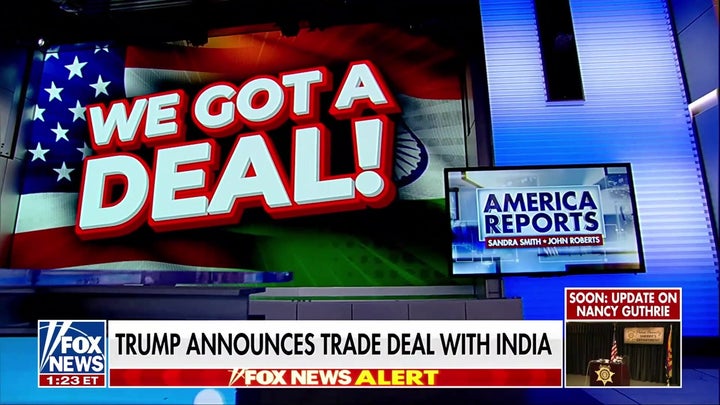
‘Deterrence and leverage requires our adversaries (to) believe we will act,’ Newton said. ‘President Trump is doing just that by disrupting the systems that fund and sustain Putin’s war. The capture of Maduro and the just announced trade deal with India’s Prime Minister Modi — that forces India off of Russian oil — is a major blow to Russia’s war machine.’

The White House said in February that it struck with India to increase U.S. energy imports and stop buying Russian oil. The U.S. tops the world in daily oil production, with Saudi Arabia and Russia following behind. 

Filipetti argued that peace in Ukraine is only obtained by forcing Russia to face ‘real consequences.’

‘Vladimir Putin is responsible for a war of aggression marked by atrocities against Ukrainian civilians, and any lasting peace must impose real consequences on Russia itself. And weakening Russia’s proxies and isolating Putin is one of the most effective ways to reduce his ability to wage war,’ Filipetti said.

‘When it comes to China, North Korea, and Iran — without question these authoritarians are facing a very different calculus than just a few months ago,’ she said. 

Trump announces major trade deal with India, includes halt to Russian oil purchases

While Newton pointed to a shadow-fleet sanctions package and another sanctions package that are moving through Congress, along with higher NATO spending and a tougher allied military posture, as key pressure points he says could help drive a peace deal.

Republican South Carolina Sen. Lindsey Graham is promoting a sweeping Russia sanctions bill that would tighten the screws on Moscow by punishing countries and companies that keep buying Russian energy with secondary sanctions and tariffs, while a separate bipartisan ‘shadow fleet’ package would target the tankers, insurers and shell networks Russia uses to move oil and evade sanctions.

Murphy argued that Trump already has sketched what he sees as a realistic off-ramp for Moscow — one he says even some Democrats would recognize as the best deal Putin is likely to get — including restoring Russia’s seat at the top diplomatic table, reopening some Western commercial access, and acknowledging Russia’s current occupation of Ukrainian territory without formally recognizing sovereignty. 

Murphy likened that offer to a ‘golden bridge’ for Putin to exit the war, but said the Kremlin has so far declined it, making the next move ultimately Russia’s choice — and raising the question of how many more casualties Moscow is willing to absorb with no clear endpoint in sight.

The war underscores a Russian worldview U.S. negotiators often misread through a Western lens, Murphy said, explaining Russia is shaped by catastrophic losses in World War I and World War II and a deep-seated suspicion that invasion is a recurring threat. He said that unpredictability is why the U.S. military has long used the ‘Crazy Ivan’ moniker for Russian behavior. 

Trump is meanwhile putting himself in the Russians’ shoes, Murphy argued, and meeting the moment with a clearer-eyed read of Moscow’s mindset and history. 

‘It is a decision that the Russians are going to have to make. How many more lives do they want to feed into this meat grinder? How many more deaths are they willing to endure?’ Murphy said. 

Ukrainian President Volodymyr Zelenskyy told reporters in February that the U.S. set a June deadline for Moscow and Kyiv to strike an agreement to end the war, teeing up heightened tensions ahead of the U.S. midterms in November. 


This post appeared first on FOX NEWS

The Senate is scrambling to avoid a third government shutdown under President Donald Trump, and after negotiations seemingly appeared to hit a brick wall, lawmakers are cautiously optimistic that a deal could be made. 

Senate Republicans received Senate Democrats’ ‘partisan wishlist’ of demands over the weekend, sources familiar with negotiations told Fox News Digital. The White House sent over its own counter-proposal, but several lawmakers weren’t clear what was in package as of Monday night. 

Some, including Senate Majority Leader John Thune, R-S.D., wouldn’t say, but noted that congressional Democrats and the White House were ‘trading papers,’ and signaled that the back and forth activity was a good sign of negotiations moving forward. 

But lawmakers aren’t out of the woods yet, a reality that Thune warned of since Senate Democrats demanded a two-week funding extension for the Department of Homeland Security (DHS). Congress has until Friday to avert a shutdown and little time to actually move a short-term patch from one side of the building to the other. 

Republicans are mulling another short-term extension, known as a continuing resolution (CR), to avert a partial shutdown. Thune said whether Democrats would sign off depended on how well background negotiations were going, but hinted that so far, things were moving toward a solution. 

‘I think, based on what I’m familiar with about the discussion so far, I think there is, but we’ll know more when the proposal comes back,’ Thune said. ‘Let’s have a chance to evaluate it.’ 

Thune later said that he planned to tee up another CR on Tuesday, but noted that the length would ‘have to be negotiated. But let’s see what the next day brings and we’ll go from there.’

Democrats’ prime objective is reining in Immigration and Customs Enforcement (ICE), following the fatal shootings of Alex Pretti and Renee Nicole Good. 

The proposal they submitted included items that are a bridge too far for Republicans, including requiring ICE agents to get judicial warrants, de-mask and have identification ready — some in the GOP warn doing so would lead to more agents being doxxed, or when a person’s private information is made public, like their address. 

Senate Minority Leader Chuck Schumer, D-N.Y., warned that the ‘clock is ticking’ for Republicans to respond. 

‘We have sent you our proposals, and they are exceedingly reasonable,’ Schumer said on the Senate floor. ‘I hope our colleagues on the other side, many of whom, at least here in the Senate, recognize that things need to change, show they’re ready to act in a meaningful way.’

Prior to Democrats finally handing over the legislative version of their demands on Saturday, Republicans publicly questioned if they actually wanted to have serious negotiations. That changed over the weekend. 

A White House official told Fox News that ‘President Trump has been consistent, he wants the government open and the Administration has been working with both parties to ensure the American people don’t have to endure another drawn-out, senseless, and hurtful shutdown.’

Meanwhile, the scope and scale of a possible third closure would be limited to just the DHS, but would really only have an effect on FEMA, TSA, the Coast Guard and other priorities under the agency’s umbrella. That’s because ICE and immigration operations are flush with billions from Trump’s ‘big, beautiful bill.’ 

‘To say that the security of Americans is not paramount, I think, would be a huge mistake for the Democrats, and I certainly hope that they’ll continue to operate in good faith,’ Sen. Katie Britt, R-Ala., and the chair of the Homeland Security spending panel, said.

‘Because you do realize, ICE and [Customs and Border Patrol] would continue to be funded,’ she continued. 

Things are also about to get complicated quickly in the upper chamber. Lawmakers are set to leave Washington, D.C., for a weeklong recess this Thursday, and many are headed overseas to the Munich Security Conference. 

That starts on the day of the deadline and lasts through the weekend. Thune warned that it was possible he would cancel the upcoming recess, especially if there was little progress toward avoiding a DHS shutdown. 

Still, Senate Democrats believe that the ball is in the GOP’s court and are waiting for their counterparts to act. 

‘I mean, I think they’re pretty reasonable,’ Sen. Chris Murphy, D-Conn., and the top Democrat on the Senate Homeland Security Appropriations panel, said.

‘I mean, we did not ask for the moon,’ he continued. ‘We asked for targeted but impactful changes in the way that ICE is terrorizing American cities. So obviously we’re willing to negotiate.’


This post appeared first on FOX NEWS

Iranian Foreign Minister Abbas Araghchi said his country would not negotiate on its ballistic missile program, rejecting a core U.S. demand and further dimming prospects for a breakthrough deal.

He again warned in an interview with Al Jazeera that Tehran, Iran, would target U.S. bases in the Middle East if provoked, calling Iran’s missile program ‘never negotiable.’

The warnings came as U.S. and Iranian negotiators met in early February in Oman, even as Washington continued to build up military forces across the region — a posture U.S. officials say is meant to deter further escalation but which analysts argue also underscores how far apart the two sides remain.

Despite the imbalance in military power, analysts say Iran believes it can withstand U.S. pressure by signaling greater resolve — and by betting that Washington’s appetite for war is limited.

While the U.S. possesses overwhelming military capabilities, Defense Priorities analyst Rosemary Kelanic said Iran is relying on the logic of asymmetric conflict.

‘One country is much stronger, but the weaker country cares more,’ Kelanic said. ‘And historically, the country that cares more often wins by outlasting the stronger one.’

‘Iran is trying to signal resolve as strongly as it can, but it likely doubts U.S. resolve — because from Tehran’s perspective, the stakes for Iran are existential, while the stakes for the United States are not,’ she added.

Behnam Taleblu, a senior fellow at the Foundation for Defense of Democracies, said Tehran’s primary leverage is its ability to threaten wider regional instability, even if it cannot win a prolonged conflict.

‘The Islamic Republic’s leverage is the threat of a region-wide war,’ Taleblu said, noting that while U.S. and Israeli defenses could intercept most attacks, ‘something will get hit.’

Iran buying time

Analysts across the spectrum agree that Iran is using negotiations less as a path to compromise than as a way to delay decisive action.

Oren Kessler, analyst at global consulting firm Wikistrat, said Iran is using talks to stabilize its position internally while avoiding concessions on core security issues.

‘Both sides want a deal, but their red lines are very hard for the other side to overcome,’ Kesler said. ‘The talks are going well in the sense that they’re happening, but they’re not really going anywhere.’

Taleblu echoed that assessment, arguing that Tehran is treating diplomacy as a shield rather than a solution.

‘The regime is treating negotiations as a lifeline rather than a way to resolve the core problem,’ he said.

Taleblu added that Iran’s leadership sees talks as a way to deter a strike in the short term, weaken domestic opposition in the medium term, and eventually secure sanctions relief to stabilize its economy.

Secretary of State Marco Rubio has insisted that limits on Iran’s ballistic missiles must be part of any agreement to avoid military action.

‘At the end of the day, the United States is prepared to engage, and has always been prepared to engage with Iran,’ Rubio said in early February. ‘In order for talks to actually lead to something meaningful, they will have to include certain things, and that includes the range of their ballistic missiles. That includes their sponsorship of terrorist organizations across the region. That includes the nuclear program. And that includes the treatment of their own people.’

Anti-government protests beginning at the start of 2026 led to a brutal crackdown in Iran. The regime has admitted to 3,117 deaths linked to the demonstrations, though human rights groups and Iranian resistance organizations peg the death toll as much higher. 

The U.S. also has demanded that Iran give up all enriched uranium stockpiles, which can be used for civilian energy at low levels but for nuclear weapons at higher concentrations.

Araghchi told Al Jazeera that Iran is willing to negotiate on nuclear issues but insisted enrichment is an ‘inalienable right’ that ‘must continue.’

‘We are ready to reach a reassuring agreement on enrichment,’ he said. ‘The Iranian nuclear case will only be resolved through negotiations.’

Iran’s atomic chief said Monday that Tehran would consider diluting its 60% enriched uranium — a level close to weapons-grade — but only in exchange for the lifting of all sanctions.

As negotiations unfolded, the U.S. continued to expand its military footprint in the Middle East.

In late January, the U.S. dispatched a carrier strike group centered on the USS Abraham Lincoln to the North Arabian Sea, accompanied by multiple destroyers and other naval assets. Additional F-15E strike aircraft and air defense systems have also been repositioned at bases across the region, alongside thousands of U.S. troops.

Taleblu said the administration may be using diplomacy to buy time of its own.

‘The charitable interpretation is that the president is buying time — moving assets, strengthening missile defense, and preparing military options,’ he said. ‘The less charitable interpretation is that the United States is taking Iran’s threats as highly credible and still chasing the optics of a deal.’

In 2025, five rounds of talks similarly stalled over U.S. demands that Iran abandon enrichment entirely — talks that ultimately collapsed into Operation Midnight Hammer, a U.S.-led bombing campaign against Iranian nuclear facilities.


This post appeared first on FOX NEWS

A year or so ago, I met my friend’s mother for the first time at a wedding. She told me that she was Mississippi born and raised, but that after her kids were born she and her husband decided to move to North Carolina. Turns out the whole extended family was from Mississippi, still lives there, still loves it there.

“Why did you leave?” I asked.

“Because we had little kids, and the schools were terrible.”

Her answer didn’t surprise me – I’d heard about Mississippi’s bad schools before. But while its schools were terrible enough to induce a cross-country move when her kids (now in their mid-twenties) were young, that’s no longer the case. 

Mississippi has become an educational role model, a shining example of what’s possible inside public schools. It’s a turnaround story no one expected.

Mississippi is, on average, a state that people leave. It has the fourth-lowest in-migration rate in the country (only Louisiana, Michigan, and Ohio have fewer transplants from other states), while 36 percent of its young people move out-of-state. On net, its population is shrinking. Between 2020 and 2024, 16,000 more Mississippi residents died than were born.

Mississippi is a state known for its poverty, its unreliable infrastructure, and its substandard health care system – as well as its poor overall public health. It leads the nation in pregnancy-related deaths and high infant mortality rates. Its capital city, Jackson, has contamination issues with its water supply (with an annual average of 55 breaks per 100 miles of water line, nearly four times the national safety limit of 15). Mississippi consistently comes in as the poorest state in the country, with one in four Mississippi children living below the poverty line.

It’s not a state most Americans look to as a role model.

But over the past fifteen years, this unassuming Deep South state has been quietly pulling off one of the most impressive feats in American public education: while literacy rates around the nation have been falling, Mississippi’s have been steadily rising.

Historically, Mississippi’s school system performed about as well as its health care system and its economy: that is, near the bottom in the national rankings. For years, Mississippi ranked 50 out of 50 in the country for K-12 education. But all that changed in 2013, when Mississippi implemented the Literacy-Based Promotion and embraced the science of reading, overhauling its K-3 literacy curriculum and its teacher training.

Since 2013, Mississippi’s overall K-12 achievement scores have improved significantly. In 2013, Mississippi came in 49 out of 50 states on the NAEP (Nation’s Report Card) for fourth grade reading. In 2021, that number jumped to 21 – and in 2024, it rose all the way to ninth in the nation.

All of this was achieved while Mississippi faced a slew of challenges: teacher shortages, low teacher pay, and under-resourced special education programs, to name a few – the things critics so often point to as the culprits for poor educational outcomes. And all of this was achieved too in a state where 26-28 percent of its students are living below the poverty line – the children who are historically the most underserved (and therefore the lowest performing) students in the country.

All these challenges make Mississippi’s achievements more impressive, and the conclusion more irrefutable: reading science works. A measured, methodical, science-driven approach to teaching literacy results in – you guessed it – unprecedented levels of literacy.

That should not be a headline. And yet it is, printed and reprinted all over the country, colloquially referred to as “the Mississippi Miracle” – because the comeback story is so impressive, so unprecedented, so unexpected.

And yet, the strange thing isn’t that one of the poorest and most under-resourced states in the country implemented this – the strange thing is that it’s so rare as to be noteworthy.

Mississippi’s turnaround story is, as most things in life, a story of cause and effect – and in this case, the causes are quite few: a scientific approach to reading, a teacher education program consistent with that scientific approach, early identification and intensive intervention for students who are struggling, and a commitment to honoring the integrity of grade level standards (if a child isn’t reading at a third grade level, they don’t get advanced to third grade).

The “scientific approach to reading” in question is – no surprise – teaching via phonics, the time-tested approach to literacy that has worked for centuries, but which modern public schools seem strangely allergic to.

The simplest headline summary of the Mississippi Miracle is that Mississippi started teaching its kids to read using phonics – and stopped advancing kids who hadn’t learned the material. Their literacy scores turned around seemingly overnight. But of course, the story is more complicated than that.

Mississippi’s comeback started all the way back in 2000, in the private sector, when corporate executive and philanthropist Jim Barksdale donated $100m to launch the Barksdale Reading Institute, a nonprofit intended to turn around Mississippi’s poor literacy rates. Barksdale, whose résumé included serving as the COO of FedEx, the CEO of AT&T, and the CEO of Netscape, was deeply committed to his home state of Mississippi and deeply concerned about the literacy rates in its schools.

He saw the literacy crisis for what it is: the deficit of a fundamental life skill, with lasting implications for the entire life trajectory of children robbed of the chance to learn to read.

As sociology professor Beth Hess wrote to The New York Times after Barksdale’s donation was announced (after praising Barksdale himself): “It is disturbing that the state of Mississippi will be rewarded for its continuing failure to tax its citizens fairly and to allocate enough money to educate students, especially in predominantly black districts. This should have been a public rather than private responsibility.”

Yet as is so often the case, it was private sector efforts that led to change, unfettered by bureaucracy and untethered from the slow-moving weight of the public sector machine.

The Barksdale Reading Institute tackled the reading crisis at every level: teaching reading instruction inside Mississippi’s teachers’ colleges, engaging with parents and early childhood programs (like Head Start), and educating teachers on teaching phonics.

In 2013, Mississippi’s public sector followed suit, implementing two critical steps: passing a law that required all third graders to pass a “reading gate” assessment to advance to fourth grade, and appointing Casey Wright as Mississippi’s superintendent of education, who in the words of journalist Holly Korbey, “reorganized the entire education department to focus on literacy and more rigorous standards.”

Under the stewardship of Wright, Mississippi trained over 19,000 of its teachers in teaching phonics using the science-backed instructional program LETRS. In the early days of the literacy push, the state focused more on teacher training than on curriculum, but in 2016 it expanded its efforts to promote the use of curricula it felt best supported literacy training.

Compared with a full curriculum overhaul, the third-grade reading gate might sound like a small change, but it’s a critically important piece of the puzzle. Across the country, grade advancement is largely treated as a product of age, not of academic ability. Students with “failing grades” can be held back (and often are), but a passing grade is a low bar: a “D,” often considered a passing grade, usually means proficiency of 60 percent, meaning a child can miss 40 percent of the third-grade material and still advance to fourth grade.

The third-grade reading assessment ensures that children aren’t advancing to harder material with large gaps in their knowledge, that they’re set up with the skills they need to succeed, rather than being thrown in the deep end to fail. It’s also an important milestone: third-grade reading proficiency is a leading indicator of long-term academic success, with poor third-grade readers far more likely to drop out of high school. And as evidenced by Mississippi’s rising math scores (even though most of its energy is being directed toward literacy), the ability to read correlates with better performance across all subjects.

All this effort, unsurprisingly, led to swift and measurable results. Not only did Mississippi come in ninth in the nation in fourth-grade reading in 2025, but it scores even higher when weighted for demographic factors like poverty.

None of this should be scientifically surprising (because obviously teaching kids to read using the scientifically backed approach was going to work). But it’s politically shocking because, despite ample research, schools across the country resist teaching students to read using phonics, and their literacy rates flounder as a result.

Other states across the South (coined by Karen Vaites as the “Southern Surge states”) have followed Mississippi’s lead. Louisiana implemented a similar reading program in tandem with Mississippi, beginning in 2012 and seeing similar results. Tennessee implemented approaches borrowing from Mississippi and Louisiana in the school year of 2018-19, and Alabama followed suit in the 2019 legislative session. Each state is seeing success in its amended reading education approach.

None of these states have ample funding; each is in the bottom half nationally for per-pupil spending. All of these states have large numbers of students below the poverty line. Some have teacher and resource shortages. And yet, by implementing a pure phonics approach to reading instruction, they’re blowing past states that have more funding and more resources but are using a less rigorous approach.

In the words of writer Kelsey Piper, “illiteracy is a policy choice.” We know that teaching reading via phonics works. We know how to do it. And, thanks to Mississippi, we know it can be effective even with a limited budget and limited staff. 

Thanks to Jim Barksdale, we know that private sector pushes toward better policy can be effective. And thanks to states using non-phonics literacy approaches (and whose test scores are falling while Mississippi’s are rising), we know what not to do, too. 

The challenge now is to stop doing what doesn’t work, and start moving toward what does – not just in Mississippi and the Southern Surge states, but all across the country.


For most of us, especially those of us who think about it a lot, the Roman Empire conjures up famous names of such men as Caesar, Augustus, Nero, Marcus Aurelius, and a few others of the imperial elite. We might also think of grand structures like the Colosseum, the Appian Way, and the Pantheon, or massive spectacles from gladiator duels to races at the Circus Maximus. Dozens of books explore the Empire’s wars against Dacia in southeastern Europe, the Iceni in Britannia, Germania in northern Europe, and the Jews in Palestine.  

The point is, we tend to think of the extraordinary, not the ordinary or, to put it another way, the macro, instead of the micro. Why? As Kim Bowes, a professor of classical archaeology at the University of Pennsylvania, explains in Surviving Rome: The Economic Lives of the Ninety Percent, until recently the ordinary lives of ordinary Romans eluded us for lack of evidence. Only in the last three or four decades, thanks to an explosion of archeological digs often triggered by construction projects across Europe, have we been showered with new knowledge about the lives of what Bowes labels “the 90 percent.”  

“It’s a delicious irony,” she writes, “that more information about the rural Roman 90 percent has emerged from the construction of Euro Disney [about 15 miles east of Paris] than from the well-intentioned excavations designed to find them.”

Perhaps we assumed that “everyday working people” in ancient Rome didn’t write much about themselves. Certainly, the well-known chroniclers of the day — Sallust, Livy and Tacitus — didn’t focus on them; they mostly wrote instead about the big names who wielded political power. But thanks to discoveries of the past four decades — including graffiti, and writings on broken pottery and wooden tablets, coins and documents and farm implements, and scientific analysis of soil samples and ancient ruins — we’ve learned more about the lives of ordinary people in the Empire than historians ever knew before. 

This “shower of information about Roman farms and fields, crops and herds, and the geology and soil science,” Bowes argues, is transforming our understanding of life at the time. Her book is the first notable effort to tell the world what these recent findings reveal. 

Let’s remember that the history of ancient Rome did not begin with the Empire. For 500 years before its first emperor, it was a remarkable res publica (a republic) known for the rule of law, substantial liberty, and the dispersion of power. When that crumbled into imperial autocracy late in the first century BCE, what we know as “the Empire” took root and lasted another 500 years. Weakened internally by its own welfare-warfare state, the Western Roman Empire centered in Rome fell to barbarians in 476 CE. Bowes’ attention is drawn exclusively to that second half-millennia.  

The Empire evolved into a very different place from the old Republic. By the dawn of the second century CE, it would have been unrecognizable to Roman citizens of the second century BCE Loyalty to the state and one-man rule had largely superseded the old republican virtues. Many emperors were ghastly megalomaniacs to whom earlier Romans would never have groveled.

Despite the general decline in morals and governance that characterized much of the imperial era, ordinary Romans fared better than you might surmise, at least until the decline overwhelmed them in the late fifth century. Bowes attributes this to “cagey managers of small resources” who lived in “precarity” but “doubled down on opportunities.” The picture she paints with recent evidence is one of hard-working, resourceful farmers, tradesmen, and shopkeepers making the very best of a tough situation and, for the most part, doing remarkably well at it. 

Ongoing excavations at Pompeii, destroyed by a volcanic eruption in 79 CE, have yielded fascinating details of commerce and coinage in the city: 

Bar and shop owners did more of their business in bronze and less with the prestige metals. Resellers of bulk oil and wine, and above all artisans producing for larger-scale markets, used gold and particularly silver. 

Bowes reveals that much of the Roman world experienced a “consumer revolution” as the Empire stretched from the border with Scotland to the Levant and across north Africa. Roman roads and trade, even while government grew more tyrannical in Rome, facilitated it. Consider this finding:

New data from archeology, and newly reconsidered texts like the Pompeii graffito, find working people, even some of the poorest, consuming far in excess of our previous expectations. From small-time traders to enslaved servants, farmers to craftsmen, Romans ate more and different foods, purchased rather than made many of the items they used…Their levels of household consumption were thus historically quite high…

The immense quantity of data gleaned from the recent discoveries shows up in numerous tables, charts, graphs and illustrations in Bowes’ book. From those entries, we learn of the accounts of a Roman beer-buyer; the percentage of farms with lamps, candlesticks and window glass; which cereal crops were grown on small farms; the real incomes of artisans and shopkeepers; the prevalence of metabolic disease among children, and so much more.  

For comedians who often poke fun today at British teeth, there’s this tidbit: Data suggest that the Roman conquest of Britain brought dramatic declines in dental health and that “British urbanites had the same or perhaps even worse dental health as the mostly urban Italian sample.” 

Nonetheless, new evidence suggests that “the majority of Romans were consuming a relatively robust caloric package.” Bowes tells us, 

This meant a lot more energy to do work, and thus a lot more work could be done. The Coliseum was not built on 1,900 calories per day…The Coliseum was not built by workers scraping their porridge out of a single pot. 

So, we now know that ordinary Romans during the Empire likely lived better than historians previously believed. They exhibited “relentless persistence and shrewdness,” “perseverance and ingenuity,” a degree of “grit and hustle” we can appreciate more than ever. For several hundred years, their accomplishment “was their ability to wrest a living from a hard and complex world.”  

We also know that it didn’t last. As the Empire disintegrated in the fifth century, it became ever more difficult for many, and impossible for a great number, to eke out a living. The “Dark Ages” that commenced with the fall of Rome saw economic and cultural decline and a massive depopulation. Life spans shortened, mortality rose, and standards of living plummeted. At its height, the city of Rome itself was home to a million people; a few centuries later, it plunged to a nadir of barely 30,000.  

Though Bowes falls short of saying so herself, I think the moral of the story is this: A resourceful people can endure a great deal before they throw in the towel, but a thriving civilization depends on what the Roman Empire ultimately forfeited: peace, freedom, property rights, and the rule of law. 

Clear Commodity Network CEO and Mining Stock Daily host Trevor Hall opened his talk at the Vancouver Resource Investment Conference (VRIC) with a strong message: It is still possible to go broke in a bull market.

“I want to start with the simple but uncomfortable truth: most investors don’t lose money in bear markets,” he said.

“They lose it in bull markets. Bear markets are honest. Liquidity disappears; prices fall. Risk is obvious, and fear keeps people cautious. Bull markets, on the other hand, are deceptive.”

According to Hall, bull markets feed the idea that everything is working well.

Charts and spreadsheet data convince investors and business owners that it is the perfect time to make big decisions, making this the phase of the cycle where moves are based on impulse.

“Rising prices get confused with good business, compelling stores get confused with durable assets. Bull markets don’t expose bad ideas immediately; they carry, and that’s why the damage is so severe when cycles turn.”

For short, people get too excited, focusing on the potential weight of what they can earn soon without realizing how much they could lose in the long run.

Supercycle review

Ultimately, what is needed is a shift in mindset. Hall specified that the first point that has to be recognised is that bull markets do not mean that everyone is making money.

“High prices produce a false sense of security. They made marginal assets look competitive,” he said. “They mask permitting challenges, metallurgy issues, infrastructure gaps in management, weaknesses and too much capital changed too many projects simply because the spreadsheet said it works. Investors have need to learn from that in today’s market.”

Momentum is not directly proportional to skill, and government involvement does not eliminate risk.

He cited 2011 as the last super cycle that created enormous opportunities, but also created enormous mistakes.

At the time, companies jumped into spending on huge projects and capital expenditure blowout, not accounting for returns.

Some companies also lost control and went all in on mergers and acquisitions, while developers “pursued production growth for the sake of growth.”

The sector focused on volume, therefore burning investors. The market funded every project that screams as economic at high spot prices.

This lack of discipline led to over a decade’s worth of rebuilding mining credibility.

Now, the sector has changed. This time, companies that generate durable margins, stick to realistic timelines, manage risk and focus on humility will be rewarded.

It’s all in discipline.

Advice for companies

Hall specified certain aspects he believes investors who have learned from the super cycle are now looking for. We summarised them into five points:
  • Concrete de-risk plans with achievable milestones
  • Strict capital discipline, especially on operating and construction costs
  • Management teams with experience in leadership, permitting, engineering and community relations
  • Productive offtakes

“Capital is no longer betting solely on geology. It’s betting on execution,” the CEO stated. “Investors want to see alignment with users, so institutional investors are screening for policy alignment projects that strengthen domestic supply chains, support energy security and fit federal or state strategic priorities.”

Above all, across all this is transparency. Hall said that it is a must and called it “the new currency of trust in this sector.”

Advice for investors

“Many deposits look promising, far fewer have teams capable of construction and operations,” Hall said, adding that while high metal prices do help the sector, they also encourage a wave of marginal projects that do not deserve capital.

Maintaining high standards amidst high prices is vital. He advised investors to ask the following questions before making decisions:

  • Does the project work within conservative price limits or not? Does it have structural advantages?
  • Does it have grade, jurisdiction, scale and production cost?
  • Does the project matter? Does it solve a supply deficit?
  • Does it serve a strategic need, or is it simply additive but unnecessary?
  • Can management actually build it?

Making the right moves

Hall likened his industry recommendations to that of a chess game: make decisive moves and manage risks. It’s not just about what’s in front of you; it’s how you can win.

The industry is entering a new era where the investment cycle is not only driven by numbers and market forces, but by strategic necessity.

It is also the first time in decades that government capital, institutional capital and private capital are moving in the same direction, posing bigger opportunities.

Companies must learn to listen and execute to remain in the game for the next decade of resource development, and investors should come into the space with clear expectations.

“I think the ultimate word is check your discipline, because your discipline and your expectations need to be in line and more in tune than ever before,” Hall told companies.

“And for investors out there listening, you have to remember this: bull markets don’t make people rich by default; they reveal who already have the discipline.”

Securities Disclosure: I, Gabrielle de la Cruz, hold no direct investment interest in any company mentioned in this article.

This post appeared first on investingnews.com

Gold often dominates conversations at the annual Vancouver Resource Investment Conference (VRIC), but silver’s price surge, which began in 2025 and continued into January, placed the metal firmly in the spotlight.

At this year’s silver forecast panel, Commodity Culture host and producer Jesse Day sat down with Maria Smirnova, senior portfolio manager and senior investment officer Sprott (TSX:SII,NYSE:SII); GoldSeek President and CEO Peter Spina; Peter Krauth, editor of Silver Stock Investor and Silver Advisor; and Silver Tiger Metals (TSXV:SLVR,OTCQX:SLVTF) President and CEO Glenn Jessome to discuss silver’s meteoric performance and where it could be headed next.

Significant tailwinds supporting silver

Over the past five years, the silver price has largely stagnated, trading between US$20 and US$25 per ounce until mid-2024 when the white metal crossed the US$30 mark. Even then, the price mostly held steady until 2025, when it crossed the US$35 mark in June, then passed US$40 in September and US$50 in October.

However, the most significant rise came at the start of December, when momentum took over, sending silver on a historic run that pushed it to a record high of US$116 by the end of January.

Behind these meteoric gains was a highly volatile silver market, which, despite strong fundamentals, became highly speculative and attractive to investors seeking an alternative to gold, which is also trading at all-time highs.

“You buy gold to prevent losing money, and you buy silver to make money, to buy more gold,” Spina said.

Silver is in the midst of a six-year structural supply deficit, with the expectation that it will continue through 2026.

A key driver of this deficit is silver’s growing role in industrial applications. Although its biggest gains have come from its use in solar panel production, it’s also important to several other sectors, including automotive and defense.

“We wouldn’t have a modern civilization without silver. It’s used in a myriad of different places, and what is interesting now is that silver is very critical to the national defense of the US, of China, of big superpowers. So it’s becoming weaponized,” Spina explained. He noted that the US designated silver a critical mineral in 2025, placing it alongside copper for strategic purposes, and suggested that stockpiling is likely underway.

In addition to demand driving the silver price, Spina also noted that investors who had been absent from the market for many years moved into net-buying positions last year, which has helped to accelerate the market.

“Its more serious than the gold market, because silver is so essential in our daily lives,” Spina said.

While demand increases, a serious situation is developing on the supply side. The majority of silver produced today comes as a byproduct from mining other metals like copper and zinc.

Jessome outlined how perilous the supply side is, noting that in 2025 there were just 52 primary silver mines worldwide; by the end of 2026, that number is expected to fall to 46, and in 2027 to 39.

With so few mines and high prices, the expectation is that there would be new production set to come online, and although there are some in the pipeline, including Jessome’s Silver Tiger, the reality is that starting a new mine is fraught with challenges. He noted that, from the first drill hole to production, the average time is 17 years.

“From that first drill hole to a commercial mine, it’s one in 1,000. So if you think that we’re going to solve this 39 in the next year, it’s not easy, it’s hard,” Jessome told the VRIC audience.

He continued to explain that, regardless of what happens with the price, people don’t realize there’s not enough silver.

Bull markets, retractions and getting ahead

Even though silver’s fundamentals support high prices, the questions on many lips throughout VRIC were: ‘Is it too much too soon?’ and ‘Is it a bull market or is it a bubble?’

The consensus was that the metal remains in a bull market, but is exhibiting some bubble-like characteristics; investors can expect corrections, but silver will likely maintain momentum.

“We’re multiple percent above the 200 day moving average. This is not something that’s sustainable. If we continue at this pace, it would suck all the money from the markets into this one asset. It’s not likely to continue,” Krauth said just days prior to a significant correction that took the silver price back below US$70.

He pointed to the 2001 to 2011 bull market: silver rose from US$4 to nearly US$50, but along the way, there were corrections. “There were five corrections of 15 percent or more. The average correction was 30 percent. That would take us to US$75, US$80 right now,” Krauth emphasized to the audience at VRIC.

While the expert explained that a silver correction of that magnitude wouldn’t be shocking, he also pointed out that miners would still be pretty happy at those prices.

Given the market volatility, Spina echoed much of Krauth’s belief that there is reason for investors to be excited but also urged caution, commenting, “I would be very, very cautious in trying to trade this, especially with leverage or anything like that, but I do think that we’re in the revaluation phase. Silver could go a lot higher, but along the way, we can get some very vicious pullbacks, and so one has to be ready for those events.’

Smirnova urged calm, and that she was hopeful for a correction, agreeing with Krauth that the parabolic trajectory of silver wasn’t sustainable, and saying she sees gold market as more steady.

She also suggested that, rather than chasing opportunities, investors should be patient and wait for them to come to them, rather than being fearful in such a volatile market.

“I would urge people to think, sit back, and think about the reasons why silver ran in the first place, and whether those reasons are continuing right now, and they will. I think the fundamentals haven’t changed for silver, using corrections as opportunities to reload, to enter, to buy things that you know you like as an investor,” Smirnova said.

Investor takeaway

Overall, the panel was in agreement that the main factors fueling a strong silver market, supply and demand, investment, and a bifurcated market, aren’t going anywhere anytime soon.

Demand for silver goes beyond investment and is set to play a crucial role in the energy transition, AI and technology, and national defense. However, they also agreed that it’s probably run up to fast, and needs a correction, which started to happen on January 29, but none expected the bull market to come to an end.

Smirnova did an excellent job of putting the changing silver market into perspective for investors.

“We mine and produce, between scrap and mining supply, 1 billion ounces a year at US$30. That was a US$30 billion market. At US$100 it’s a US$100 billion market. It’s nothing. We have companies trading at trillion-dollar valuations in the market. The whole silver market is $100 billion a year, so it really does not take a lot of money to move the price, and that’s why I think it’s gone from US$30 to US$100 in no time at all,” she said.

While these price shifts don’t require significant capital inflows, they make a significant difference across the sector. Krauth noted that the price of silver hasn’t really been factored in for silver developers or producers because their projections are currently based on prices that are two-thirds lower.

“Almost nobody ever uses spot prices. They’re arguably two-thirds below spot price,’ he said.

‘So when the next few quarters come in and the market starts to realize what kind of cash these projects are generating, I think that’s when the reality will start to set in,” Krauth added.

The panel was largely optimistic that opportunities will continue to arise in the silver market. They noted that physical silver prices tend to be more volatile, but there are safer options for investors who don’t want to miss out.

Securities Disclosure: I, Dean Belder, hold no direct investment interest in any company mentioned in this article.

This post appeared first on investingnews.com